The series ‘Life on Our Planet’ brought to life by Steven Spielberg and narrated by Morgan Freeman, unfolds the remarkable and epic four-billion-year journey of life on Earth. Its captivating narrative explores the continuous battle of life to conquer and survive, delving into the history of the 20 million species that exist today. However, what we witness is merely a snapshot in time; 99% of Earth's inhabitants are buried in our deep past. This series weaves the tales of these dynasties, chronicling their rise and fall in a story that is as incredible as it is enlightening, sparking a profound interest in the history and resilience of life on Earth. The first episode traces the evolution of life on our planet and highlights the diversity of life, from ancient sharks to the reign of dinosaurs and the emergence of mammals. The episode showcases the constant struggle for survival and adaptation across different eras, illustrating the dynamic and often brutal nature of Earth's evolution.
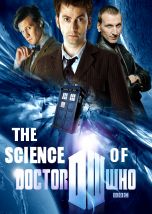
Blowing your mind, that's what Doctor Who's all about. What makes it all so fun is that while all this crazy science fiction is going on, there's actual facts. You've got space travel, you've got time travel, you've got regeneration. These are all the powerful themes of Doctor Who. And they're also the things that drive science forward.
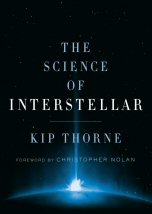
In The Science of Interstellar, Kip Thorne, the physicist who assisted Nolan on the scientific aspects of Interstellar, shows us that the movie's jaw-dropping events and stunning, never-before-attempted visuals are grounded in real science. Thorne shares his experiences working as the science adviser on the film and then moves on to the science itself. In chapters on wormholes, black holes, interstellar travel, and much more, Thorne's scientific insights-many of them triggered during the actual scripting and shooting of Interstellar-describe the physical laws that govern our universe and the truly astounding phenomena that those laws make possible.
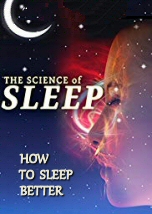
Gaby Roslin and Amir Khan present a program in which they apply the latest science to some of the worst sleepers. They include an extreme snorer, a man who suffers from night terrors, a woman who has restless leg syndrome, and a man with chronic insomnia for 20 years. The film also shows a sleep deprivation experiment to test for risky behaviour, pain resistance and emotional control. When the subjects reach the final hours of the challenge, the experiment begins to take its toll as the participants' emotions go into overdrive, with one threatening to quit altogether.
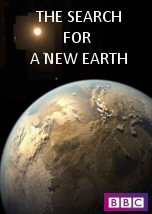
Planet Earth has been home to humankind for over 200,000 years, but with a population of 7.3 billion and counting and limited resources, this planet might not support us forever. Professor Stephen Hawking thinks the human species will have to populate a new planet within 100 years if it is to survive. With climate change, pollution, deforestation, pandemics and population growth, our own planet is becoming increasingly precarious. In this landmark film Professor Hawking, alongside engineer and radio astronomy expert Professor Danielle George and a former student, Christophe Galfard, join forces to find out if, and how, humans can reach for the stars and relocate to different planets. Travelling the globe, they meet top scientists, technologists and engineers who are working to answer our biggest questions: is there another planet out there that we could call home? How will we travel across the vast distances of space to get there? How will we survive the journey? And how will we set up a new human civilization on an alien world? Travelling the globe, they meet top scientists, technologists and engineers who are working to answer our biggest questions: is there another planet out there that we could call home? How will we travel across the vast distances of space to get there? How will we survive the journey? And how will we set up a new human civilization on an alien world? Taking in the latest advances in astronomy, biology and rocket technology from the Atacama Desert to the wilds of the Arctic, viewers will discover a whole world of cutting edge research. This programme shows that Professor Hawking’s ambition isn’t as fantastical as it sounds - and that science fiction is closer to science fact than we ever thought.
Chaos theory has a bad name, conjuring up images of unpredictable weather, economic crashes and science gone wrong. But there is a fascinating and hidden side to Chaos, one that scientists are only now beginning to understand. It turns out that chaos theory answers a question that mankind has asked for millennia - how did we get here? In this documentary, Professor Jim Al-Khalili sets out to uncover one of the great mysteries of science - how does a universe that starts off as dust end up with intelligent life? How does order emerge from disorder? It's a mindbending, counterintuitive and for many people a deeply troubling idea. But Professor Al-Khalili reveals the science behind much of beauty and structure in the natural world and discovers that far from it being magic or an act of God, it is in fact an intrinsic part of the laws of physics. Amazingly, it turns out that the mathematics of chaos can explain how and why the universe creates exquisite order and pattern. And the best thing is that one doesn't need to be a scientist to understand it. The natural world is full of awe-inspiring examples of the way nature transforms simplicity into complexity. From trees to clouds to humans - after watching this film you'll never be able to look at the world in the same way again.











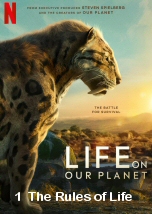




The first episode traces the evolution of life on our planet and highlights the diversity of life, from ancient sharks to the reign of dinosaurs and the emergence of mammals. The episode showcases the constant struggle for survival and adaptation across different eras, illustrating the dynamic and often brutal nature of Earth's evolution.