This feature length movie reveals The Great Secret of the universe. It has been passed throughout the ages, traveling through centuries. This is the secret to everything - the secret to unlimited joy, health, money, relationships, love, youth: everything you have ever wanted. All the resources you will ever need to understand and live The Secret. The world's leading scientists, authors, and philosophers will reveal The Secret that utterly transformed the lives of every person who ever knew it... Plato, Newton, Carnegie, Beethoven, Shakespeare, Einstein.
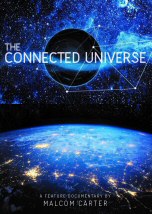
This fascinating journey of exploration of the connection of all things in the Universe is narrated by the legendary Sir Patrick Stewart. With the lens of science, the film reveals the mechanism linking everything in the cosmos.
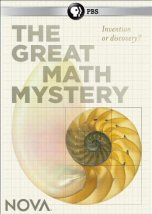
Go with us on a mathematical mystery tour, a provocative exploration of math's astonishing power across the centuries. We discover math's signature in the swirl of a nautilus shell, the whirlpool of a galaxy, and the spiral in the center of a sunflower. Math was essential to everything from the first wireless radio transmissions to the successful landing of rovers on Mars. But where does math get its power?" Astrophysicist and writer Mario Livio, along with a colorful cast of mathematicians, physicists, and engineers, follow math from Pythagoras to Einstein and beyond, all leading to the ultimate riddle: Is math an invention or a discovery? Humankind's clever trick, or the language of the universe? Whether we think we're good with numbers or not, we all use math in our daily lives. The Great Math Mystery sheds fascinating light on how math works in our brains and ponders the ultimate mystery of why it works so well when decoding the universe.
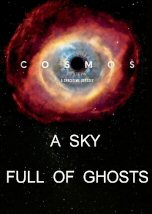
Tyson begins the episode by explaining the nature of the speed of light and how much of what is seen of the observable universe is from light emanated from billions of years in the past. Tyson further explains how modern astronomy has used such analyzes via deep time to identify the Big Bang event and the age of the universe. Tyson proceeds to describe how the work of Isaac Newton, William Herschel, and James Clerk Maxwell contributed to understanding the nature of electromagnetic waves and gravitational force, and how this work led towards Albert Einstein's Theory of Relativity, that the speed of light is a fundamental constant of the universe and gravity can be seen as distortion of the fabric of space-time. Tyson describes the concept of dark stars as postulated by John Michell which are not visible but detectable by tracking other stars trapped within their gravity wells, an idea Herschel used to discover binary stars. Tyson then describes the nature of black holes, their enormous gravitational forces that can even capture light, and their discovery via X-ray sources such as Cygnus X-1. Tyson uses the Ship of Imagination to provide a postulate of the warping of spacetime and time dilation as one enters the event horizon of the black hole, and the possibility that these may lead to other points within our universe or others, or even time travel. Tyson ends on noting that Herschel's son, John would be inspired by his father to continue to document the known stars as well as contributions towards photography that play on the same nature of deep time used by astronomers.
Dr Hannah Fry explores a paradox at the heart of modern maths, discovered by Bertrand Russell, which undermines the very foundations of logic that all of maths is built on. These flaws suggest that maths isn't a true part of the universe but might just be a human language - fallible and imprecise. However, Hannah argues that Einstein's theoretical equations, such as E=mc2 and his theory of general relativity, are so good at predicting the universe that they must be reflecting some basic structure in it. This idea is supported by Kurt Godel, who proved that there are parts of maths that we have to take on faith. Hannah then explores what maths can reveal about the fundamental building blocks of the universe - the subatomic, quantum world. The maths tells us that particles can exist in two states at once, and yet quantum physics is at the core of photosynthesis and therefore fundamental to most of life on earth - more evidence of discovering mathematical rules in nature. But if we accept that maths is part of the structure of the universe, there are two main problems: firstly, the two main theories that predict and describe the universe - quantum physics and general relativity - are actually incompatible; and secondly, most of the maths behind them suggests the likelihood of something even stranger - multiple universes. We may just have to accept that the world really is weirder than we thought, and Hannah concludes that while we have invented the language of maths, the structure behind it all is something we discover. And beyond that, it is the debate about the origins of maths that has had the most profound consequences: it has truly transformed the human experience, giving us powerful new number systems and an understanding that now underpins the modern world.
Could time travel ever be science fact? Time itself may be something you can bend and stretch. Trying to understand if time travel can be possible teach us a lot about the universe. It forces us to take on some of the toughest unanswered questions in all of physics and will ultimately probably lead to deeper understanding of the very nature of the cosmos.














The world's leading scientists, authors, and philosophers will reveal The Secret that utterly transformed the lives of every person who ever knew it... Plato, Newton, Carnegie, Beethoven, Shakespeare, Einstein.