









Last Watched

"Hawk"  Sort by

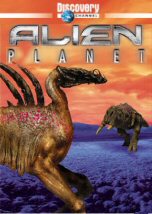
Alien Planet

   2005    Nature
The computer animated drama takes place on Darwin IV, a planet 6.5 light years from earth, with 2 suns and 60% of Earth's gravity. Earth sends a pilot mission with three probes. This robotic fleet is responsible for finding and assessing any life forms on Darwin IV. The probes soon find themselves in the middle of a developed ecosystem teeming with diversity of life of all sizes. "Alien Planet" is motivated by real science missions, such as the NASA Origins Program and the NASA / JPL Planet-Finder Mission, as well as the European Space Agency's Darwin Project. It is a cosmic expedition along side Stephen Hawking, Michio Kaku, Jack Horner, Craig Venter, and George Lucas, and NASA's Chief Scientist Jim Garvin. No longer just the domain of science fiction, "Alien Planet" dramatizes an exciting and possible answer to what alien life really looks like and when we'll find it.
Aliens: The Big Think

   2016    Nature
The hunt for aliens is on! After a distinguished career in cosmology Professor Martin Rees, the astronomer royal, has taken up the search for extra-terrestrials. Looking for aliens is no longer science fiction - it is a question that's engaging some of the greatest minds in science." As our knowledge of the universe has increased, we're getting closer to answers. Many scientists now think we live in galaxy with a billion Earth-like planets, many of which may be teeming with life. But what kind of life? Has anything evolved into beings we could communicate with? This film gets inside the minds of the scientists considering one of the most exciting and profound questions we can ask - are we alone in the universe? Professor Rees thinks we may have our idea of what an alien is like all wrong. If he's right, it's not organic extra-terrestrials we should look for, it's machines.

Secrets of Time Travel

   2019    Science
Could time travel ever be science fact? Time itself may be something you can bend and stretch. Trying to understand if time travel can be possible teach us a lot about the universe. It forces us to take on some of the toughest unanswered questions in all of physics and will ultimately probably lead to deeper understanding of the very nature of the cosmos.
Series: How the Universe Works Series 8

The Search for a New Earth

   2017    Technology
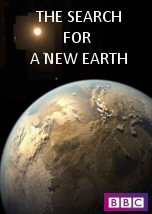
Planet Earth has been home to humankind for over 200,000 years, but with a population of 7.3 billion and counting and limited resources, this planet might not support us forever. Professor Stephen Hawking thinks the human species will have to populate a new planet within 100 years if it is to survive. With climate change, pollution, deforestation, pandemics and population growth, our own planet is becoming increasingly precarious. In this landmark film Professor Hawking, alongside engineer and radio astronomy expert Professor Danielle George and a former student, Christophe Galfard, join forces to find out if, and how, humans can reach for the stars and relocate to different planets. Travelling the globe, they meet top scientists, technologists and engineers who are working to answer our biggest questions: is there another planet out there that we could call home? How will we travel across the vast distances of space to get there? How will we survive the journey? And how will we set up a new human civilization on an alien world? Travelling the globe, they meet top scientists, technologists and engineers who are working to answer our biggest questions: is there another planet out there that we could call home? How will we travel across the vast distances of space to get there? How will we survive the journey? And how will we set up a new human civilization on an alien world? Taking in the latest advances in astronomy, biology and rocket technology from the Atacama Desert to the wilds of the Arctic, viewers will discover a whole world of cutting edge research. This programme shows that Professor Hawking’s ambition isn’t as fantastical as it sounds - and that science fiction is closer to science fact than we ever thought.

The Hawking Paradox

   2005    Science
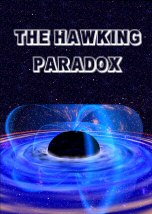
Stephen Hawking is the most famous scientist on the planet. But behind the public face lies an argument that has been raging for almost 30 years. Has he been wrong for the last 30 years? Hawking shot to fame in the world of physics when he provided a mathematical proof for the Big Bang theory. This theory showed that the entire universe exploded from a singularity, an infinitely small point with infinite density and infinite gravity. Hawking was able to come to his proof using mathematical techniques that had been developed by Roger Penrose. These techniques were however developed to deal not with the beginning of the Universe but with black holes". Science had long predicted that if a sufficiently large star collapsed at the end of its life, all the matter left in the star would be crushed into an infinitely small point with infinite gravity and infinite density – a singularity. Hawking realised that the Universe was, in effect, a black hole in reverse. Instead of matter being crushed into a singularity, the Universe began when a singularity expanded to form everything we see around us today, from stars to planets to people. Hawking realised that to come to a complete understanding of the Universe he would have to unravel the mysteries of the black hole and its paradoxes

Nuclear Now

   2022    Technology
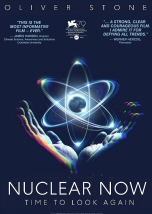
With unprecedented access to the nuclear industry in France, Russia, and the United States, director Oliver Stone delves deep into the groundbreaking technologies that promise a revolution in energy production. But this is not just a story of power and progress; it's a tale of dispelling myths and confronting the fears surrounding nuclear energy. From the passionate voices of those funding their ventures to the illuminating insights of visionaries like Stephen Hawking, 'Nuclear Now' challenges viewers to question their preconceptions.
Join this journey to uncover the truths, understand the risks, and judge the possibilities. Imagine a tomorrow that is brighter than today, where humanity harnesses the primordial power of the atom to ensure a future we can all look forward to. Dive into the debate, and decide for yourself.