









Last Watched

"Animation"  Sort by

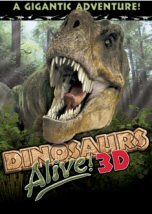
Dinosaurs Alive

   2009    Science    3D    HD
A global adventure of science and discovery--featuring the earliest dinosaurs of the Triassic Period to the monsters of the Cretaceous 'reincarnated' life-sized for the screen. Audiences will journey with some of the world's preeminent palaeontologists as they uncover evidence that the descendents of dinosaurs still walk (or fly) among us. From the exotic, trackless expanses and sand dunes of Mongolia's Gobi Desert to the dramatic sandstone buttes of New Mexico, the film will follow American Museum of Natural History palaeontologists as they explore some of the greatest dinosaur finds in history. Through the magic of scientifically accurate computer-generated animation, these newly discovered creatures, and some familiar favourites, will come alive... in a big way!
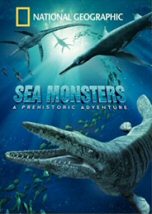
Sea Monsters

   2011    Science
The setting alternates between prehistory and modern day times in which scientists study the fossilized remains of the creatures in the film. In 2009, a group of paleontologists discover a rare fossil in Kansas. The fossil was previously exposed by a summer rain, and it appears to be a marine reptile, tracing back over 70 million years. It was a female Dolichorhynchops and will be the inspiration for telling the story of Dolly, who travels the Kansas Inland Sea, 80 million years ago during the late Cretaceous period with her family.
The film brings to life some of the most bizarre, ferocious and fascinating creatures to ever inhabit the ocean, incluing Tylosaurus, Xiphactinus, Cretoxyrhina, and Ammonite. It combines animation with recreations in a 3D prehistoric adventure. A journey to the bottom of the ancient oceans dramatizes awe-inspiring creatures.

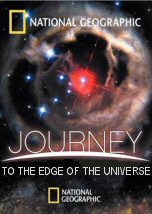
Journey to the Edge of the Universe

       Science    3D    HD
Take an express journey to the edge of the universe as the filmmakers use computer-generated animation to build on images captures by the Hubble Telescope. The animation and story telling absolutely wonderful. Beginning on planet Earth, viewers are hurtled into the deepest reaches of space. There are no stops on this flight, and along the way the mysteries of the universe come alive as we examine the history and science of distant celestial.

When Knowledge Conquered Fear

   2014    Science
The episode begins with Tyson describing how pattern recognition manifested in early civilization as using astronomy and astrology to predict the passing of the seasons, including how the passage of a comet was often taken as an omen. Tyson continues to explain that the origin of comets only became known in the 20th century due to the work of Jan Oort and his hypothesis of the Oort cloud. Tyson then continues to relate the collaboration between Edmond Halley and Isaac Newton in the last part of the 17th century in Cambridge. The collaboration would result in the publication of Philosophiæ Naturalis Principia Mathematica, the first major work to describe the laws of physics in mathematical terms, despite objections and claims of plagiarism from Robert Hooke and financial difficulties of the Royal Society of London. Tyson explains how this work challenged the prevailing notion that God had planned out the heavens, but would end up influencing many factors of modern life, including space flight. Tyson further describes Halley's contributions including determining Earth's distance to the sun, the motion of stars and predicting the orbit of then-unnamed Halley's Comet using Newton's laws. Tyson contrasts these scientific approaches to understanding the galaxy compared to what earlier civilizations had done, and considers this advancement as mankind's first steps into exploring the universe. The episode ends with an animation of the Milky Way and Andromeda galaxies' merging based on the principles of Newton's laws.
Series: Cosmos: A Spacetime Odyssey

Land Of The Mammoth

   2003    Nature
Journey through the long-vanished corners of prehistoric North America, beginning when man first entered the vast, unspoiled continent some 14,000 years ago, in this appealing BBC documentary. Witness ancient beasts, mammoths, mastodons, giant bears, and sabre-toothed cats, and see the legacies each has passed to their modern successors. Computer animation and digital effects bring to life mammoths, saber-toothed cats, giant ground sloths, short-faced bears, glyptodonts, and a plethora of smaller animals in a lush Ice Age mosaic.
Series: Prehistoric America

A Trip to Infinity

   2022    Science
Does Infinity exist? Can we experience the Infinite? In an animated film created by artists from 10 countries, the world's most cutting-edge scientists and thinkers go in search of the infinite and its mind-bending implications for the universe.
It doesn’t behave like we’re used to. It’s a monster that needs to be tamed. It creates and destroys mathematicians. It’s infinity! You know, the thing that goes on and on and on and never ends. Here we have theoretical physicists, mathematicians, philosophers, theoretical cosmologists talking about infinity – what it is, how it works, where we can find it, etc., and their concepts and explanations are illustrated by a variety of nifty animations in a variety of visual styles ranging from literal to metaphorical.
Directors Jonathan Halperin and Drew Takahashi solicit experts to help them tackle the most maximal topic in the history of everything from a few different angles. Y when you think about it for a second, the only possible conclusion one can arrive at is a sublime and confounding realization that, on a cosmic scale, humans are naught but grand ignoramuses.
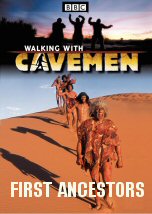
Walking with Cavemen

Walking with Cavemen

2003  History
Cooked

Cooked

2016  Culture
Five Came Back

Five Came Back

2017  Art
Earthflight

Earthflight

2012  Nature
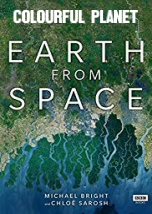
Earth from Space

Earth from Space

2019  Nature
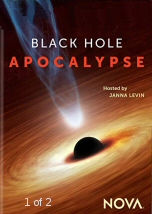
Black Hole Apocalypse

Black Hole Apocalypse

2018  Science
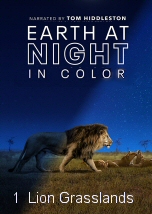
Earth at Night in Color

Earth at Night in Color

2020  Nature