Buddhists, Hindus, and hundreds of thousands of travellers from around the globe flock to Cambodia every year to experience the grandeur of Angkor. Its famous temples were built over the span of five centuries by the rulers of the Khmer Empire, and endure today as one of Earth's greatest archaeological wonders. Join us as we shed light on one of the most enigmatic, mesmerizing civilizations in the history of mankind. We peel away the myth and legend to uncover the hidden story behind the creation of this ancient city. Angkor Wat is the largest temple on the face of the Earth and is a symbol of one of the greatest empires in the history of Southeast Asia. And yet, for centuries, the sacred structure remained lost within the tropical forests of Cambodia, along with the history of the young king who built the temple. Discover the story of Suryavarman II and how he ushered in the golden age of the Khmer Empire. See how Angkor Wat was constructed over four backbreaking decades, and witness the monument in its true glory and splendour, as it appeared 900 years ago.
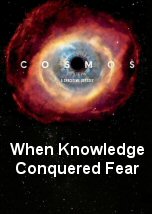
Morgan Freeman produces hosts and narrates this exploration of the greatest mysteries of the universe. The four forces governing our universe are phenomenally finely tuned, so finely that it had led many to the conclusion that someone, or something, must have calibrated them: an alien gameseter who's created our world as the ultimate SIM game for his own amusement.
The episode begins with Tyson describing how pattern recognition manifested in early civilization as using astronomy and astrology to predict the passing of the seasons, including how the passage of a comet was often taken as an omen. Tyson continues to explain that the origin of comets only became known in the 20th century due to the work of Jan Oort and his hypothesis of the Oort cloud. Tyson then continues to relate the collaboration between Edmond Halley and Isaac Newton in the last part of the 17th century in Cambridge. The collaboration would result in the publication of Philosophiæ Naturalis Principia Mathematica, the first major work to describe the laws of physics in mathematical terms, despite objections and claims of plagiarism from Robert Hooke and financial difficulties of the Royal Society of London. Tyson explains how this work challenged the prevailing notion that God had planned out the heavens, but would end up influencing many factors of modern life, including space flight. Tyson further describes Halley's contributions including determining Earth's distance to the sun, the motion of stars and predicting the orbit of then-unnamed Halley's Comet using Newton's laws. Tyson contrasts these scientific approaches to understanding the galaxy compared to what earlier civilizations had done, and considers this advancement as mankind's first steps into exploring the universe. The episode ends with an animation of the Milky Way and Andromeda galaxies' merging based on the principles of Newton's laws.
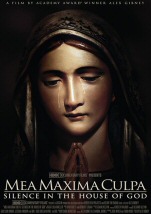
Alex Gibney explores the charged issue of pedophilia in the Catholic Church, following a trail from the first known protest against clerical sexual abuse in the United States and all the way to the Vatican. The title is derived from the Latin phrase "mea maxima culpa". It is taken from the Confiteor that is part of the Roman Catholic Mass. It translates into English as "My most grievous fault" The film examines the abuse of power in the Catholic Church system through the story of four deaf men who set out to expose the priest who abused them during the mid-1960s. Each of the men brought forth the first known case of public protest against clerical sex abuse, which later lead to the sex scandal case known as the Lawrence Murphy case. Through their case the film follows a cover-up that winds its way from the row houses of Milwaukee, Wisconsin, through Ireland's churches, all the way to the highest office of the Vatican.
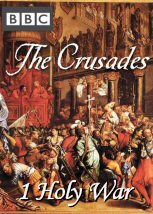
Dr. Thomas Asbridge introduces the epic story of the Crusades – a tale of religious fanaticism and unspeakable brutality, of medieval knights and Jihadi warriors; of castles and kings; of heroism, betrayal, and sacrifice. He explains how, using fresh evidence, eye-witness testimonies and contemporary accounts – from both the Christian and Islamic worlds – we are able to re-examine this epic medieval drama, and how he has retraced the steps of the Crusaders from a small town in France to the magnificent cities of the Holy Land, bringing to life the human experience of the Crusades, and shedding new light on how it was that two of the world’s great religions waged war in the name of God.
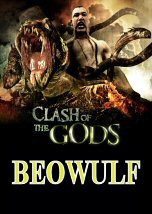
The story of the Viking world's most famous warrior, the legend of Beowulf is the ultimate tale of courage. Pit against thirsty invaders, barbaric monsters and a fire breathing dragon, Beowulf emerges as Norse mythology's greatest hero. But could this warrior have actually been real? Unearthed burial mounds and ancient carvings suggest the myth of Beowulf might have been more than epic legend.




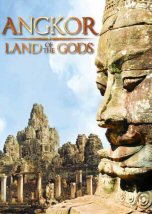



Angkor Wat is the largest temple on the face of the Earth and is a symbol of one of the greatest empires in the history of Southeast Asia. And yet, for centuries, the sacred structure remained lost within the tropical forests of Cambodia, along with the history of the young king who built the temple. Discover the story of Suryavarman II and how he ushered in the golden age of the Khmer Empire. See how Angkor Wat was constructed over four backbreaking decades, and witness the monument in its true glory and splendour, as it appeared 900 years ago.