














Last Watched

"atmosphere"  Sort by

Space Junk

   2012    Technology    3D    HD
As of 5 July 2016, the United States Strategic Command tracked a total of 17,852 artificial objects in orbit about the Earth, including 1,419 operational satellites. Take a look at the mounting threat of debris in Earth's atmosphere, the potential dangers of such 'junk' and what can possibly be done to avoid a crisis. The film is a visually explosive journey of discovery that weighs the solutions aimed at restoring our planet's orbits.


Webb Telescope: The Story So Far

   2024    Science    HD
In July 2022, the James Webb Space Telescope (JWST) unveiled its first breathtaking images, offering an unprecedented level of detail of stars, galaxies, and planets. But for scientists, these images were just the start of an exciting journey to uncover the universe's secrets. This documentary follows Chris Lintott as he embarks on a road trip to meet the researchers who have been eagerly analyzing JWST's data, revealing groundbreaking discoveries about exoplanet atmospheres, the outer planets of our solar system, and the earliest galaxies in the cosmos.
To mark the second anniversary of JWST's first images, Chris, along with presenters Maggie Aderin-Pocock and George Dransfield, revisits these scientists to explore the telescope's successes and challenges. From new jet streams on Jupiter to quirks on Uranus and Neptune, and insights into the ancient universe, the documentary showcases the remarkable findings made possible by JWST. Additionally, resident astronomer Pete Lawrence guides viewers on how to observe the night sky's wonders, aligning their stargazing with the telescope's targets. This captivating journey into space science promises to inspire and intrigue.
Series: The Sky at Night

Volcanoes

   2021    Nature
Our planet is one in a billion. How incredible, awe-inspiring life is driven by its natural forces - and how we can ensure humans become a force for good. David Attenborough narrates a series revealing how the forces of nature drive, shape and support the Earth's great diversity of life.
The first edition examines volcanoes, which responsible for both for the planet's breathable atmosphere and the oceans, but are also the architects of the planet, with over 80% of the Earth's surface being the result of magma bursting up from the molten interior - providing a platform for life.
Series: A Perfect Planet

Coming of Age In The Anthropocene

   2020    Nature
At 11 o'clock on New Year's Eve of the Cosmic Calendar, Homo erectus stood up for the first time, freeing its hands and earning the species its name. They began to move around, to explore, daring to risk everything to get to unknown places. Our Neanderthal relatives lived much as we did and did many of the things we consider to be 'human.' More restless than their cousins the Neanderthals and Denisovans, our Homo sapiens ancestors crossed seas and unforgiving landscapes, changing the land, ocean and atmosphere, leading to mass extinction. The scientific community gave our age a new name, 'Anthropocene.'
Since the first civilizations we've wondered if there's something about human nature that contains the seeds of our destruction. Syukuro Manabe was born in rural Japan and took an intense interest in Earth's average global temperature. In the 1960's, he would assemble the evidence he needed to predict the increase of Earth's temperature due to greenhouse gases until it becomes an uninhabitable and toxic environment, leading to our extinction. 'This doesn't have to be,' says Neil deGrasse Tyson, 'it's not too late. There's another hallway, another future we can still have; we'll find a way.'
Series: Cosmos: Possible Worlds

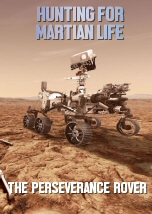
Hunting for Martian Life. The Perseverance Rover

   2020    Technology    HD
Meet Perseverance, NASA's latest rover, as it heads to Mars to answer one question: did life exist on the red planet? On the way, it will lay the foundation for human exploration of our closest neighbour.
Today, Mars is hostile to life. It's too cold for water to stay liquid on the surface, and the thin atmosphere lets through high levels of radiation, potentially sterilizing the upper part of the soil. But it wasn't always like this. Some 3.5 billion years ago or more, water was flowing on the surface. It carved channels still visible today and pooled in impact craters. A thicker carbon dioxide atmosphere would have blocked more of the harmful radiation. The Mars 2020/Perseverance rover is designed to better understand the geology of Mars and seek signs of ancient life. The mission will collect and store a set of rock and soil samples that could be returned to Earth in the future. It will also test new technology to benefit future robotic and human exploration of Mars, as the Ingenuity Helicopter.

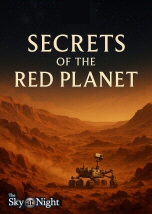
Secrets of the Red Planet

   2025    Science    HD
Groundbreaking missions and the latest research are finally uncovering the long-hidden secrets of Mars. From ancient water flows to possible traces of life, scientists are piecing together the planet's dramatic past. As powerful new technology scans its surface and atmosphere, experts confront extraordinary questions: Did Mars once support life? And could humanity one day make the Red Planet its second home? A stunning exploration into the evolving mysteries of our nearest planetary neighbor.
Series: The Sky at Night