Virgilio Martínez is the chef/owner of Central, a restaurant in Lima, Peru that currently sits at number four on the World’s 50 Best Restaurants list. After a decade spent cooking in kitchens around the world, Martínez only found his true identity as a chef when he began exploring the different regions of his native Peru, from the ocean to the Andes. While some chefs are obsessed with a 'sense of place,' Martínez strives to offer his guests a sense of many places — entire ecosystems over the course of a tasting menu. Martínez always had an adventurous spirit, but growing up in Peru during the 70s and ‘80s meant that many parts of the country were closed off to him. As a teenager, he learned that pursuing a career in the kitchen would allow him the freedom to travel all over the world. The chef ended in charge of a restaurant in Madrid. This is really where Virgilio started to develop his experimental style. Martínez decided to leave Spain to go and work on opening his own restaurant in Peru. He decided to explore the idea of cooking dishes based on altitudes and ecosystems. Martínez runs Central’s kitchen with his wife, Pia León. They developed the altitude-based menu concept together. Martínez’s sister, Malena, has a science background, so he brought her on as part of the team to explore different terrains in search of ingredients that they could use at the restaurant. Virgilio remarks: 'We use 180 ingredients, and 50 percent of them are unknown.' The altitude-themed tasting menu was introduced in 2012, and the following year, Central landed at the bottom of the World’s 50 Best Restaurants list. Two years later, it soared to number four.
‘Sugarcane’ is a compelling 2024 documentary that delves into the harrowing legacy of the Canadian Indian residential school system. The film investigates the discovery of unmarked graves at St. Joseph's Mission near Williams Lake, British Columbia, bringing to light the physical and sexual abuses endured by Indigenous children. Through intimate interviews with survivors and their descendants, directors Julian Brave NoiseCat and Emily Kassie reveal the enduring impact of these institutions on Indigenous communities, highlighting their resilience and ongoing quest for justice. The narrative intertwines personal stories with a broader historical context, showcasing the strength and unity of a community confronting its painful past. ‘Sugarcane’ not only exposes the atrocities committed but also celebrates the enduring spirit of Indigenous peoples as they heal and reclaim their cultural identity. This poignant film serves as a testament to their perseverance and the ongoing fight for recognition and reconciliation.
Even 2,000 years after his death, General Hannibal's battle strategies are still studied today. But of all his military feats, perhaps his greatest was leading his massive Carthaginian army of men and three-dozen elephants across the Alps and into the heartland of Rome in 218 B.C. Until now, the route they took has been a matter of dispute, but thanks to modern-day technology, geomorphologist Bill Mahaney and microbiologist Chris Allen believe they've accurately traced this ancient journey.
David Attenborough discovers the plants that have evolved to shed their dependency on water enabling them to survive in the driest environments. The story begins at midnight in midsummer as David steps into the Princess of Wales Conservatory to witness the extraordinary nocturnal blooming of a cactus. The queen of the night, with its giant flowers, is the centre piece of a stunning symphony of cacti blooms that burst open in the desert (and at Kew) at night. In a mesmerizing 3D slow motion sequence, we discover the extraordinary connections between cacti and their natural pollinators: bats. As the sun rises, David meets other amazing plants. Species like the century plant, the Agave franzosini, which grows steadily for over 50 years, only to then flower itself to death with one mighty telegraph pole sized bloom which literally bursts out of the roof of Kew’s green house.
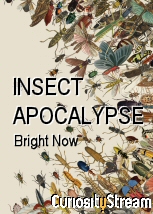
An alarming decline in insect populations could devastate all life on earth. What's causing it, and can anything be done to stop it? Insects are disappearing across the world. If we lost our pollinators, we would lose 80 to 90% of the plants on the planet. That is not an option. It's the ecosystems on this planet that keep humans alive. Scientists warn us that the insect apocalypse is entirely possible.
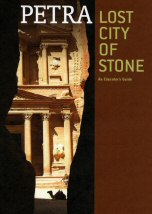
More than 2,000 years ago, the thriving city of Petra rose up in the bone-dry desert of what is now Jordan. An oasis of culture and abundance, the city was built by wealthy merchants whose camel caravans transported incense and spices from the Arabian Gulf. They carved spectacular temple-tombs into its soaring cliffs, raised a monumental Great Temple at its heart, and devised an ingenious system that channeled water to vineyards, bathhouses, fountains, and pools. But following a catastrophic earthquake and a slump in its desert trade routes, Petra's unique culture faded and was lost to most of the world for nearly a thousand years. Now, in a daring experiment, an archaeologist and sculptors team up to carve an iconic temple-tomb to find out how the ancient people of Petra built their city of stone. Meanwhile, scientists using remote sensors and hydraulic flumes uncover the vast city and its sophisticated water system. The race is on to discover how these nomads created this oasis of culture in one of the harshest climates on Earth.








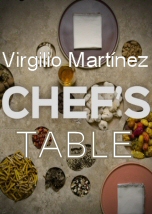
















Martínez always had an adventurous spirit, but growing up in Peru during the 70s and ‘80s meant that many parts of the country were closed off to him. As a teenager, he learned that pursuing a career in the kitchen would allow him the freedom to travel all over the world. The chef ended in charge of a restaurant in Madrid. This is really where Virgilio started to develop his experimental style. Martínez decided to leave Spain to go and work on opening his own restaurant in Peru. He decided to explore the idea of cooking dishes based on altitudes and ecosystems. Martínez runs Central’s kitchen with his wife, Pia León. They developed the altitude-based menu concept together. Martínez’s sister, Malena, has a science background, so he brought her on as part of the team to explore different terrains in search of ingredients that they could use at the restaurant. Virgilio remarks: 'We use 180 ingredients, and 50 percent of them are unknown.' The altitude-themed tasting menu was introduced in 2012, and the following year, Central landed at the bottom of the World’s 50 Best Restaurants list. Two years later, it soared to number four.