



Last Watched

"Biology"  Sort by

Rivals

   2015    Science    3D    HD
David Attenborough continues his search for the origins of flying animals, as he charts the rise of new, larger creatures – extinct reptiles that flew on wings of skin, dinosaurs that sprouted feathers to become the ancestors of birds, and gliding mammals that emerged from a life in the trees to dominate the night as bats. His journey spans the globe – from the rainforests of Borneo to see bizarre gliding animals, to China and its new discoveries of dinosaur fossils. Stunning CGI brings to life creatures that disappeared over 200 million years ago, and new filming techniques bring us closer than ever to the secrets of flight itself.
Series: Conquest of the Skies
The Survival

   2012    Nature
David Attenborough discovers the plants that have evolved to shed their dependency on water enabling them to survive in the driest environments. The story begins at midnight in midsummer as David steps into the Princess of Wales Conservatory to witness the extraordinary nocturnal blooming of a cactus. The queen of the night, with its giant flowers, is the centre piece of a stunning symphony of cacti blooms that burst open in the desert (and at Kew) at night. In a mesmerizing 3D slow motion sequence, we discover the extraordinary connections between cacti and their natural pollinators: bats. As the sun rises, David meets other amazing plants. Species like the century plant, the Agave franzosini, which grows steadily for over 50 years, only to then flower itself to death with one mighty telegraph pole sized bloom which literally bursts out of the roof of Kew’s green house.
Series: Kingdom of Plants

Wild South America: Lost Worlds

   2005    Nature
A major new series exploring the wildlife of South America. This is a breathtaking aerial journey through the most spectacular locations on the continent, from the icy peaks of the Andes to the Amazon jungle and the Atacama desert. These extreme conditions are home to a mind-boggling variety of creatures, many of them rarely seen before on television.
Series: Wild South America

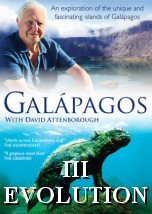
Evolution

   2013    Nature    3D    HD
No two islands in the Galapagos are the same. The imperceptible drift of a continental plate keeps each island biologically isolated. David Attenborough explores this evolutionary crucible, encountering tortoises that weigh up to half a tonne, finches that use tools and lizards that communicate using press-ups; for Darwin, this was all evidence for his theory of evolution. We see the final footage of the world famous tortoise fondly known as Lonesome George, the last survivor of his species. David Attenborough was the last person to have ever filmed with him. Darwin’s famous visit had a downside – the arrival of man. David investigates the impact we’ve had in these islands, as our influence is a double-edged sword. We’ve disrupted the natural balance but he also believes Darwin would be thrilled with the advances we have made in science. We’re also now uncovering evidence that evolution is more rapid than Darwin could ever have imagined. Whatever wonders the Galapagos Islands hold today, they are only a hint of what awaits them in the future.
Series: Galapagos with David Attenborough

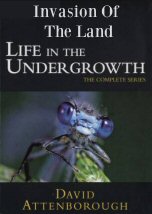
Life in the Undergrowth: Invasion Of The Land

   2005    Nature
Open your eyes to the bizarre, ferocious and surprisingly beautiful world of the invertebrates, a ground-breaking exploration into a spectacular miniature universe never normally seen but teeming all around us. In the first episode, the story of the land-living invertebrates. Discover the private life of Europe's dramatic leopard slug, a common garden resident with a truly bizarre end to its marathon mating ritual; watches the courtship ballet of tiny springtails on the underside of a leaf; sees swarms of bright red South African millipedes find partners, and in the caves of Venezuela meets the giant bat-eating centipede.
Series: Life in the Undergrowth

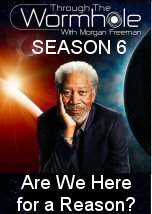
Through the Wormhole Season 6: Are We Here for a Reason

   2015    Science
Evolution tells us that all life exists for only one purpose: to reproduce. But is that all there is? How could such a simple imperative lead us to create great art and civilizations? A new theory suggests that instead of passing on genes, our ultimate purpose is to process and pass on information. We are the universe figuring itself out. Scientists dig deep into DNA, chemistry, technology and engineering to find the meaning of life. One thing is certain: living is easier if you find a reason for living.
Series: Through the Wormhole Season 6
Wild Wild Country

Wild Wild Country

2018  Culture
Leaving Neverland

Leaving Neverland

2019  Culture
Hidden Kingdoms

Hidden Kingdoms

2014  Nature
Top Gear

Top Gear

2012  Technology
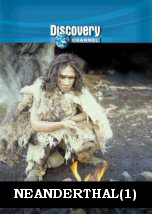
Neanderthal

Neanderthal

  History
How to Stay Young

How to Stay Young

2016  Medicine
Minimalism

Minimalism

2015  Culture