The most innovative area of human motion lies not on Earth, but with the exploration of space. Space is the most hostile environment we know. Navigating it involves crossing unprecedented distances. It's the greatest engineering challenge humanity has ever undertaken. Meet the pioneers who've dreamed of reaching other worlds, pushing the boundaries of space exploration, and the private space entrepreneurs jostling to offer the tantalizing prospect of cheap, frequent travel beyond the atmosphere into Earth orbit.
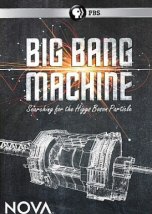
On July 4, 2012, scientists at the giant atom smashing facility at CERN announced the discovery of a subatomic particle that seems like a tantalizingly close match to the elusive Higgs Boson, thought to be responsible for giving all the stuff in the universe its mass. Since it was first proposed nearly fifty years ago, the Higgs has been the holy grail of particle physicists: finding it completes the 'standard model" that underlies all of modern particle physics. Now CERN's scientists are preparing for the Large Hadron Collider's second act, when they restart the history-making collider, running at higher energy--hoping to find the next great discovery that will change what we know about the particles and forces that make up our universe.
Explore the latest science behind the headlines and the coolest scientific developments that impact our lives. Technology catapults to new heights in 2015, going faster and further than ever before. We have canvassed the world in search of the best and most fascinating science and tech stories of the year for 2015 YEAR IN SCI-TECH". This action-packed hour of fun and intrigue revisits the world’s first glimpse of Pluto and images of water on Mars while exploring what this all could mean for intelligent life in the universe – all while earthling’s inch closer to becoming actual space tourists. Throughout the hour, we revisit the year’s most amazing techological feats and scientific discoveries, including new and elusive animal species discovered deep under the ocean, as well as the hottest tech trends – from hover boards to driverless cars and trucks, and the newest advances in mind-blowing virtual reality.
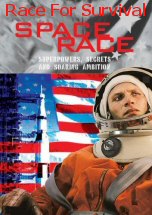
During 1959-1961 both the Americans and Soviets are planning manned space flight, and we see both sides preparing to do so with the development of the Vostok programme (Russia) and Project Mercury (USA). After difficulties and failures on both sides, the Soviets succeed in putting Yuri Gagarin into space first, with the Americans putting Alan Shepard up shortly afterwards.
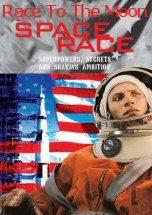
During 1964-1969 both sides now plan to put a man on the Moon - while the Soviets struggle, the Americans pull ahead in the space race with Project Gemini, but then suffer a disaster with the Apollo 1 fire. The Soviet space programme suffers its own blows: Sergei Korolev dies when his heart fails during an operation, Soyuz 1 crashes and kills cosmonaut Vladimir Komarov, and their planned moon rocket, the N-1 rocket, fails to successfully launch. In America, von Braun has difficulties with the Saturn V, but they are overcome, and the rocket successfully launches the first manned lunar mission, Apollo 8, and the first manned lunar landing, Apollo 11.
Focuses on the fierce rivalry that took place in the laboratories in Britain, Holland, France and Poland as they sought the ultimate extreme of cold. The program will follow the extraordinary discoveries of superconductivity and superfluidity and the attempt to produce a new form of matter that Albert Einstein predicted would exist within a few billionths of degrees above absolute zero.




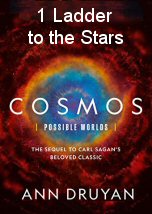






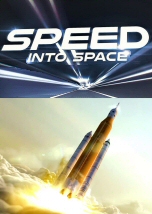







Meet the pioneers who've dreamed of reaching other worlds, pushing the boundaries of space exploration, and the private space entrepreneurs jostling to offer the tantalizing prospect of cheap, frequent travel beyond the atmosphere into Earth orbit.