Follows the story of Eric Christopher Conn, a Kentucky attorney who managed to steal over 550 million dollars from the U.S. government through its Social Security program. In the first episode, Eric C. Conn, the biggest social security lawyer in eastern Kentucky, is threatened when a reporter starts looking into his professional connections.
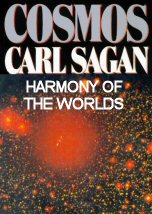
Beginning with the separation of the fuzzy thinking and pious fraud of astrology from the careful observations of astronomy, Sagan follows the development of astronomical observation. Beginning with constellations and ceremonial calendars (such as those of the Anasazi), the story moves to the debate between Earth and Sun-centered models: Ptolemy and the geocentric worldview, Copernicus' theory, the data-gathering of Tycho Brahe, and the achievements of Johannes Kepler (Kepler's laws of planetary motion and the first science-fiction novel).
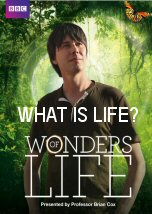
From the Philippines to the US, Madagascar and Mexico, Professor Brian Cox explores the globe to reveal how a few fundamental laws of science gave birth to the most complex and unique feature of the universe - life. In the first episode, Brian journeys to the volcanic landscapes of South-East Asia, seeking to understand how life first began and how that spark has endured to this day.
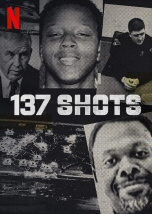
Law enforcement faces scrutiny as Americans demand justice after police violence claims multiple Black lives in Cleveland. The film examines the case in Cleveland where police officers shot at unarmed suspects in a car 137 times. Timothy Russell and Malissa Williams were the victims. While looking at policing standards within the city of Cleveland, '137 Shots' also examines the shooting of 12-year old Tamir Rice by Cleveland police officers. This film is an extremely tough thing to watch, but necessary in order to bring about awareness for change.
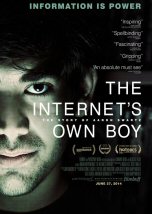
the rise and fall of a tech industry prodigy. Interviews with his friends and loved ones paint a portrait of Swartz as a martyr of freedom of information and hail his fight for the public's right to access tax-funded academic and scientific research, culminating in a personally devastating two-year Federal lawsuit." An avid researcher who had previously accessed otherwise private databases, Swartz, acting "in the grand tradition of civil disobedience to declare... opposition to this private theft of public culture" used MIT computers to access tax-funded research that would otherwise be held privately by for-profit publishers, an incident many viewers may remember from national headlines just a few year ago. Though neither MIT nor the digital repository Swartz accessed pressed charges, a US Attorney stepped in and filed a 13-count felony charge against Swartz, threatening him with over $1 million in fines and up to 35 years of jail time. Despite the defense of his peers, these events launched Swartz into a two-year long downward spiral of withdrawal and depression. Aaron Swartz's untimely death at the age of 26.
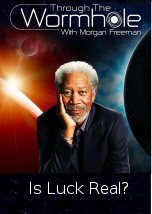
Do you make your own luck, or does luck make you? Some scientists believe luck is strictly a matter of statistics and probabilities…but others believe unseen forces are at work, and randomness is built into every particle of the universe. We’ll find luck, good and bad, in casinos, basketball courts, genetics labs and the subatomic world. How much does the genetic lottery rule your fate? Are lucky streaks and unfortunate accidents merely our own minds fooling us? It’s a scientific journey that will radically revise your understanding of the laws of nature and the workings of the human brain.
















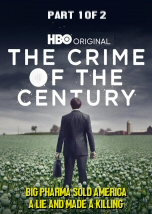




In the first episode, Eric C. Conn, the biggest social security lawyer in eastern Kentucky, is threatened when a reporter starts looking into his professional connections.