The Series 'In Search of' conducted investigations into the controversial, paranormal and mysterious. The producer's purpose is to suggest some possible explanations, but not necessarily the only ones, to the mysteries examined. The 2018 revival is presented by Zachary Quinto. In this episode, Zach wants to understand how a person can be superhuman. He meets a man who bent the metal frame of a car door with his bare hands in a moment of crisis; a man who can feel no pain; and a Shaolin warrior monk, who teaches him how to harness superhuman powers of his own.
The film is the long-awaited reunion concert of the renowned folk pop music duo, more than a decade after their separation as musical performers. It was recorded on the 19th September 1981 at a free benefit concert on the Great Lawn in Central Park, New York City, where the pair performed in front of an audience reported at the time as 500,000 people. The film includes two songs that had not appeared on the album. Rolling Stone called the concert 'one of the finest performances, one that vividly recaptured another time, an era when well-crafted, melodic pop bore meanings that stretched beyond the musical sphere and into the realms of culture and politics.'
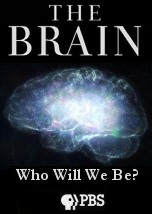
In ‘Who will we be?’ Dr. David Eagleman journeys into the future, and asks what’s next for the human brain, and for our species. We stand at a major turning point, one where we might take control of our own development. We face a future of uncharted possibilities in which our relationship with our own body, our relationship with the world, the very basic nature of who we are is set to be transformed. For thousands of generations, humans have lived the same life cycle over and over. We are born, we control a fragile body, we experience a limited reality, and we die. But science and technology are giving us tools to transcend that evolutionary story. Our brains don't have to remain as we have inherited them. We are capable of extending our reality, of inhabiting new bodies, and possibly shedding our physical forms altogether. And we are discovering the tools to shape our own destiny. Who we become is up to us.
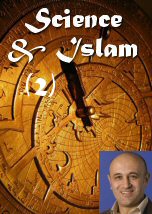
Al-Khalili travels to northern Syria to discover how, a thousand years ago, the great astronomer and mathematician Al-Biruni estimated the size of the earth to within a few hundred miles of the correct figure. He discovers how medieval Islamic scholars helped turn the magical and occult practice of alchemy into modern chemistry. In Cairo, he tells the story of the extraordinary physicist Ibn al-Haytham, who helped establish the modern science of optics and proved one of the most fundamental principles in physics - that light travels in straight lines. Prof Al-Khalili argues that these scholars are among the first people to insist that all scientific theories are backed up by careful experimental observation, bringing a rigour to science that didn't really exist before.
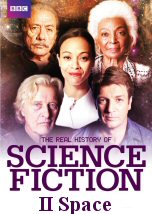
What if we could explore the vastness of Space? Science fiction has always fed upon our need to explore – to wonder what is out there. Space journeys from Jules Verne’s earliest ideas about attempts to leave our planet, to the Star Wars far away galaxy through to Nichelle Nichols revealing how her groundbreaking role as Lt. Uhura in Star Trek led to her participation in the recruitment of NASA’s astronauts. It explores the deep sea inspiration for Avatar, finds out why Ursula K Le Guin wrote The Left Hand of Darkness and discovers how Stanley Kubrick was able to make 2001: A Space Odyssey seem so believable. In addition, the program looks at the way Dune and The Mars Trilogy embraced the challenge of world building and discusses the appeal of the beaten up ‘dirty space’ of Dark Star and Firefly. From the horrifying scenes of Alien, to the epic spectacle of Star Wars, this is a journey to the stars and the alien encounters that await us there.
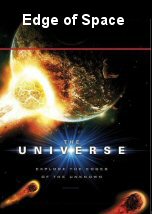
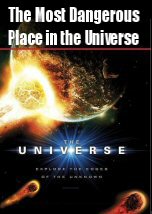
Take a tour of the cosmic hot zones--black holes, galaxy mergers, gamma ray bursts and magnetars. Super black holes can literally lasso Earth out of the solar system. A clash between two galaxies can result in a ritual called galactic cannibalism. Magnetars are a cosmic magnetic force so strong it could wipe out data on every credit card.







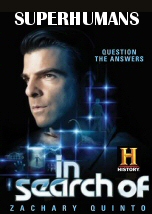







In this episode, Zach wants to understand how a person can be superhuman. He meets a man who bent the metal frame of a car door with his bare hands in a moment of crisis; a man who can feel no pain; and a Shaolin warrior monk, who teaches him how to harness superhuman powers of his own.