





Last Watched

"REM"  Sort by

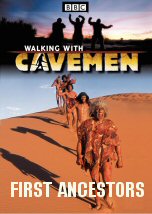
Walking with Cavemen: First Ancestors

   2003    History
It's 3.5 million years ago and in East Africa a remarkable species of ape roams the land. Australopithecus afarensis has taken the first tentative steps towards humanity by standing and walking on two legs. The rift valley was forming, and the rain forests dying as Africa dried out - turning the landscape into a mosaic of scattered trees and grass. In this new environment afarensis found it more efficient to move about on two legs rather than four.
Series: Walking with Cavemen
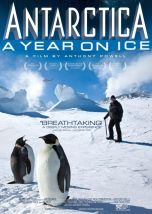
Antarctica: A Year on Ice

   2013    Nature
A visually stunning journey to the end of the world with the hardy and devoted people who live there year-round. The research stations scattered throughout the continent host a close-knit international population of scientists, technicians and craftsmen. Isolated from the rest of the world, enduring months of unending darkness followed by periods when the sun never sets, Antarctic residents experience firsthand the beauty and brutality of the most severe environment on Earth. Capturing epic battles against hellacious storms, quiet reveries of nature's grandeur, and everyday moments of work and laughter, this unique documentary shows a steadfast community thriving in a land few humans have experienced. Using specially modified cameras and spectacular time-lapse photography, filmmaker Anthony Powell captures the splendor of the region like no film before. ANTARCTICA: A YEAR ON ICE gives testament to the planet's natural wonders, humanity's thirst for adventure, and the emotional extremes that accompany a year within the last pristine wilderness on the planet.

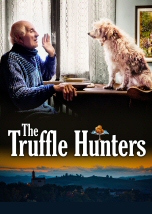
The Truffle Hunters

   2021    Culture
(Click CC for Subtitles) Deep in the forests of Northern Italy resides the prized white Alba truffle. Desired by the wealthiest patrons in the world, it remains a pungent but rarified mystery. It cannot be cultivated or found: the only souls on Earth who know how to dig it up are a tiny circle of canines and their silver-haired human companions-Italian elders with walking sticks and devilish senses of humor-who only scour for the truffle at night so as not to leave any clues for others. Still, this small enclave of hunters induces a feverish buying market that spans the globe.
With unprecedented access to the elusive truffle hunters, filmmakers Michael Dweck and Gregory Kershaw follow this maddening cycle from the forest floor to the pristine restaurant plate. With a wily and absurdist flare, The Truffle Hunters captures a precarious ritual constantly threatened by greed and outside influences but still somehow protected by those clever, tight-lipped few who know how to unearth the magic within nature.

Everything

       Science
This series deals with two of the deepest questions there are - what is everything, and what is nothing? In two epic, surreal and mind-expanding films, Professor Jim Al-Khalili searches for an answer to these questions as he explores the true size and shape of the universe and delves into the amazing science behind apparent nothingness.
he first part, Everything, sees Professor Al-Khalili set out to discover what the universe might actually look like. The journey takes him from the distant past to the boundaries of the known universe. Along the way he charts the remarkable stories of the men and women who discovered the truth about the cosmos and investigates how our understanding of space has been shaped by both mathematics and astronomy.
Series: Everything and Nothing

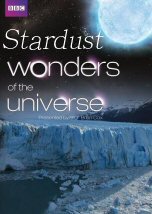
Stardust

   2011    Science
In the second stop in his exploration of the wonders of the universe, Professor Brian Cox goes in search of humanity's very essence to answer the biggest questions of all: what are we? And where do we come from? This film is the story of matter - the stuff of which we are all made. Brian reveals how our origins are entwined with the life cycle of the stars. But he begins his journey here on Earth. In Nepal, he observes a Hindu cremation. Hindu philosophy is based on an eternal cycle of creation and destruction, where the physical elements of the body are recycled on to the next stage. Brian draws a parallel with the life cycle of the stars that led to our own creation. Next, he explains how the Earth's resources have been recycled through the ages. How every atom that makes up everything we see, was at some time a part of something else. Our world is made up of just 92 elements, and these same 92 elements are found throughout the entire universe. We are part of the universe because we are made of the same stuff as the universe.
Series: Wonders of the Universe

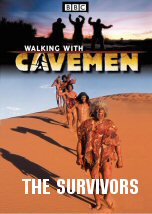
Walking with Cavemen: The Survivors

   2003    History
Nearly half a million years ago, the most advanced human yet roams Europe. Strong and powerful, Homo heidelbergensis are fierce hunters, use sophisticated tools and live in close-knit family groups. Over 200,000 years they become split into two populations by extremes of weather and environment and evolve separately into two very different species. In the North are the Neanderthals, whose physical power and resilience is the key to surviving in ice age Northern Europe. About 140,000 years ago, Africa is in the grip of a devastating drought, and something remarkable has happened to the descendants of heidelbergensis who live there. The combination of environment and chance has bred in them a unique ability that will change the course of human history. It will be this small band of southern survivors, perhaps numbering just a few tens of thousands, who will come to dominate the world and be known as Homo sapiens.
Series: Walking with Cavemen