













Last Watched

"Pet"  Sort by

Return to Jurassic Park

   2011    Art
It walks through the making of the film, the hurricane during shooting, and how it helped change the world of special effects. All interviews for these retrospective documentaries come with comments from Spielberg, Johnston, Neill, Dern, Goldblum, the effects crews, the child actors, and Peter Stormare. This is a extra for the Jurassic Park Trilogy and is broken into three parts: Dawn of a New Era (25 min) Making History (20 min), and the Next Step in Evolution (15 min)
Jaws 50: The Definitive Inside Story

   2025    Art
A thrilling deep dive into the creative storm that brought a cultural phenomenon to life. This anniversary documentary explores the wild and often unpredictable journey behind Spielberg’s 1975 masterpiece — from Peter Benchley’s novel to the birth of the modern blockbuster. Featuring rare outtakes, unearthed behind-the-scenes footage, and candid interviews, it reveals how a troubled production, a malfunctioning mechanical shark, and a visionary young director came together to ignite a worldwide obsession with the ocean’s most misunderstood predator. Both a tribute and a revelation, it offers the most definitive look yet at how cinematic history was made.

Apocalypse in the Tropics

   2024    Culture
Click CC for subtitles. Oscar-nominated director Petra Costa presents a gripping investigation into the rise of evangelical power in Brazil, revealing how religious leaders have gained unprecedented political influence. With extraordinary access to President Lula, former President Bolsonaro, and Silas Malafaia, the country’s most powerful televangelist, the film uncovers a dramatic power struggle where apocalyptic faith becomes a political force. What emerges is a haunting portrait of a nation at a crossroads, where spiritual warfare is not just metaphor — it’s policy.

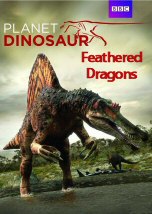
Feathered Dragons

   2011    Culture
In a late Jurassic forest in what is now China, an Epidexipteryx escapes from a juvenile Sinraptor by climbing a tree. It finds a beetle grub in the tree bark, being shown to use its elongated fingers in a similar way to a modern day aye-aye. However, its prey is stolen by another, larger Epidexipteryx, and after a brief bout of posturing, the smaller individual goes to find more food. It drops a second grub to the forest floor, where the other Epidexipteryx retrieves it, only to be killed by the juvenile Sinraptor. The episode then cuts to a desert in late Cretaceous Mongolia, where a Saurornithoides is shown brooding a nest of eggs. When it leaves the nest, an Oviraptor raids it, fleeing when the troodontid returns. The Saurornithoides is suddenly attacked and eaten by a Gigantoraptor, which then heads to compete in a breeding ritual for mates. The males use their feathers for display, a brief fight between two erupting at one point, allowing the females to choose the best suitor. The episode finally cuts to an early Cretaceous forest in China, where a Xianglong is being hunted by a Microraptor, which uses its feathers to pursue the gliding lizard in the air. A Sinornithosaurus attacks it, and after a brief chase the Microraptor manages a lucky escape. The Sinornithosaurus, alongside two other members of its species is then shown hunting a Jeholosaurus and its three young. The group brings down the parent, the narrator explaining that their possibly venomous bite allowed them to tackle animals much larger than themselves. A montage is then shown of the feathered dinosaurs featured in the programme, with the narrator saying that Microraptor not only hints at how flight might have developed, but also that dinosaurs still live amongst us today, as birds.
Series: Planet Dinosaur

Maracana

   2014    Culture
It tells the story of FIFA World Cup of 1950, highlighting (but also showing other nations) the path of the two teams who played the final match: Uruguay and Brazil. The high quality of the footage is amazing, the text is smart and humorous, the music has been very well chosen in order to represent both the emotions involved in each moment and the contrast between the calmness of Uruguayan preparation and the crowded days of Brazilian team." The whole story shows not only one side. While Uruguayan team acquired confidence after an initial mistrust, Brazil was by far the best team in the competition but was heavily influenced by the environment in Brazilian society, the influence of politics and the pressure of the fans. While Uruguay overcame heroically all the constraints and, led by Obdulio Varela, won a title that few people believed, Brazilians got shocked because they considered themselves champions even before the final match, and their players became stigmatized until nowadays, not being celebrated as the fantastic team they were.

Man-Eating Tigers of the Sundarbans

   2009    Nature
The Sundarbans mangrove forest, in Bangladesh near the Indian border, is a tidal jungle where Ganges and Brahmaputra enter the Indian Ocean. Its has some 400 Bengal tigers - the largest population in the world, and the only to be hardly scared of men. The downside is tigers kill up the 50 Bangladeshis a year, even from neighbouring villages, so keeping them inside the reserve is key to long-term survival.
A recent project tries to train local mongrels, not pets but fiercely self-reliant dogs, to spot and even scare off tigers from villages. An individual tiger can turn into a man-eater in order to survive - this process may occur due to an injury or old age (and so cannot hunt agile prey) or even accidentally tasting human flesh.
Series: Natural World
High Score

High Score

2020  Technology
Mammals

Mammals

2024  Nature
Space Race

Space Race

2005  Technology
Leaving Neverland

Leaving Neverland

2019  Culture
How to Change Your Mind

How to Change Your Mind

2022  Medicine
How Earth Made Us

How Earth Made Us

2010  Science