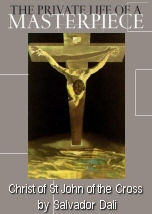
Salvador Dali's strange crucifixion is often called the greatest religious painting of the 20th century. Yet its artist was a notorious blasphemer some of whose work had outraged the Catholic Church. The Christ of St John of the Cross by Salvador Dali is the first of two extraordinary crucifixions painted by Dali in the early 1950s. The painting is based on a 'cosmic dream' Dali is said to have had, in which the nucleus of the atom was a figure of Christ himself. The painting offers a surrealist view of the crucifixion of Christ, and is based on a drawing by the 16th century Spanish friar Saint John of the Cross. But Dali's vision was somewhat unique, using an unusual artistic perspective in which Christ is seen from above. His Christ of St. John of The Cross was inspired by a weird mix of Spanish mysticism and nuclear physics, with his Christ being modelled by a Hollywood stuntman. It's also a masterpiece of painting technique.
Professor Marcus du Sautoy explores why we are driven to measure and quantify the world around us and why we have reduced the universe to just a handful of fundamental units of measurement. He tells the story of the metre and the second - how an astonishing journey across revolutionary France gave birth to the metre, and how scientists today are continuing to redefine the measurement of time and length, with extraordinary results.
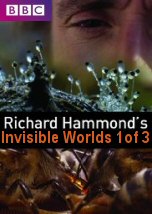
Richard Hammond explores the extraordinary wonders of the world of detail hidden in the blink of an eye. It takes our brain around a hundred and fifty milliseconds to process what we see. We're not aware of this time lag going on, but in those few milliseconds, there are extraordinary things happening that completely pass us by. But what if we could break through this speed limit? Bend and stretch time in ways never thought possible. What new marvels would we see? Now, using the latest high-speed cameras, Richard takes us on a journey beyond our eye's limits, letting us see secrets hidden in every element of our planet. A world where thin air can shatter rock. And water can tear through metal. A world where the fastest thing on earth lies right beneath our feet. And where a spectacular celestial display is finally captured, even though many have claimed it doesn't even exist.
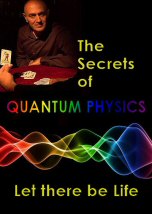
Professor of physics Jim Al-Khalili investigates the most accurate and yet perplexing scientific theory ever - quantum physics, the perplexing theory of sub-atomic particles. Turning his attention to the world of nature, can quantum mechanics explain the greatest mysteries in biology? The European robin navigates using one of the most bizarre effects in physics - quantum entanglement, a process which seems to defy common sense. Jim finds that even the most personal of human experiences - our sense of smell - is touched by ethereal quantum vibrations. According to new experiments it seems that our quantum noses are listening to smells. Jim discovers that the most famous law of quantum physics - the uncertainty principle - is obeyed by plants and trees as they capture sunlight during the vital process of photosynthesis. Jim wonders if the strange laws of the sub-atomic world, which allow objects to tunnel through impassable barriers in defiance of common sense, could effect the mechanism by which living species evolve?
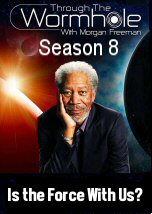
Morgan Freeman continues to challenge audiences to think about daring topics in the last season of Through the Wormhole. In the part 1, new research is beginning to reveal a hidden force in the universe - one that penetrates space with trillions of invisible connections, instantly linking every place in our world and joining our future with our past. Is the Force with us?
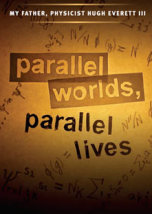
Mark Oliver Everett, singer of the band EELS, on his quest to get to know his later father, quantum physicist Hugh Everett III, who invented the Many Worlds theory. The film follows Mark on his journey across America, where he meets old friends and colleagues of his father. Hugh died of a heart attack in his home in 1982, where his body was found by 19-year-old Mark. Even though they had lived in the same house, the two of them were alienated. Only by entering the paradoxical world of quantum mechanics can Mark hope to understand why he was such a stranger to his own father.








The painting offers a surrealist view of the crucifixion of Christ, and is based on a drawing by the 16th century Spanish friar Saint John of the Cross. But Dali's vision was somewhat unique, using an unusual artistic perspective in which Christ is seen from above. His Christ of St. John of The Cross was inspired by a weird mix of Spanish mysticism and nuclear physics, with his Christ being modelled by a Hollywood stuntman. It's also a masterpiece of painting technique.