
Last Watched

"Star"  Sort by

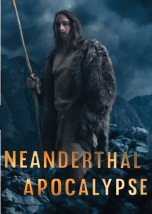
Neanderthal Apocalypse

   2015    History
40,000 years ago the steppes of Eurasia were home to our closest human relative, the Neanderthals. Recent genetic and archaeological discoveries have proven that they were not the dim-witted cave dwellers we long thought they were. In fact, they were cultured, technologically savvy and more like us than we ever imagined! So why did they disappear? We accompany scientists on an exciting search for an answer to this question and come to a startling conclusion... A climate change due to a cataclysmic event.
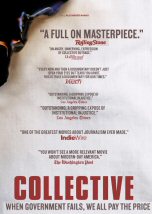
Collective

   2019    Culture
In 2015, a fire at Bucharest's Colectiv club leaves 27 dead and 180 injured. Soon, more burn victims begin dying in hospitals from wounds that were not life-threatening. Then a doctor blows the whistle to a team of investigative journalists. One revelation leads to another as the journalists start to uncover vast health care fraud. When a new health minister is appointed, he offers unprecedented access to his efforts to reform the corrupt system but also to the obstacles he faces.
Following journalists, whistle-blowers, burn victims, and government officials, Collective is an uncompromising look at the impact of investigative journalism at its best. Nominated for Best International Film & Documentary in 2020 Academy Awards. (Click CC for subtitles)

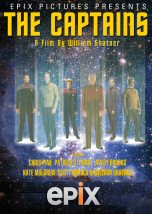
The Captains

   2011    Art
Follow actor William Shatner through interviews with the other actors who have portrayed starship Enterprise captains in five other incarnations of the Star Trek franchise. Shatner's subjects discuss their lives and careers before, during and after their tenure with Star Trek. With the use of conversations and archival footage, they explore the pressures, stigmas and sacrifices that accompanied their roles and their larger careers. During the process of the film and with help from the other Captains, Sir Patrick Stewart, Avery Brooks, Kate Mulgrew, Scott Bakula and Chris Pine, Shatner overcomes his disdain and learns to embrace his best known character, Captain James T. Kirk.

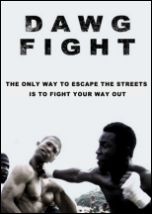
Dawg Fight

   2015    Culture
West Perrine, Florida is a suburban ghetto in Southwest Miami. Over 63% of its residents are African-American and the unemployment rate is three times higher than the national rate. Violent crimes occur on a daily basis in this neighborhood of less than two square miles, where much of its adult male population winds up dead or in prison before their 30th birthday. But there is hope in the hood... Dhafir 'Dada 5000' Harris has built a ring in his momma's backyard and transforms himself into the Don King of illegal backyard fights in Perrine". Dada 5000 (6'3", 270lbs., bench presses 670lbs) grew up blocks away from Perrine's MMA sensation, Kimbo Slice, and spent a year traveling the world as Kimbo's bodyguard. When Kimbo's manager buried video of Dada's spectacular backyard fight debut, for fear of Dada overshadowing his rising superstar, Dada leaves Kimbo's crew and makes a life-changing decisión. In his ring there is no doctors, no ambulance. Just two men in a 12'x12' ring battling in a savage bare-knuckle fight to the finish. Dada's gladiators give everything in the the backyard to feed their families and to try to fight their way out of hood. Meanwhile Dada returns to the ring, is discovered by professional scouts and gets his shot at turning pro in the octagon at the Hard Rock Hotel and Casino.

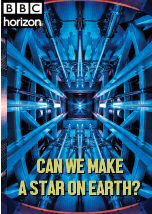
Can We Make a Star on Earth

   2009    Technology
Could nuclear fusion hold the answers to the energy crisis? It is the process that has forged all matter in the universe. It lights the stars and it is what transformed the lighter atoms that formed in the Big Bang into heavier atoms. In Can We Make a Star on Earth?, Brian Cox peers beyond the glare of our Sun to reveal the hidden forces that provide its power. He discovers how this fusion energy has kept our closest star burning for five billion years. Brian believes humanity must build a star on Earth to ensure survival. Will scientists be able to harness fusion power and achieve abundant, cheap, clean energy?

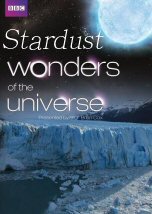
Stardust

   2011    Science
In the second stop in his exploration of the wonders of the universe, Professor Brian Cox goes in search of humanity's very essence to answer the biggest questions of all: what are we? And where do we come from? This film is the story of matter - the stuff of which we are all made. Brian reveals how our origins are entwined with the life cycle of the stars. But he begins his journey here on Earth. In Nepal, he observes a Hindu cremation. Hindu philosophy is based on an eternal cycle of creation and destruction, where the physical elements of the body are recycled on to the next stage. Brian draws a parallel with the life cycle of the stars that led to our own creation. Next, he explains how the Earth's resources have been recycled through the ages. How every atom that makes up everything we see, was at some time a part of something else. Our world is made up of just 92 elements, and these same 92 elements are found throughout the entire universe. We are part of the universe because we are made of the same stuff as the universe.
Series: Wonders of the Universe
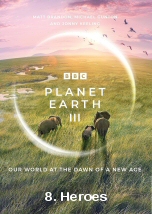
Planet Earth III

Planet Earth III

2023  Nature
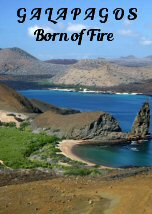
Galapagos

Galapagos

2006  Nature
The Hunt

The Hunt

2015  Nature
Cooked

Cooked

2016  Culture
Our Planet

Our Planet

2019  Nature
Planet Earth

Planet Earth

2007  Nature
Modern Masters

Modern Masters

2024  Art
Long Way Up

Long Way Up

2020  Culture