This documentary series explores the Three Mile Island Accident that occurred in Pennsylvania on March 28, 1979, suffering a partial meltdown of the reactor core on the same day. It also reveals how this accident unfolded in real time, its impact on the community and the personal account of the chief engineer and whistleblower, Richard Parks, who had the courage to speak out and avert a catastrophe for the East Coast. This first episode explains how in 1979, a breakdown at the power plant causes confusion and the release of radiation. Fear spreads, as do suspicions that the authorities are hiding the truth.
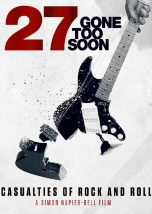
Brian Jones, Jimi Hendrix, Janis Joplin and Jim Morrison all died at the age of 27 between 1969 and 1971. At the time, the coincidence gave rise to some comment, but it was not until the death of Kurt Cobain, about two and a half decades later, that the idea of a '27 Club' began to catch on in public perception, reignited with the death of Amy Winehouse in 2011. Through interviews with people who knew them, such as music stars, critics, medical experts and unseen footage, the lives, music, and artistry of those who died at 27 are investigated with a bid to find answers.
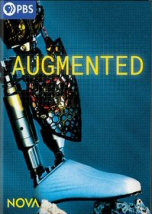
Follow the dramatic personal journey of Hugh Herr, a biophysicist working to create brain-controlled robotic limbs. At age 17, Herr’s legs were amputated after a climbing accident. Frustrated by the crude prosthetic limbs he was given, Herr set out to remedy their design, leading him to a career as an inventor of innovative prosthetic devices. Now, Herr is teaming up with an injured climber and a surgeon at a leading Boston hospital to test a new approach to surgical amputation that allows prosthetic limbs to move and feel like the real thing. Herr’s journey is a powerful tale of innovation and the inspiring story of a personal tragedy transformed into a life-long quest to help others.
This episode explores the nature of the greenhouse effect (discovered by Joseph Fourier and Svante Arrhenius), and the evidence demonstrating the existence of global warming from humanity's influence. Tyson begins by describing the long-term history of the planet Venus; based on readings from the Venera series of probes to the planet, the planet had once had an ocean and an atmosphere, but due to the release of carbon dioxide from volcanic eruptions, the runaway greenhouse effect on Venus caused the surface temperatures to increase and boiled away the oceans. Tyson then notes the delicate nature of the amount of carbon dioxide in the atmosphere can influence Earth's climate due to the greenhouse effect, and that levels of carbon dioxide have been increasing since the start of the 20th century. Evidence has shown this to be from mankind's consumption of oil, coal, and gas instead of from volcanic eruptions due to the isotopic signature of the carbon dioxide. The increase in carbon dioxide has led to an increase in temperatures, in turn leading to positive feedback loops of the melting polar ice caps and dethawing of the permafrost to increase carbon dioxide levels. Tyson then notes that humans have discovered means of harvesting solar power, such as Augustin Mouchot's solar-driven motor in the 19th century, and Frank Shuman's solar-based steam generator in the 1910's. Tyson points out that in both cases, the economics and ease of using cheap coal and oil caused these inventions to be overlooked at the time. Today, solar and wind-power systems would be able to collect enough solar energy from the sun easily. Tyson then compares the motivation for switching to these cleaner forms of energy to the efforts of the Space race and emphasizes that it is not too late for humanity to correct its course.
Scientists and engineers fight to save Notre Dame Cathedral after the 2019 fire. When the roof of Notre Dame Cathedral erupted in flames in April of 2019, firefighters battled for nine gruelling hours to save the historic landmark. Still, Paris came alarmingly close to losing more than 800 years of history. Now engineers are in a different race against time: to rebuild the roof and secure the medieval structure of Notre Dame. Underneath the charred scaffolding and vaulted ceilings of the cathedral, scientists study the components of Notre Dame’s iconic structure to puzzle out how best to repair it.
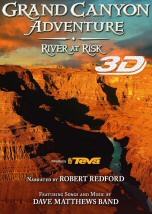
Anthropologist Wade Davis and river advocate Robert F. Kennedy Jr journey down the Colorado River on a two-week expedition to highlight water conservation issues. Traveling by rafts, kayaks and wooden dories, they are accompanied by their daughters and guided by Shana Watahomigie, a Native American National Park ranger. Filmed with a 350-pound 3D camera, it involved the cooperation of three Indian nations, the National Park Service, film sponsor Teva’s team of kayakers and more than a dozen experienced river guides. The film explores America's drought and freshwater shortages, the impact on the river of damming, and human water supply needs. Grand Canyon Adventure: River at Risk was directed by Greg MacGillivray and narrated by Robert Redford.









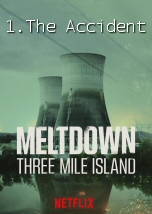





This first episode explains how in 1979, a breakdown at the power plant causes confusion and the release of radiation. Fear spreads, as do suspicions that the authorities are hiding the truth.