



Last Watched

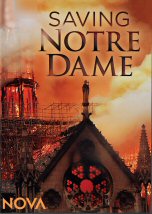
Saving Notre Dame

   2021    Art
Scientists and engineers fight to save Notre Dame Cathedral after the 2019 fire. When the roof of Notre Dame Cathedral erupted in flames in April of 2019, firefighters battled for nine gruelling hours to save the historic landmark. Still, Paris came alarmingly close to losing more than 800 years of history. Now engineers are in a different race against time: to rebuild the roof and secure the medieval structure of Notre Dame. Underneath the charred scaffolding and vaulted ceilings of the cathedral, scientists study the components of Notre Dame’s iconic structure to puzzle out how best to repair it.
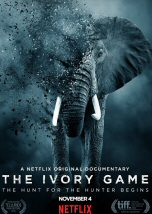
The Ivory Game

   2016    Nature
The film exposes the dark world of ivory trafficking. Ivory is a prized status symbol for middle class Chinese, and poachers in pursuit of elephants in Africa are causing a great damage. Award-winning director Richard Ladkani and Kief Davidson filmed undercover for 16 months infiltrating and documenting the deep-rooted corruption at the heart of the global ivory trafficking crisis.

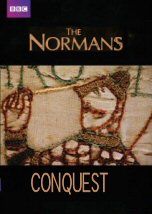
The Normans: Conquest

   2010    History
Professor Robert Bartlett explores the impact of the Norman conquest of Britain and Ireland. Bartlett shows how William the Conqueror imposed a new aristocracy, savagely cut down opposition and built scores of castles and cathedrals to intimidate and control. He also commissioned the Domesday Book, the greatest national survey of England that had ever been attempted. England adapted to its new masters and both the language and culture were transformed as the Normans and the English intermarried. Bartlett shows how the political and cultural landscape of Scotland, Wales and Ireland were also forged by the Normans and argues that the Normans created the blueprint for colonialism in the modern world.
Series: The Normans

The World Set Free

   2014    Nature
This episode explores the nature of the greenhouse effect (discovered by Joseph Fourier and Svante Arrhenius), and the evidence demonstrating the existence of global warming from humanity's influence. Tyson begins by describing the long-term history of the planet Venus; based on readings from the Venera series of probes to the planet, the planet had once had an ocean and an atmosphere, but due to the release of carbon dioxide from volcanic eruptions, the runaway greenhouse effect on Venus caused the surface temperatures to increase and boiled away the oceans. Tyson then notes the delicate nature of the amount of carbon dioxide in the atmosphere can influence Earth's climate due to the greenhouse effect, and that levels of carbon dioxide have been increasing since the start of the 20th century. Evidence has shown this to be from mankind's consumption of oil, coal, and gas instead of from volcanic eruptions due to the isotopic signature of the carbon dioxide. The increase in carbon dioxide has led to an increase in temperatures, in turn leading to positive feedback loops of the melting polar ice caps and dethawing of the permafrost to increase carbon dioxide levels. Tyson then notes that humans have discovered means of harvesting solar power, such as Augustin Mouchot's solar-driven motor in the 19th century, and Frank Shuman's solar-based steam generator in the 1910's. Tyson points out that in both cases, the economics and ease of using cheap coal and oil caused these inventions to be overlooked at the time. Today, solar and wind-power systems would be able to collect enough solar energy from the sun easily. Tyson then compares the motivation for switching to these cleaner forms of energy to the efforts of the Space race and emphasizes that it is not too late for humanity to correct its course.
Series: Cosmos: A Spacetime Odyssey

Unity

   2015    Culture
This is a film for all who hunger for a deeper meaning to existence, and a more unified way of living with one another, with all expressions of life. Just imagine a world that didn't rely on opposites (us/them, rich/poor, black/white, gay/straight, human/animal, etc.), but rather a world that perceived only wholeness. UNITY presents the notion of a world in which we are all equally valued, even though we are not the same: Human, Animal, Tree.

The Story of China Ancestors

   2016    History
Michael Wood embarks on a great historical adventure, exploring the stories, people and landscapes that have helped create China's distinctive character and genius over four thousand years. Is the history of the world's newest superpower, from its ancient past to the present day.
Starting in Wuxi, Michael joins the Qin family reunion, when 300 relatives gather to worship their ancestors on Tomb Sweeping Day. 'Like the nation, the family has been through so much,' one says. 'Now everyone wants to know - what are our roots?'
Looking for the origins of the Chinese state, he visits the excavations at Erlitou and sees an exquisite turquoise dragon sceptre from 2000 BC. China's first writing is found on 'oracle bones' dug up from the Shang royal tombs at Anyang in the 1920s. At the Beijing Planetarium, Michael travels back in time as astronomers plot the planetary conjunction that the ancients believed foretold the overthrow of the Shang Dynasty. Next, the Age of Philosophers and Confucius, whose book Analects has had greater influence worldwide than even the Bible, according to some. In Xi'an, we hear how the First Emperor united China and created the authoritarian Qin state that gave us the word China. Finally, Michael returns to the temple fair in Henan for a dramatic night ceremony to give thanks to the ancestors. China, Michael concludes, is rising again, not just because of its economic strength, but because of the incredible solidarity of the Han Chinese view of their own civilisation, their sense of family and, of course, the presence of the ancestors.
Series: The Story of China