Why are ultra-processed foods so irresistible, and how they have come to dominate food culture? Dr Chris van Tulleken features interviews with former food industry insiders who talk openly about the way in which popular foods have been designed to be irresistible. Food companies go to extraordinary lengths to ensure their products connect with consumers - from using brain scans to assess the deliciousness of ice cream to carefully engineering the sound of a crunch. Ultra-processed foods are hyper-delicious and super-convenient, have long shelf lives and are extremely cheap. But a growing body of evidence is linking these products to our declining health.
Horizon explores the strange and wonderful world of illusions – and reveals the tricks they play on our senses and why they fool us. We show how easy it is to trick your sense of taste by changing the colours of food and drink, explain how what you see can change what you hear, and see just how unreliable our sense of colour can be. But all this trickery has a serious purpose. It’s helping scientists to create a new understanding of how our senses work – not as individual senses, but connected together. It holds the intriguing possibility that one sense could be mapped into another.
The series Secret History of Comics takes a deeper look into the stories, people and events that have transformed the world of comic books. In the first episode, we will explore how Jack Kirby and Stan Lee invented Marvel's most beloved characters. Stan Lee and Jack Kirby are the Lennon and McCartney of Marvel Comics, and just like The Beatles, eons from now, people will still be talking about these characters and the people who created them, akin on the same level.
The series takes place after the extinction of the dinosaurs 65 million years ago and recreates animals of the Cenozoic with computer-generated imagery and animatronics. The first episode starts 49 million years ago, when Earth has fully recovered from the dinosaur extinction and is covered in a mysterious forest. This is a time that the world has almost forgotten - Germany was a hot sweaty jungle, birds ruled the earth and preyed on miniature horses and whales walked on land.
This feature documentary tells the story of Mohammed Emwazi's journey from being an ordinary London boy to becoming terrorist 'Jihadi John', and the intelligence operatives' attempts to catch him by the US and British military and intelligence services. It explores the twisted worldview espoused by ISIS - the richest and most notorious Islamist terrorist organization in history - and its propaganda machine which was operated by "Jihadi millennials" who turned social media sites such as Twitter and YouTube into recruitment platforms. Told through extraordinary first-hand accounts of key counter-terrorism and intelligence officials who identified "Jihadi John" and the voices of Muslim community leaders who worked with parents whose radicalized children fled places such as the US and Britain to join ISIS on the battlefields of Syria and Iraq.
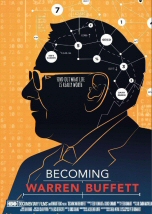
Warren Buffett is truly a one-of-a-kind billionaire. The legendary investor still lives in his modest home in Omaha. At 90 years old, he drives to the office every morning to manage Berkshire Hathaway, the fifth largest public company in the world. But more surprising than his humble lifestyle is his moral core. The same principles of decency and integrity that helped him pile up a fortune led him to give it all away in the largest philanthropic donation in history. 'Becoming Warren Buffett' chronicles the evolution of an ambitious, numbers-obsessed boy from Nebraska who became one of the most richest and respected men in the world, and the heroes who helped guide him along the way. By allowing access to his life and never-before-released home videos, Buffett offers a glimpse into his unique mind to help us understand what is truly important when money no longer has meaning.


























Food companies go to extraordinary lengths to ensure their products connect with consumers - from using brain scans to assess the deliciousness of ice cream to carefully engineering the sound of a crunch. Ultra-processed foods are hyper-delicious and super-convenient, have long shelf lives and are extremely cheap. But a growing body of evidence is linking these products to our declining health.