
Last Watched

"Pet"  Sort by

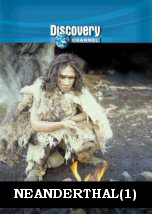
Neanderthal 1

       History
Long ago, two species of human beings coexisted on Earth until competition drove one of them to extinction. This program, set in the southwest of France 35,000 years ago, reconstructs the life in the Neanderthal world at the time Cro-Magnons first entered the scene. All aspects of Neanderthal clan life are examined, including tool- and weapon-making, hunting and gathering, health and healing, childbirth, rituals, and making fire. Footage of skeletal remains and the scholarly research of eminent paleontologist Chris Stringer and Oxford University's Paul Pettitt support the documentary.
Series: Neanderthal
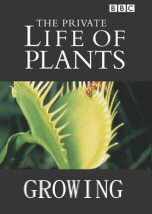
Growing

   1994    Nature
The second episode is about how plants gain their sustenance. Sunlight is one of the essential requirements if a seed is to germinate, and Attenborough highlights the cheese plant as an example whose young shoots head for the nearest tree trunk and then climb to the top of the forest canopy, developing its leaves en route. Using sunshine, air, water and a few minerals, the leaves are, in effect, the "factories" that produce food. However, some, such as the begonia, can thrive without much light. To gain moisture, plants typically use their roots to probe underground. Trees pump water up pipes that run inside their trunks, and Attenborough observes that a sycamore can do this at the rate of 450 litres an hour — in total silence. Too much rainfall can clog up a leaf's pores, and many have specially designed 'gutters' to cope with it. However, their biggest threat is from animals, and some require extreme methods of defence, such as spines, camouflage, or poison. Some can move quickly to deter predators: the mimosa can fold its leaves instantly when touched, and the Venus flytrap eats insects by closing its leaves around its prey when triggered. Another carnivorous plant is the trumpet pitcher that snares insects when they fall into its tubular leaves. Attenborough visits Borneo to see the largest pitcher of them all, Nepenthes rajah, whose traps contain up to two litres of water and have been known to kill small rodents.
Series: The Private Life of Plants

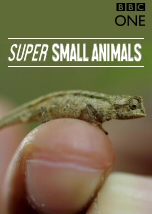
Super Small Animals

   2022    Nature
From a primate that’s no bigger than a mouse, to a chameleon that can fit on your fingertip, the natural world is full of fantastically small animals. Biologist Patrick Aryee explores the fascinating secrets behind these miniature marvels and shows that they’re not the underdogs you might think they are. Super Small Animals follows him as he meets the leading experts on these pint sized superstars, and finds out what makes them some of the most successful on the planet.
First up, he reveals the huge benefits that being small can bring. There’s the little lemur whose diminutive frame helps it to exploit a unique gap in the eco-system, the tiny hummingbird that uses its size to out-maneuver the competition, and the world’s smallest seahorse that never has to leave home. He also explores why small animals are proportionally the strongest in the world, and introduces a peanut-sized beetle that can pull over a thousand times its own weight.
Next he explores the challenges that animals face when they shrink in size, and the ingenious ways they overcome them. We find out how the smallest armadillo in the world manages to control its temperature in the searing desert sun, and the how the world’s smallest fish can survive in nothing more than a puddle, because it never really grows up. Patrick meets a secretive hippo that lives in the dense jungle, and looks like it’s been shrunk in the wash, and some of the world’s smallest snakes that give birth to enormous babies. He also meets a scientist that studies how really tiny spiders have a surprising trick that enables them to travel an incredible 40 miles per day, using almost no energy.
Then there are the animals that refuse to be pigeon holed as small, and manage to punch way above their weight. He puts some astonishing invertebrates to the test, to see how they work together to become much bigger than the sum of their parts and meets a pint-sized predator that takes on some of the largest and most dangerous creatures on the planet, getting hands on to discover how its build helps it to be brave. Finally he uncovers the incredible lengths that deep sea anglerfish go to in order to be big and small at the same time, and has an endearing encounter with a tiny carnivore that manages to be small in just one direction.
Whether their size helps them to hunt, hide or survive, all these remarkable animals prove that good things really do come in small packages.

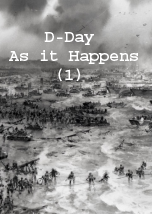
D-Day: As it Happens (1)

   2013    History
D-Day: As It Happens D-Day: As It Happens tells the story of this pivotal event in 20th-century history in a completely new way. Using newly-analysed archive footage, viewers can track the progress of seven people who were there on the day, each of them a real participant in the 1944 invasion. And they can do so moment by moment in real time, encountering the twists and turns of the fighting at the same time as the D-Day seven did, and learning their fate as the action unfolds in parallel with the present, Narrated by Peter Snow, with Channel 4 presenter and former marine Arthur Williams, and experts including former British Army officer Colonel Tim Collins and front-line journalist Lorna Ward. The first programme tells the back stories of the real people that the event is following in real time and sets out their missions over the following 24 hours. The D-Day seven include a paratrooper, a midget submariner, a nurse and a military cameraman.
Series: D-Day

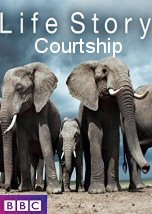
Courtship

   2014    Nature
Competition to win a partner …has created some of the most extraordinary beauty and life-threatening violence anywhere in nature. Dazzling colours, elaborate dances and powerful weapons have all evolved to attract and defend a mate. The stakes could not be higher: without a mate, the journey of life ends here... sometimes literally.
Series: Life Story

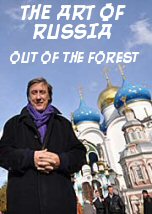
The Art of Russia: Out of the Forest

   2009    Art
Art critic Andrew Graham-Dixon tells the incredible story of Russian art, its mystery and magnificence and until now a story untold. He explores the origins of the Russian icon from its roots in Byzantium and the first great Russian icon, Our Lady of Vladimir to the masterpieces of the country's most famous icon painter, Andrei Rublev. Both epic and awe-inspiring, and producing brilliant art", nevertheless medieval Russia could be a terrifying place. Criss-crossing the epic landscape, Andrew visits the monastery founded by Ivan the Terrible, where his favourite forms of torture found inspiration in religious art. One man would shine a light into Russia's 'dark' ages - Peter the Great who, surprisingly, took as his inspiration Deptford in South London.
Series: The Art of Russia
Life

Life

2009  Nature
Art of Spain

Art of Spain

2008  Art
Conquistadors

Conquistadors

2002  History
Planet Earth III

Planet Earth III

2023  Nature
Reel Rock

Reel Rock

2014  Culture
Natural World

Natural World

2017  Nature
Prehistoric America

Prehistoric America

2003  Nature