





Last Watched

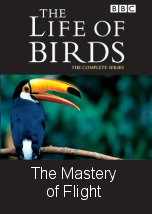
The Mastery of Flight

   1998    Nature
The second programme deals with the mechanics of flight. Getting into the air is by far the most exhausting of a bird's activities, and Sir Attenborough observes shearwaters in Japan that have taken to climbing trees to give them a good jumping-off point. The albatross is so large that it can only launch itself after a run-up to create a flow of air over its wings. A combination of aerodynamics and upward air currents (or thermals), together with the act of flapping or gliding is what keeps a bird aloft. Landing requires less energy but a greater degree of skill, particularly for a big bird, such as a swan. Weight is kept to a minimum by having a beak made of keratin instead of bone, a light frame, and a coat of feathers, which is maintained fastidiously. The peregrine falcon holds the record for being fastest in the air, diving at speeds of over 300 km/h. Conversely, the barn owl owes its predatory success to flying slowly, while the kestrel spots its quarry by hovering. However, the true specialists in this regard are the hummingbirds, whose wings beat at the rate of 25 times a second. The habits of migratory birds are explored. After stocking up with food during the brief summer of the north, such species will set off on huge journeys southwards. Some, such as snow geese, travel continuously, using both the stars and the sun for navigation. They are contrasted with hawks and vultures, which glide overland on warm air, and therefore have to stop overnight.
Series: The Life of Birds

The Science of Interstellar

   2014    Art
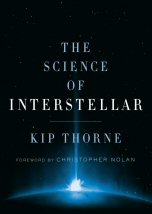
In The Science of Interstellar, Kip Thorne, the physicist who assisted Nolan on the scientific aspects of Interstellar, shows us that the movie's jaw-dropping events and stunning, never-before-attempted visuals are grounded in real science. Thorne shares his experiences working as the science adviser on the film and then moves on to the science itself. In chapters on wormholes, black holes, interstellar travel, and much more, Thorne's scientific insights-many of them triggered during the actual scripting and shooting of Interstellar-describe the physical laws that govern our universe and the truly astounding phenomena that those laws make possible.

Enemies And Traitors

   2020    History
This second instalment looks at how Vladimir Putin arrived in the Kremlin as a vulnerable and unknown president, whom the Russian oligarchs expect to control. The programme reveals how he asserted his hold on power and ultimately surrounded himself with his KGB peers, as well as his philosophy as regards traitors and enemies. The film also examines the stories of businessman Boris Berezovsky and defector Alexander Litvinenko, who both stood up to Putin and wound up dead on British soil.
Series: Putin: A Russian Spy Story

Avatar: Creating the World of Pandora

   2010    Art
Are you still in awe of what James Cameron did with Avatar? You still wondering how Cameron could pull off something so visually wondrous when other SFX companies don’t even come close to matching it? If you answered yes to any of those questions (or having a passing interest) then you should check out this behind-the-scenes featurette, Creating The World of Pandora

Notes on Blindness

   2016    History
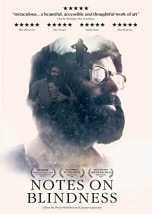
In the summer of 1983, just days before the birth of his first son, writer and theologian John Hull went blind. In order to make sense of the upheaval in his life, he began keeping a diary on audiocassette. Upon their publication in 1990, Oliver Sacks described the work as 'the most extraordinary, precise, deep and beautiful account of blindness I have ever read. It is to my mind a masterpiece.'
With exclusive access to these original recordings, Notes On Blindness encompasses dreams, memory and imaginative life, excavating the interior world of blindness.

Freshwater

   2007    Nature
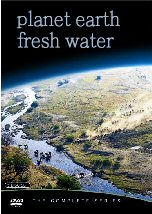
Fresh water is our most precious resource and it defines the distribution of life on land. Follow the descent of rivers from their mountain sources to the sea. Watch spectacular waterfalls, fly inside the Grand Canyon and explore the wildlife below the ice in the world's deepest lake. Witness unique and dramatic moments of animal behaviour: a showdown between smooth-coated otters and mugger crocodiles; deep-diving long tailed macaques; massive flocks of snow geese on the wing and a piranha frenzy in the perilous waters of the world's largest wetland.
Series: Planet Earth