





Last Watched

"The Earth"  Sort by

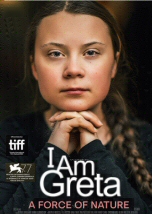
I Am Greta

   2020    History
In August of 2018, Greta Thunberg, a 15-year-old student in Sweden, starts a school strike for the climate. Her question for adults: if you don't care about her future on earth, why should she care about her future in school? Within months, her strike evolves into a global movement. Greta, a quiet Northern-European girl on the autism spectrum is now a world famous activist. The team behind Greta has been following the young activist from her very first day of school striking. The documentary shows the international crusade of Greta on in her goal to get people to listen to scientists about the world's environmental problems.

Mammals

   2024    Nature    HD
Sir David Attenborough reveals how Mammals have conquered the Earth, uncovering the secrets to their success with their winning design, incredible adaptability, unrivalled intelligence, and unique sociability.
66 million years ago, when the reign of the dinosaurs came to an end, mammals were set free to exploit every corner of the planet. Mammals reveals the strategies, behaviours and traits that lie behind the astonishing success of this remarkable group of animals. Above all, the series celebrates the amazing intelligence that enables mammals to learn, remember, problem-solve, parent, and co-operate.
Experience the complete six-episode series in a single video, showcasing how mammals have adapted to thrive in every major environment on Earth. They inhabit every ocean and continent, from frozen wildernesses and dense jungles to baking deserts, the dark depths of the ocean, and even the skies above our forests.
Series: Mammals

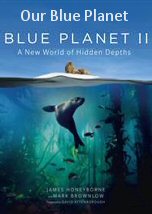
Our Blue Planet

   2017    Nature
Blue Planet II explores parts of the ocean that nobody has ever visited, encountered extraordinary animals, and discovered new insights into life beneath the waves. In Our Blue Planet, Sir David Attenborough examines the impact of human life on life in the ocean. In this final episode, we uncover the impact that our modern lives are having on our best-loved characters from across the series, including devoted albatross parents unwittingly feeding their chicks discarded plastic and mother dolphins potentially exposing their new born calves to pollutants through their contaminated milk. Scientists have even discovered that increasing noise levels may stop baby clownfish finding their way home.
Series: Blue Planet II

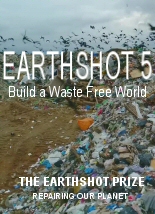
Build a Waste Free World

   2021    Nature
We have become too comfortable in societies that are immensely wasteful. As a consequence across the globe, the natural world about us is now suffering from the waste we throw away. Is it possible for us to keep what we have and continue to progress without generating waste? This film will expose the root causes of our wastefulness, highlight people around the world working on incredible solutions and it willl introduce you to the new projects shortlisted for the fifth goal of the Earthshot Prize.
Series: The Earthshot Prize: Repairing Our Planet

The Immortals

   2014    Science
This episode covers the nature of how life may have developed on Earth and the possibility of life on other planets. Tyson begins by explaining how the human development of writing systems enabled the transfer of information through generations, describing how Princess Enheduanna ca. 2280 BCE would be one of the first to sign her name to her works, and how Gilgamesh collected stories, including that of Utnapishtim documenting a great flood comparable to the story of Noah's Ark. Tyson explains how DNA similarly records information to propagate life, and postulates theories of how DNA originated on Earth, including evolution from a shallow tide pool, or from the ejecta of meteor collisions from other planets. In the latter case, Tyson explains how comparing the composition of the Nakhla meteorite in 1911 to results collected by the Viking program demonstrated that material from Mars could transit to Earth, and the ability of some microbes to survive the harsh conditions of space. With the motions of solar systems through the galaxy over billions of years, life could conceivably propagate from planet to planet in the same manner. Tyson then moves on to consider if life on other planets could exist. He explains how Project Diana performed in the 1960s showed that radio waves are able to travel in space, and that all of humanity's broadcast signals continue to radiate into space from our planet. Tyson notes that projects have since looked for similar signals potentially emanating from other solar systems. Tyson then explains that the development and lifespan of extraterrestrial civilizations must be considered for such detection to be realized. He notes that civilizations can be wiped out by cosmic events like supernovae, natural disasters such as the Toba disaster, or even self-destruct through war or other means, making probability estimates difficult. Tyson describes how elliptical galaxies, in which some of the oldest red dwarf stars exist, would offer the best chance of finding established civilizations. Tyson concludes that human intelligence properly applied should allow our species to avoid such disasters and enable us to migrate beyond the Earth before the Sun's eventual transformation into a red giant.
Series: Cosmos: A Spacetime Odyssey

Spaceship...Earth

   2007    Science
Take a ride through the formation of the third planet from the Sun, Earth. A survivor of one of the most violent neighbourhoods in the universe, learn how earth was created and discover what creatures hold clues to how life began. What evil forces threaten the demise of Earth?
Series: The Universe
The Last Dance

The Last Dance

2020  Culture
Galapagos

Galapagos

2006  Nature
The Hunt

The Hunt

2015  Nature
How to Grow a Planet

How to Grow a Planet

2012  Science
Life of a Universe

Life of a Universe

2017  Science
Power of Art

Power of Art

2006  Art
Planet Earth

Planet Earth

2007  Nature
Human

Human

2025  History