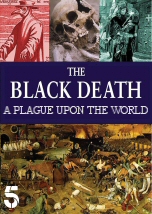
In an enthralling documentary, Dan Snow and archaeologist Raksha Dave delve into the catastrophic impact of the Black Death on Britain 700 years ago, a pandemic that extinguished around half of the population, or three million people. The duo embarks on a journey to trace the origins and merciless spread of the plague, starting from its arrival on Britain's South coast in June 1348, through the bustling trade routes that brought the disease to Melcombe Regis, Dorset. Their investigation takes them to various hotspots of the outbreak, including the Old Operating Theatre in London and Wildwood Animal Sanctuary in Kent, where they explore the role of rats in dispersing the bubonic plague. Through dramatic reconstructions and visits to places like Nottingham University's biomedical laboratories, they uncover the rapid spread and deadly impact of the plague, offering a month-by-month account of how it ravaged the country, decimating cities, towns, and villages alike. The documentary not only showcases the horrific symptoms and desperate attempts at cures through brutal medical practices of the time but also leverages cutting-edge research to explain why the Black Death remains the deadliest pandemic in history. The personal stories of victims, from princes to paupers, are brought to light, revealing the indiscriminate nature of the disease. Dan's visit to Canterbury Cathedral and Raksha's investigation into the recent discovery of mass graves beneath a tranquil London square underline the widespread desperation and devastation. Their journey through the history of the Black Death, culminating in the discovery of its indiscriminate toll and the unveiling of mass graves in London, not only sheds light on the darkest chapters of British history but also ignites a profound understanding of the tragedy, making a compelling case for why this documentary is a must-watch for anyone interested in the profound impacts of pandemics on human society.
Amazing Ocean is a fantastic journey through the magic of the deep blue sea. Let yourself be amazed by little schools of fish that swim right into your living room. See squids and the elusive octopus up close, along with the magnificent manta ray, and experience dolphins and turtles that visit you in your sofa. Shot in stereoscopic 3D, the film is a breathtakingly beautiful experience. Directed by Benjamin Eicher and Timo Joh. Mayer.
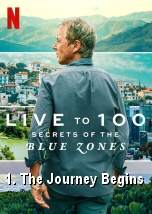
Most people hope they'll live a long, healthy, and happy life, but few are able to travel the world in an attempt to reverse-engineer the formula for longevity. That's exactly what Dan Buettner did: Beginning in the early aughts, Buettner collaborated with National Geographic, scouring the globe in pursuit of places where people live much longer than average, and thus, the concept of 'Blue Zones' came to be. In the first episode, how can people live so long and with such great health? A trip to Okinawa reveals simple secrets about diet, lifestyle and longevity. They maintain a sense of purpose no matter what age and you won't find them laying on the sofa.
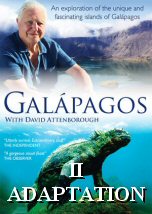
Once life arrived in the Galapagos, it exploded into unique and spectacular forms. David Attenborough investigates the driving forces behind such evolutionary innovations. We learn that life must be able to adapt quickly in these ever-changing volcanic landscapes. It has resulted in species found nowhere else in the world, such as giant whale sharks and marine iguanas that can spit sea-salt from their noses, dandelion seeds that grow into tree-sized plants and spiders that can blend perfectly into the darkness. Adaptation has been the key to survival in these islands so far, but the story of life in the Galapagos doesn’t end here. The catalyst that triggers these explosions of life remains in place.
From east to west, via mountains, volcanoes, deserts, lakes and Arctic ice, this breathtaking series uses stunning cinematography to chart the dazzling natural wonders of this vast country. Accounting for around 10 per cent of the world’s dry land, Siberia is famous as a brutally cold place. Yet it is home to a diverse range of habitats and animal life – including musk deer, camels, gazelles and the extraordinary Siberian salamander, which can spend years encased in -40°C ice and still survive.
Explore the intriguing world of M.C. Escher in this captivating documentary, which delves deep into his life and artistic journey through his own words. Narrated with excerpts from his writings, the film is visually enriched with archival footage of Escher himself and showcases his iconic drawings. Gain unique insights from interviews with his surviving family members who illuminate aspects of his personal and professional life. Escher, who often described his work as straddling the realms of art and mathematics, admitted to not excelling in either yet found profound expression in geometry-infused art. Choosing to work in stark black and white, he embraced the challenge of conveying complex ideas without the use of color. The film explores pivotal phases in his career, including his mesmerizing explorations of the human eye and his ultimate obsession with the concept of infinity—depicted in real forms like circles and through visual illusions such as his famous never-ending staircase. The documentary also features perspectives from admirers such as musician Graham Nash, who argues that Escher's genius remains underappreciated. This film promises not only to shed light on Escher’s innovative work but also to inspire a deeper appreciation for his unique blend of visual storytelling and mathematical precision.




















The documentary not only showcases the horrific symptoms and desperate attempts at cures through brutal medical practices of the time but also leverages cutting-edge research to explain why the Black Death remains the deadliest pandemic in history. The personal stories of victims, from princes to paupers, are brought to light, revealing the indiscriminate nature of the disease. Dan's visit to Canterbury Cathedral and Raksha's investigation into the recent discovery of mass graves beneath a tranquil London square underline the widespread desperation and devastation. Their journey through the history of the Black Death, culminating in the discovery of its indiscriminate toll and the unveiling of mass graves in London, not only sheds light on the darkest chapters of British history but also ignites a profound understanding of the tragedy, making a compelling case for why this documentary is a must-watch for anyone interested in the profound impacts of pandemics on human society.