



Last Watched

"Astronomy"  Sort by

Earth: Venus Evil Twin

   2015    Science
There is a hellish planet in our solar system; covered in thick dense clouds and roasted by colossal temperatures. It will be inevitable that the Earth will someday not only be like Venus, but actually put it to shame. A billion years from now, Earth's oceans will boil off, triggering a runaway greenhouse effect, and the temperature will be so high, its all surface will melt. In the distance future, Earth could be the evil twin of Venus. To understand how our world will be destroyed we need to look at what happened to Venus.
Series: How the Universe Works Season 4
Oceans of the Solar System

   2016    Science
The oceans define the earth. They are crucial to life and we used to think that they were unique to our blue planet. But we were wrong. It has recently been discovered that there are oceans all over our solar system, and they are very similar to our own. And now scientists are going on an epic journey in search of new life in places that never seemed possible. Nasa is even planning to dive to the depths of a strange, distant ocean in a remarkable submarine. Discover that the hunt for oceans in space is marking the dawn of a new era in the search for alien life.

Words on a Page

   2020    History
Writing itself is 5,000 years old, and for most of that time words were written by hand using a variety of tools. The Romans were able to run an empire thanks to documents written on papyrus. Scroll books could be made quite cheaply and, as a result, ancient Rome had a thriving written culture. With the fall of the Roman Empire, papyrus became more difficult to obtain. Europeans were forced to turn to a much more expensive surface on which to write: Parchment. Medieval handwritten books could cost as much as a house, they also represent a limitation on literacy and scholarship.
No such limitations were felt in China, where paper had been invented in the second century. Paper was the foundation of Chinese culture and power, and for centuries how to make it was kept secret. When the secret was out, paper mills soon sprang up across central Asia. The result was an intellectual flourishing known as the Islamic Golden Age. Muslim scholars made discoveries in biology, geology, astronomy and mathematics. By contrast, Europe was an intellectual backwater.
That changed with Gutenberg’s development of movable type printing. The letters of the Latin alphabet have very simple block-like shapes, which made it relatively simple to turn them into type pieces. When printers tried to use movable type to print Arabic texts, they found themselves hampered by the cursive nature of Arabic writing. The success of movable type printing in Europe led to a thousand-fold increase in the availability of information, which produced an explosion of ideas that led directly to the European Scientific Revolution and the Industrial Revolution that followed.
Series: The Secret History of Writing

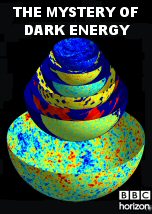
The Mystery of Dark Energy

   2016    Science
Dark energy - the mysterious force that is unexpectedly causing the universe's expansion to speed up. The effects of dark energy were discovered in 1998 but physicists still don't know what it is. Worse, its very existence calls into question Albert Einstein's general theory of relativity - the cornerstone of modern physics. The hunt for the identity of dark energy is on". Experiments on earth and in space generate data that might provide a clue, but there are also hopes that another Einstein might emerge - someone who can write a new theory explaining the mystery of the dark energy.

Alien Technology

   2017    Science    HD
Is there anyone out there? Astronomers have been pointing their radio telescopes at the skies for decades trying to pick up alien signals, so far without success. But now there's a new way of looking for aliens. Hitch a ride with Dr Graham Philips as he joins astronomers trawling through the galaxy looking for signs of extra-terrestrial intelligence.
Series: Catalyst

Cosmic Dawn: The Real Moment of Creation

   2015    Science
Forget the Big Bang. The real moment of creation was the Cosmic Dawn - the moment of first light. It's the moment the first stars were born, the moment that lit up the Universe, and made the first structure and the first ingredients of life. This is the scientific version of the story of Genesis. The Big Bang gets all the credit for creating our universe. But in fact, the universe it gave was dark and boring. There were no stars, no galaxies, just a vast, black fog of gas - the cosmic dark ages". But, after a hundred million years of nothing, came a dramatic moment of transformation - the Cosmic Dawn. Astronomers are now trying to witness this cosmic dawn. For the first time they have the tools to explore the very first stars of the universe and to tell the scientific story of our creation.
The Reluctant Traveler

The Reluctant Traveler

2023  Culture
Minimalism

Minimalism

2015  Culture
The Climate Wars

The Climate Wars

  Nature
Untold

Untold

2021  Culture
The Human Body

The Human Body

1998  Medicine