The film unlocks the secrets to an innovative concept called circularity, an economic system based on the idea that nothing should go to waste. It's a deceptively simple idea that is at the heart of nature and the natural world, but very few of us actually live this way. And yet, it has the potential to save our planet's resources and save us from the ravages of future climate change. The film tells the story of four visionaries from around the world, whose thinking shapes and informs the concept of circularity: 102-year-old inventor Dr. James Lovelock, biomimicry biologist Janine Benyus, engineer and designer Arthur Huang, and financier John Fullerton. The extraordinary experiences of these very different people changed the way they think about humanity's future. Through the deeply personal transformation of each visionary profiled, the film explores concrete solutions individuals and communities are using to move toward a more circular society, rethinking everything from our food, our cities, our financial system, even our fashion industry.
As man moves to colonize the cosmos, the realities of sexual relationships and reproduction need to be addressed. Probe the physiological, psychological and cultural challenges of sex in space.
In August of 2018, Greta Thunberg, a 15-year-old student in Sweden, starts a school strike for the climate. Her question for adults: if you don't care about her future on earth, why should she care about her future in school? Within months, her strike evolves into a global movement. Greta, a quiet Northern-European girl on the autism spectrum is now a world famous activist. The team behind Greta has been following the young activist from her very first day of school striking. The documentary shows the international crusade of Greta on in her goal to get people to listen to scientists about the world's environmental problems.
In this captivating film hosted by Anderson Cooper, viewers are presented with an insightful exploration of artificial intelligence (AI), its profound implications, and the ethical dilemmas it poses. The documentary begins with a startling revelation: what appeared to be Anderson Cooper was actually an AI-generated version, raising questions about the authenticity of what we see and hear. The narrative then shifts to broader concerns about AI replacing human roles across industries and its capability to outperform humans in tasks ranging from driving to creating art. Viewers are taken on a journey through various facets of AI, from the streets of San Francisco, where robot taxis hint at a future dominated by AI, to the insights of Yoshua Bengio, a pioneer in deep learning. The film also addresses the darker side of AI, including the potential for misuse and the challenges in distinguishing between reality and AI-generated content. The climax of the documentary presents a critical question: Can AI save humanity, or does it pose a threat to our existence? This thought-provoking exploration of AI's impact on our world is a must-watch for anyone curious about technology and its intersection with human life.
Step into a gripping political thriller that uncovers the unsettling power of Christian fundamentalists in the United States. Backed by millions of dollars and direct ties to government corridors, this movement is not just preaching—they are mobilizing for what they call The Holy War, determined to bring about the prophesied Armageddon. The film takes viewers behind the scenes of their world, exposing the powerful megachurch leaders who rally their followers toward a "final battle" they believe will trigger the Second Coming of Christ. With unprecedented access, Praying for Armageddon explores the alarming intersection of faith, power, and political influence. It reveals how ideology can shape decisions at the highest levels, raising urgent questions about the far-reaching consequences of religious extremism. This is not just a documentary—it’s a wake-up call to understand the forces shaping a precarious future.
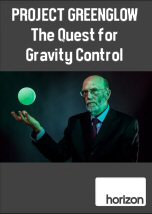
For centuries, the precise workings of gravity have confounded the greatest scientific minds - from Newton to Faraday and Einstein - and the idea of controlling gravity has been seen as little more than a fanciful dream. Yet in the mid 1990s, UK defence manufacturer BAE Systems began a ground-breaking project code-named Greenglow. Nasa was simultaneously running its own Breakthrough Propulsion Physics Project". It was concerned with potential space applications of new physics, including concepts like 'faster-than-light travel' and 'warp drives'. Looking into the past and projecting into the future, Horizon explores science's long-standing obsession with the idea of gravity control. It looks at recent breakthroughs in the search for loopholes in conventional physics and examines how the groundwork carried out by Project Greenglow has helped change our understanding of the universe. Gravity control may sound like science fiction, but the research that began with Project Greenglow is very much ongoing, and the dream of flying cars and journeys to the stars no longer seems quite so distant.
















The film tells the story of four visionaries from around the world, whose thinking shapes and informs the concept of circularity: 102-year-old inventor Dr. James Lovelock, biomimicry biologist Janine Benyus, engineer and designer Arthur Huang, and financier John Fullerton. The extraordinary experiences of these very different people changed the way they think about humanity's future.
Through the deeply personal transformation of each visionary profiled, the film explores concrete solutions individuals and communities are using to move toward a more circular society, rethinking everything from our food, our cities, our financial system, even our fashion industry.