In episode 3, Artemis arrives on the exoplanet Minerva B, but will she find evidence of life? This is a vision of our future, the fateful day in a far-flung corner of the universe, when a probe from Earth initiates the first descent onto an alien world, looking for proof of life beyond our solar system. There are no witnesses, no cheering crowds in the control room. A decade or more will pass before news finally reaches us, back across the dark oceans of space. But the seeds of this mission are already being sowed today by the first generation of scientists bold enough to believe it could be possible.
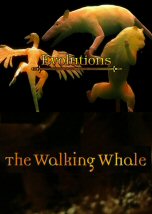
This series illuminates unique and bizarre evolutionary journeys that have brought forth some of the world’s most impressive animals. We unearth a 50-million-year-old mystery mammal sought out a new source of food in the water, starting a spectacular evolutionary journey so that today it looks like a fish. How did a creature built for land become master of the ocean?
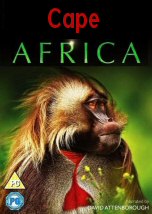
Southern Africa is a riot of life and colour because of two great ocean currents that sweep around the continent's Cape. To the east, the warm Agulhas current generates clouds that roll inland to the wettest place in southern Africa. To the west is the cold Benguela current, home to more great white sharks than anywhere else. Moisture laden fog rolls inland, supporting an incredible desert garden. Where the two currents meet, the clash of warm and cold water creates one of the world's most fabulous natural spectacles - South Africa's sardine run. This is the greatest gathering of predators on the planet, including Africa's largest, the Bryde's whale.
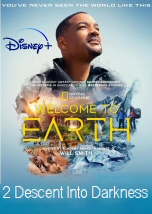
In the second episode, Will Smith descends 3,300 feet to the bottom of the ocean in a deep-water submersible, where even fewer people have gone than outer space. Along the way down, Will and explorer Diva Amon investigate how colour is used in the natural world and the role of bioluminescence. In the oceans, nearly 80 percent of animals use bioluminescence in some way, possibly the most common form of communication on the planet.
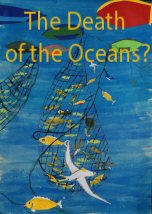
Sir David Attenborough reveals the findings of one of the most ambitious scientific studies of our time - an investigation into what is happening to our oceans. He looks at whether it is too late to save their remarkable biodiversity. Attenborough explores some of the ways in which we are affecting marine life - from over-fishing to the acidification of sea water. The film also uncovers the disturbing story of how shipping noise is deafening whales and dolphins, affecting their survival in the future.
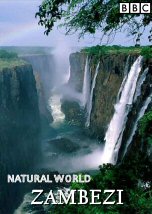
Africa's wildest river is home to the most spectacular wildlife. Hippos fight for territory while herds of elephant, water buffalo and zebra depend on it for life. In the wet season the rains burst the riverbanks and everyone, including people, must move whilst fish swim through the villages. In the dry season the creatures fight over the few pools of water while predators prowl. At its heart it plunges over Victoria Falls and into wild ravines before draining into the Indian Ocean, where storm clouds cycle the water back into the heart of Africa.






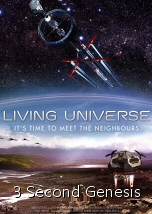





There are no witnesses, no cheering crowds in the control room. A decade or more will pass before news finally reaches us, back across the dark oceans of space. But the seeds of this mission are already being sowed today by the first generation of scientists bold enough to believe it could be possible.