Global warming, and how to combat it, has provoked intense debate, changed the way we see the planet and created headlines around the world. But when and how did scientists first discover global warming, why has it led to such furious debate? In this three-part series geologist Dr Iain Stewart presents a definitive guide to the history of climate change. Battle Begins uncovers some of the great unsung heroes of climate change science, and introduces us to a secret organisation of American government scientists, known as Jason, who wrote the first official report on global warming as far back as 1979. By the late 1980s global warming had already become a serious political issue. It looked as if the world was uniting to take action. But it turned out to be a false dawn.
This episode explores the wave theory of light as studied by mankind, noting that light has played an important role in scientific progress, with such early experiments from over 2000 years ago involving the camera obscura by the Chinese philosopher Mozi. Tyson describes the work of the 11th century Arabic scientist Ibn al-Haytham, considered to be one of the first to postulate on the nature of light and optics leading to the concept of the telescope, as well as one of the first researchers to use the scientific method. Tyson proceeds to discuss the nature of light as discovered by mankind. Work by Isaac Newton using diffraction through prisms demonstrated that light was composed of the visible spectrum, while findings of William Herschel in the 19th century showed that light also consisted of infrared rays. Joseph von Fraunhofer would later come to discover that by magnifying the spectrum of visible light, gaps in the spectrum would be observed. These Fraunhofer lines would later be determined to be caused by the absorption of light by electrons in moving between atomic orbitals when it passed through atoms, with each atom having a characteristic signature due to the quantum nature of these orbitals. This since has led to the core of astronomical spectroscopy, allowing astronomers to make observations about the composition of stars, planets, and other stellar features through the spectral lines, as well as observing the motion and expansion of the universe, and the existence of dark matter.
In the second episode, Dreadnoughtus males compete for the right to mate. Lizards are hunted by Velociraptor among a group of sleeping Tarbosaurus. A Mononykus forages for termites and investigates new food options after a brief rainstorm. Several types of dinosaurs congregate around a watering hole in Mongolia. Above the deserts of North Africa, aerial combat ensues as male Barbaridactylus pterosaurs fight for the attention of females below. A herd of Secernosaurus brave the harsh gypsum dunes in search of nourishment.
Bitcoin is a peer-to-peer monetary system in which all transaction records are public. Participants can use its open-source software to transfer virtual currency to one another as easily as they might send an email. Bitcoin opens an uncharted world of new possibilities to explore. We'll follow the stories of entrepreneurs and startups that are helping shape the new financial frontier. We'll look at the competitive mining market and the various subcultures within the Bitcoin community." You'll encounter a variety of characters and opinions as we examine the social and political impact of an open-source digital currency. Will the rise of Bitcoin bring a monetary paradigm shift that will forever change the world? Supposedly invented by a mysterious Japanese man named Satoshi Nakamoto (whose current whereabouts are unknown). Because it is designed to have an absolute ceiling of 21 million Bitcoins in circulation (not anticipated until 2040), and the system has no central depository or administrative authority, it has great appeal to libertarians and others who seek alternatives to a perceived corrupt, manipulative banking infrastructure and excessive government regulations. Its low processing fees compared with those of mainstream credit-card companies also hold considerable allure for merchants.
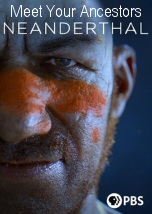
According to recent science the Neanderthals are not the knuckle-dragging apemen of popular imagination. The first part of the film investigates what Neanderthals looked like and how they lived in their Ice Age world. They were faster, smarter, better looking - and much more like us than we ever thought. Our guide is Ella Al-Shamahi, who enlists the skills of Andy Serkis, the master of performance capture, and a group of experts to investigate deeply Neanderthals appearance. In the second part, Ella explores the fate of the Neanderthals - asking why they became extinct, and discovering how they live on inside of us today. About 2% of the DNA of most people is of Neanderthal origin - and it continues to affect us today. Neanderthals were a people who were supremely well adapted to their environment. But about 40,000 years ago they disappeared. Why?
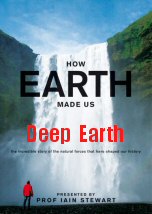
Our planet has amazing power, and yet that's rarely mentioned in our history books. This series tells the story of how the Earth has influenced human history, from the dawn of civilisation to the modern industrial age. It reveals how geology, geography and climate have been a far more powerful influence on the human story than has previously been acknowledged. A combination of epic story telling, visually stunning camerawork, extraordinary locations and passionate presenting combine to form a highly original version of human history" In the first episode professor Iain Stewart explores the relationship between the deep Earth and the development of human civilisation. He visits an extraordinary crystal cave in Mexico, drops down a hole in the Iranian desert and crawls through seven-thousand-year-old tunnels in Israel. His exploration reveals that throughout history, our ancestors were strangely drawn to fault lines, areas which connect the surface with the deep interior of the planet. These fault lines gave access to important resources, but also brought with them great danger.














Battle Begins uncovers some of the great unsung heroes of climate change science, and introduces us to a secret organisation of American government scientists, known as Jason, who wrote the first official report on global warming as far back as 1979. By the late 1980s global warming had already become a serious political issue. It looked as if the world was uniting to take action. But it turned out to be a false dawn.