On Sunday nights, one television host quietly changed America. At the height of segregation, he broke barriers by giving Black musicians and performers a national stage, challenging prejudice in front of millions. His show became a cultural turning point—introducing groundbreaking acts to households across the country and inspiring generations. Through rare archival footage and candid interviews, this documentary reveals how his bold choices reshaped popular culture, fueled the fight for equality, and cemented a legacy that still echoes today.
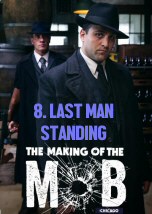
Tony Accardo receives a phone call from Joseph P. Kennedy, asking the mob kingpins to use their pull with the Illinois union vote to help his son, John F. Kennedy, win the upcoming presidential election. In return, he offers to put an end to his son Robert F. Kennedy's investigation into Giancana and the Outfit. As election day nears, Kennedy's fight against Richard Nixon tightens, turning Illinois into a key battleground. Giancana delivers the union votes. After a close race, Kennedy is declared the victor. Just weeks after Kennedy takes office, his brother Robert is named Attorney General. To the Chicago mob's surprise, when Robert takes office as the new U.S. Attorney General in 1961, he makes his top priority going after organized crime ó and one of his primary targets is the Outfit. Weeks after, John F. Kennedy is shot and killed in Dallas. After his brother is assassinated, Robert steps down from his post as Attorney General and the investigation into organized crime is virtually dropped. The government begins an investigation into the assassination, with rumors already circulating that the mafia could have been involved.
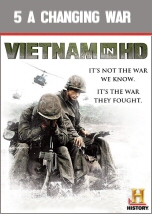
Troop withdrawals begin as the Americans train their ARVN allies to take over the war. Gery Benedetti patrols the hostile waters of the Mekong Delta. James Anderson leads a battalion into Cambodia after Nixon's controversial order. Don DeVore struggles to survive a fierce night attack, and Anne Purcell gets promising news about her husband.
Eisenhower and the CIA played a great part in the shaping of the world in the 1950's; the development of the Cold war and the nerve-wrecking battle against communism, driven on by the U.S.
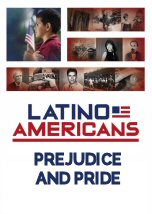
In the 1960s and 1970s a generation of Mexican Americans, frustrated by persistent discrimination and poverty, find a new way forward, through social action and the building of a new "Chicano" identity. The movement is ignited when farm workers in the fields of California, led by Cesar Chavez and Dolores Huerta, march on Sacramento for equal pay and humane working conditions. Through plays, poetry and film, Luis Valdez and activist Corky Gonzalez create a new appreciation of the long history of Mexicans in the South West and the Mestizo roots of Mexican Americans. In Los Angeles, Sal Castro, a schoolteacher, leads the largest high school student walkout in American history, demanding that Chicano students be given the same educational opportunities as Anglos. In Texas, activists such as Jose Angel Gutierrez, create a new political party and change the rules of the electoral game. By the end of the 1970s Chicanos activism and identity have transformed what it means to be an American. Chicano and Latino studies are incorporated into school curriculum; Latinos are included in the political process.
The terrorist group Boko Haram is responsible for thousands of deaths in Nigeria. Now, the government is determined to drive these militants from the country. But is the hunt for insurgents causing as much harm as it's preventing? Former Navy SEAL and new VICE correspondent Kaj Larsen travels to Nigeria to see what this cat-and-mouse game means for the people caught in the middle of the fight.
'Unnatural Selection': For centuries, scientists have been working to change the genetic traits of plants and animals. Now, the new gene-editing method CRISPR has made that process astonishingly simple - so simple it could easily be used on humans. Isobel Yeung reports from Brazil, Scotland, China and the U.S. on the technological advances that could reshape evolution as we know it.


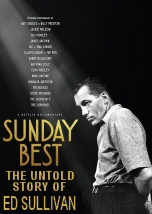





Through rare archival footage and candid interviews, this documentary reveals how his bold choices reshaped popular culture, fueled the fight for equality, and cemented a legacy that still echoes today.