Ottoman Sultan Mehmed II wages an epic campaign to take the Byzantine capital of Constantinople. Twenty-three armies have tried to take the legendary city and all have failed. Out of the carnage, one ruler will emerge victorious and shapes the course of history for centuries. For one empire to rise, another must fall. The Ottomans, former Anatolian warlords and nomads who've built a burgeoning empire are the biggest threat to the Romans' 1100-year reign. The death of Ottoman Sultan Murad II in 1451 unleashes a chain of events that will soon bring the Ottomans and Romans to the brink of war. After claiming the Ottoman throne, Mehmed II sends an unmistakable signal to Byzantine emperor Constantine XI.
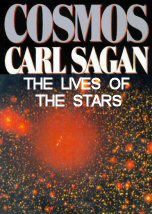
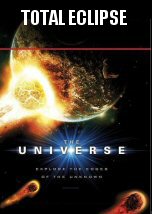
At 4.6 billion years old, the Solar System is our solid, secure home in the Universe. But how did it come to be? In this episode we trace the system's birth from a thin cloud of dust and gas. Shocked by a nearby supernova, the pull of gravity and natural rotation spun it into a flat disc from which the Sun and planets coalesced. It all happened in the space of 700 million years, during which the planets jockeyed for position, dodging the Late Heavy Bombardment of deadly asteroids and setting into the neat, stable system that we now realize might be a rarity in the universe.
Dive into a captivating documentary on S.S. Rajamouli, the mastermind behind cinematic phenomena like ‘Magadheera,’ ‘Baahubali,’ and ‘RRR.’ Discover how Rajamouli navigates the complexities of high-budget filmmaking, from innovative visual effects and meticulous continuity to fostering a dynamic collaboration with his talented team. Hear firsthand accounts of overcoming technical challenges, managing escalating budgets, and transforming ambitious visions into globally acclaimed blockbusters. Witness Rajamouli's unwavering dedication to storytelling and his relentless pursuit of perfection, which have redefined Indian cinema on the world stage. Gain unique insights into his creative process, his philosophy on character development, and the personal sacrifices made to achieve cinematic greatness. This behind-the-scenes look promises to inspire and captivate both film enthusiasts and aspiring filmmakers alike.
The documentary delves deep into the mysterious and catastrophic collapse of ancient civilizations during the late Bronze Age, as empires from Greece to ancient Egypt were wiped off the map. It explores the various theories and hypotheses that have emerged to explain their sudden downfall, revealing the tumultuous events that brought an end to a once-thriving era of human history. Through invasions, mega-droughts, natural disasters, and rebellions, we discover the complex web of factors that were involved. With stunning visual imagery, expert interviews and immersive storytelling, this film offers a fascinating glimpse into one of the most pivotal and enigmatic periods of human history. And it warns that we could be facing a similar combination of threats today.
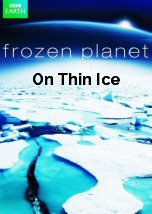
Sir David Attenborough journeys to both Polar Regions to investigate what rising temperatures will mean for the people and wildlife that live there and for the rest of the planet. David starts out at the North Pole, standing on sea ice several metres thick, but which scientists predict could be Open Ocean within the next few decades. The Arctic has been warming at twice the global average, so David heads out with a Norwegian team to see what this means for polar bears. He comes face-to-face with a tranquilised female, and discovers that mothers and cubs are going hungry as the sea ice on which they hunt disappears. In Canada, Inuit hunters have seen with their own eyes what scientists have seen from space; the Arctic Ocean has lost 30% of its summer ice cover over the last 30 years. For some, the melting sea ice will allow access to trillions of dollars worth of oil, gas and minerals. For the rest of us, it means the planet will get warmer, as sea ice is important to reflect back the sun's energy. Next David travels to see what's happening to the ice on land: in Greenland, we follow intrepid ice scientists as they study giant waterfalls of meltwater, which are accelerating iceberg calving events, and ultimately leading to a rise in global sea level. Temperatures have also risen in the Antarctic - David returns to glaciers photographed by the Shackleton expedition and reveals a dramatic retreat over the past century. It's not just the ice that is changing - ice-loving adelie penguins are disappearing, and more temperate gentoo penguins are moving in. Finally, we see the first ever images of the largest recent natural event on our planet - the break up of the Wilkins Ice Shelf, an ice sheet the size of Jamaica, which shattered into hundreds of icebergs in 2009.
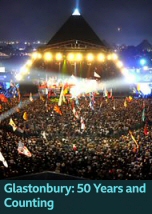
Three years in the making, Francis Whately’s film is a social and musical history of (probably) the world’s greatest music festival, as told by its principal curators, Michael and Emily Eavis, and many of the key artists who’ve appeared there between 1970 and 2019 – Billie Eilish, Thom Yorke, Florence Welch, Dua Lipa, The Levellers, Aswad, Orbital, Fatboy Slim, Linda Lewis, Noel Gallagher, Ed O’Brien, Chris Martin, Stormzy and more. Balancing the driving forces of social conscience and hedonism, Glastonbury has always been both a world apart and a barometer of the state of the nation. Looking at the hippie days, CND, the contribution of the travellers, dance music, Britpop, The Wall, the impact of television and the first black British solo headliner, this film takes viewers backstage and deep into the archive to reveal the forces that have driven this alternative nation between utopia and dystopia, the greatest night of your life and a muddy field in the middle of nowhere. This is not a chronological plod through the festival’s evolution so much as a thematic and story-driven exploration of the peaks and troughs, and the agonies and ecstasies, that have shaped Glastonbury’s 50 years and counting.




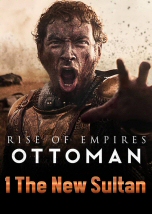





The Ottomans, former Anatolian warlords and nomads who've built a burgeoning empire are the biggest threat to the Romans' 1100-year reign. The death of Ottoman Sultan Murad II in 1451 unleashes a chain of events that will soon bring the Ottomans and Romans to the brink of war. After claiming the Ottoman throne, Mehmed II sends an unmistakable signal to Byzantine emperor Constantine XI.