The story of how a group of working-class kids growing up in post-industrial Glasgow dared to dream. Those kids became Simple Minds, the most iconic and influential Scottish band in history. The film is a captivating journey into the heart and soul of one of the most influential bands in rock history. From their humble beginnings in Glasgow to their meteoric rise on the world stage, this documentary unveils the untold stories behind Simple Minds' groundbreaking music and enduring legacy. Through rare archival footage, intimate interviews, and electrifying performances, discover how this iconic group defined an era, inspired generations, and proved that with passion and resilience, everything truly is possible. For fans and newcomers alike, this is more than a documentary—it's a celebration of the unyielding power of music to transform lives.
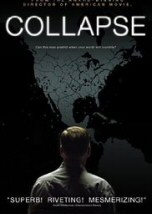
Michael Ruppert is an independent journalist who has made a minor career out of telling people news that most folks do not want to know. Ruppert, a former police officer, predicted the Wall Street debacle of 2008 several years before the fact, at a time when most analysts were still imagining infinite growth for the stock market and major investment banks. Since then, his vision of the world's future has grown only darker. As Ruppert sees it, civilization and the global economy has yet to wean itself off fossil fuels, and when the world's supply of oil finally runs out, it will lead to a global financial catastrophe that will leave no one unscathed. But while most of what Ruppert has to say bears the ring of truth, there's a small audience for his dire message -- the primary medium for his work is a self-published newsletter, and his most recent book has done so poorly in the marketplace that he faces eviction from his home. Is Ruppert right? And if he is, why doesn't anyone care? Filmmaker Chris Smith profiles Michael Ruppert and gives him a chance to explain his apocalyptic vision of the future at length
The filmmakers challenge former Indonesian death-squad leaders to reenact their mass-killings in whichever cinematic genres they wish, including classic Hollywood crime scenarios and lavish musical numbers. Anwar Congo and his friends have been dancing their way through musical numbers, twisting arms in film noir gangster scenes, and galloping across prairies as yodeling cowboys. Their foray into filmmaking is being celebrated in the media and debated on television, even though Anwar Congo and his friends are mass murderers. Medan, Indonesia. When the government of Indonesia was overthrown by the military in 1965, Anwar and his friends were promoted from small-time gangsters who sold movie theatre tickets on the black market to death squad leaders. They helped the army kill more than one million alleged communists, ethnic Chinese, and intellectuals in less than a year. As the executioner for the most notorious death squad in his city, Anwar himself killed hundreds of people with his own hands. The Act of Killing is about killers who have won, and the sort of society they have built. Unlike ageing Nazis or Rwandan génocidaires, Anwar and his friends have not been forced by history to admit they participated in crimes against humanity. Instead, they have written their own triumphant history, becoming role models for millions of young paramilitaries. The Act of Killing is a journey into the memories and imaginations of the perpetrators, offering insight into the minds of mass killers. And The Act of Killing is a nightmarish vision of a frighteningly banal culture of impunity in which killers can joke about crimes against humanity on television chat shows, and celebrate moral disaster with the ease and grace of a soft shoe dance number.
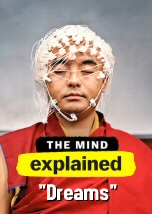
The second episode of the series looks at dreams and tries to explain what happens in the brain and body after we go to sleep. It looks at the significance of dreams and what dreams can teach us about ourselves. It talks to neuroscientists who discuss slow-wave sleep and REM (rapid eye movement) sleep during which dreams occur. It looks at the history of dream interpretation and its validity.
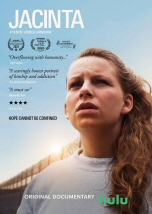
The films begins at the Maine Correctional Center where Jacinta, 26, and her mother Rosemary, 46, are incarcerated together, both recovering from drug addiction. As a child, Jacinta became entangled in her mother's world of drugs and crime and has followed her in and out of the system since she was a teenager. This time, as Jacinta is released from prison, she hopes to maintain her sobriety and reconnect with her own daughter, Caylynn, 10. Despite her desire to rebuild her life for her daughter, Jacinta continually struggles against the forces that first led to her addiction. With unparalleled access and a gripping vérité approach, director Jessica Earnshaw paints a deeply intimate portrait of mothers and daughters and the effects of trauma over generations.
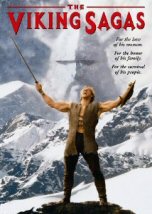
Hundreds of years ago in faraway Iceland the Vikings began to write down dozens of stories called sagas - sweeping narratives based on real people and real events. But as Oxford University's Janina Ramirez discovers, these sagas are not just great works of art, they are also priceless historical documents which bring to life the Viking world. Dr Ramirez travels across glaciers and through the lava fields of Iceland to the far north west of the country to find out about one of the most compelling of these stories - the Laxdaela Saga.













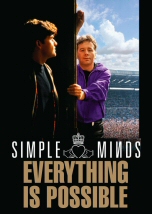



The film is a captivating journey into the heart and soul of one of the most influential bands in rock history. From their humble beginnings in Glasgow to their meteoric rise on the world stage, this documentary unveils the untold stories behind Simple Minds' groundbreaking music and enduring legacy. Through rare archival footage, intimate interviews, and electrifying performances, discover how this iconic group defined an era, inspired generations, and proved that with passion and resilience, everything truly is possible. For fans and newcomers alike, this is more than a documentary—it's a celebration of the unyielding power of music to transform lives.