The search for extraterrestrial life is an age-old quest. But recent breakthroughs make today an era like no other in the history of astronomy. From the exhilarating probing of our own solar system and the Kepler mission’s astounding discovery of thousands of extrasolar planets, to the next-generation telescopes under development, the prospects for finding life beyond Earth have never been stronger. Still, daunting hurdles remain. How can we study anything light years away, let alone a little planet? In the vast universe, where should we even start to look? Is our failure to hear any other voices in the galaxy a sign that we are special? Join leading explorers now searching the galaxy for life and intelligence on other planets—and asks, if we do find other life in the universe... what would that mean?
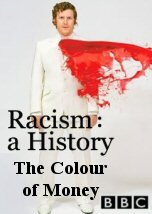
The series explores the impact of racism on a global scale and chronicles the shifts in the perception of race and the history of racism in Europe, the Americas, Australia and Asia. The first episode begins by assessing the implications of the relationship between Europe, Africa and the Americas in the 15th century. It considers how racist ideas and practices developed in key religious and secular institutions, and how they showed up in writings by European philosophers Aristotle and Immanuel Kant.
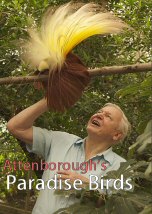
Birds of paradise are one of David Attenborough's lifelong passions. He was the first to film many of their beautiful and often bizarre displays, and over his lifetime he has tracked them all over the jungles of New Guinea. In this very personal film, he uncovers the remarkable story of how these 'birds from paradise' have captivated explorers, naturalists, artists, film-makers and even royalty. He explores the myths surrounding their discovery 500 years ago, the latest extraordinary behaviour captured on camera and reveals the scientific truth behind their beauty": the evolution of their spectacular appearance has in fact been driven by sex. And in a final contemporary twist to this story of obsession and royalty, he travels to the desert of Qatar, to a state-of-the-art facility which houses the largest breeding group of these birds in the world - a sheikh's very own private collection. There he has his closest ever encounter with a greater bird of paradise and its dramatic display, reliving the experience that captivated him in the forests of New Guinea more than 50 years ago.
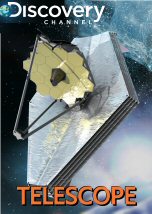
A dynamic journey behind the scenes of the next step in the evolution of telescopes: NASA's James Webb Space Telescope. A new generation has been inspired to design and build this massive instrument, which is 100 times more powerful than the Hubble Space Telescope and will be a veritable time machine, capable of looking back on the origins of our universe and identifying signatures of potential life on planets far outside our solar system". With unprecedented access to the people and technologies that power its creation, including astrophysicists, engineers at Northrop Grumman, and personnel from NASA'S Goddard Space Flight Center and the Space Telescope Science Institute, the operations center for Hubble and Webb, Telescope spotlights the high-stakes mission of building this massive new scientific instrument. The film is a comprehensive look at the dynamic history of 400 years of telescopes starting with Galileo in 1609. The Webb is the next great telescope in society's ongoing mission to see farther into the universe and answer fundamental questions that have haunted mankind from the beginning of time. Directed by Oscar nominated filmmaker Nathaniel Kahn
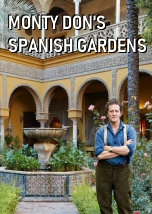
Monty Don embarks on a journey across Spain, discovering gardens across the country’s diverse landscape and exploring its rich and varied history and culture. He will cover more than 4,000 kilometres to visit some of its most interesting gardens, community projects and parks in order to get under the skin of the country. His trips range from historic imperial palaces to cutting-edge modern gardens created by a new wave of Spanish designers working more closely with the landscape and the challenges of the climate. “Spain's history and its landscapes, climates and cultures have huge diversity. And in this series, I want to get under the skin of the country by visiting as many gardens in Spain as I can so I can shed light on this nation's past, its future and its people. The result is a picture not just of its gardens but this fascinating country itself. Dramatic, proud, complex, but always compelling.”
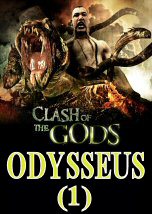
Homer's The Odyssey ranks amongst the most famous epics ever written. Follow its archetypal hero, Odysseus, as he sets sail on a twenty-year journey to return home from battle to reclaim his wife and kingdom. It's a timeless tale of adventure, filled with mythological beasts, vengeful gods, and enchanting seductresses. But could it have actually happened? Underwater divers have uncovered remains that date back thousands of years and may be a direct link to the story of Odysseus.



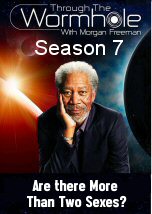







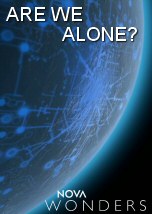


Still, daunting hurdles remain. How can we study anything light years away, let alone a little planet? In the vast universe, where should we even start to look? Is our failure to hear any other voices in the galaxy a sign that we are special? Join leading explorers now searching the galaxy for life and intelligence on other planets—and asks, if we do find other life in the universe... what would that mean?