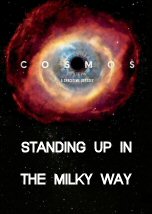
In episode 3, Artemis arrives on the exoplanet Minerva B, but will she find evidence of life? This is a vision of our future, the fateful day in a far-flung corner of the universe, when a probe from Earth initiates the first descent onto an alien world, looking for proof of life beyond our solar system. There are no witnesses, no cheering crowds in the control room. A decade or more will pass before news finally reaches us, back across the dark oceans of space. But the seeds of this mission are already being sowed today by the first generation of scientists bold enough to believe it could be possible.
Dr. Thomas Asbridge explains how in the thirteenth century, after almost two hundred years of Holy Wars, the titanic conflict between Christianity and Islam, known to history as The Crusades, reached a decisive and shocking conclusion – a chapter that despite its drama has been virtually forgotten. He explains how, in the end, the fate of the Holy Land was decided not on the hallowed ground of Jerusalem, but in Egypt; and how the ultimate outcome of the Crusades was dictated not by Christians, but by the Mongol successors to Genghis Khan, and by a Muslim slave – a fearsome warrior whose story is now all but lost to western history.
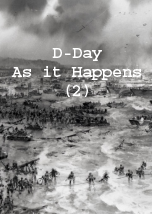
D-Day: As It Happens is a 24-hour history event to be broadcast across TV, web, mobile devices and social media, telling the story of this pivotal event in 20th-century history in a completely new way. Using newly-analysed archive footage, viewers can track the progress of seven people who were there on the day, each of them a real participant in the 1944 invasion. And they can do so moment by moment in real time, encountering the twists and turns of the fighting at the same time as the D-Day seven did, and learning their fate as the action unfolds in parallel with the present, Narrated by Peter Snow, with Channel 4 presenter and former marine Arthur Williams, and experts including former British Army officer Colonel Tim Collins and front-line journalist Lorna Ward. The second programme reveals what happened to the seven real people the event is following in real time, and also rounds up the events of D-Day.
Above all, 'In Search of Beethoven' addresses the central myth of Beethoven's life and work -- that of the heroic, tormented figure battling to overcome the tragic fate of being struck down by deafness in his prime; a man who searched for his elusive, eternal 'immortal beloved,' yet was never to attain lasting happiness.
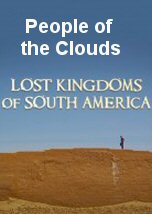
Dr Jago Cooper reveals the history of some of South America's ancient civilisations. He begins with an epic journey into the remote Peruvian Andes in search of the mysterious Chachapoya people. Once numbering half a million, they were known as the 'People of the Clouds'. Dr Cooper reveals how they developed sophisticated methods of recording stories, traded in exotic goods found hundreds of miles from their territory, and had funeral traditions that challenge assumptions about ancient human behaviour. His search for evidence takes him to astonishing cliff tombs untouched for 500 years and one of the most spectacular fortresses in South America, where the fate of the Chachapoya is revealed.
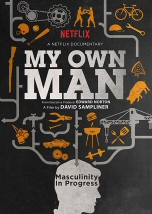
David the filmmaker is 40 years old, but he still doesn't feel like a man - not a real man anyway. When his wife becomes pregnant with a boy, David's manhood insecurities deepen. How can he bring his son into manhood if he feels so estranged from his own? This question sets him off on a quest for his manhood that leads him from voice lessons to a men's group to deer-hunting, and ultimately back to his own father. My Own Man is an intimate, humorous, and emotional account of one man's search for what it means to be a man and a father in the 21st century.











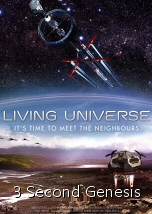








There are no witnesses, no cheering crowds in the control room. A decade or more will pass before news finally reaches us, back across the dark oceans of space. But the seeds of this mission are already being sowed today by the first generation of scientists bold enough to believe it could be possible.