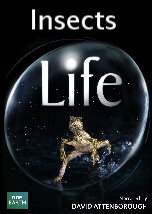
The fifth episode of the series is a fascinating exploration of the dinosaur era and its impact on the evolution of life on Earth. Through a journey of 200 million years, we discover how the breakup of Pangea and tectonic changes shaped biodiversity and created environments for dinosaurs and other forms of life to flourish. From the majestic Diplodocus to the formidable Allosaurus, the documentary brings to life the giants that once dominated our planet. Additionally, it shows the evolution of plants, highlighting the emergence of flowers and their symbiotic relationship with insects, such as termites and ants, whose social and evolutionary dynamics are explored in depth. The narrative also addresses the rise of mammals and their coexistence with dinosaurs, highlighting species such as the Numbat and their struggle for survival. With stunning imagery and a captivating narrative, this episode is an invitation to learn, marvel, and reflect on the extraordinary history of life on Earth.
The end of a decade when the world was in crisis and inspiration and hope needed resurrecting, an influential duo released a masterpiece of popular music, Bridge Over Troubled Water. Through darkness and light, the album takes its listeners on an emotional ride echoing the era and one which continues to inspire an audience the world over 50 years later. Its symphonic hymn of a title track became an anthem for a generation. The Harmony Game tells the story behind what is widely considered Simon and Garfunkel's best work, Bridge Over Troubled Water. The influential duo's last studio album has its legacy shrouded in rock n' roll mythology with legendary tales of inspiration, innovation and separation. Paul Simon, Art Garfunkel and their collaborators share the journey in their own words and reflect back on its impact 50 years later and includes never before seen film, photos and memorabilia.
Survivors, observers, and expert government officials recount the 1971 uprising at the Attica Correctional Facility. The violent five-day standoff between mostly Black and Latino inmates and law enforcement gripped America then, and highlights the urgent, ongoing need for reform 50 years later.
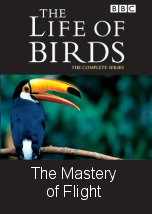
The second programme deals with the mechanics of flight. Getting into the air is by far the most exhausting of a bird's activities, and Sir Attenborough observes shearwaters in Japan that have taken to climbing trees to give them a good jumping-off point. The albatross is so large that it can only launch itself after a run-up to create a flow of air over its wings. A combination of aerodynamics and upward air currents (or thermals), together with the act of flapping or gliding is what keeps a bird aloft. Landing requires less energy but a greater degree of skill, particularly for a big bird, such as a swan. Weight is kept to a minimum by having a beak made of keratin instead of bone, a light frame, and a coat of feathers, which is maintained fastidiously. The peregrine falcon holds the record for being fastest in the air, diving at speeds of over 300 km/h. Conversely, the barn owl owes its predatory success to flying slowly, while the kestrel spots its quarry by hovering. However, the true specialists in this regard are the hummingbirds, whose wings beat at the rate of 25 times a second. The habits of migratory birds are explored. After stocking up with food during the brief summer of the north, such species will set off on huge journeys southwards. Some, such as snow geese, travel continuously, using both the stars and the sun for navigation. They are contrasted with hawks and vultures, which glide overland on warm air, and therefore have to stop overnight.
Inside the heart of the atom, its nucleus houses energy. This hidden treasure was forged billions of years ago in distant stellar furnaces. The secret of starlight is nothing to fool with. It can bring a civilization to life and it can burn it to the ground. Two atoms from different parts of the universe meet on a small planet. A deadly embrace between science and state altered the fate of the world and a gripping cautionary tale of others who grew used to living in the shadow of grave danger until it killed them all except one.
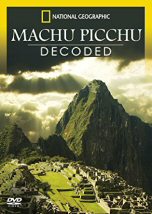
Deep in the Andean mountains lays a mysterious ruin named Machu Picchu. For 400 years it sat abandoned on its misty cliff, the quintessential lost city in the jungle. Rediscovered in 1911, it contained no written records or carvings, nothing that could shed light on its history. For a century since, it has defied the endless scores of visitors and scientists who attempted to understand its purpose. Who were the mysterious people who built it and why did they build it here? Today an international team of archaeologists, engineers and scientists are finally piecing together the clues. Together they are discovering astonishing new burials, revealing the intricacies of its ingenious engineering and finally decoding the secrets of Machu Picchu.







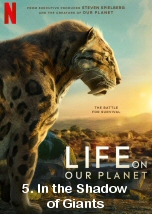








With stunning imagery and a captivating narrative, this episode is an invitation to learn, marvel, and reflect on the extraordinary history of life on Earth.