











Last Watched

"Man"  Sort by

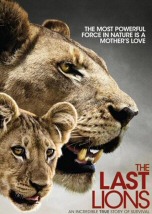
The Last Lions

   2011    Nature
Fifty years ago there were close to half-a-million lions in Africa. Today there are around 20,000. To make matters worse, lions, unlike elephants, which are far more numerous, have virtually no protection under government mandate or through international accords. This is the jumping-off point for a disturbing, well-researched and beautifully made cri de coeur from husband and wife team Dereck and Beverly Joubert, award-winning filmmakers from Botswana who have been Explorers-in-Residence at National Geographic for more than four years. Pointing to poaching as a primary threat while noting the lion's pride of place on the list for eco-tourists-an industry that brings in 200 billion dollars per year worldwide-the Jouberts build a solid case for both the moral duty we have to protect lions (as well as other threatened "big cats," tigers among them) and the economic sense such protection would make. And when one takes into account the fact that big cats are at the very top of the food chain-and that their elimination would wreak havoc on all species below them, causing a complete ecosystem collapse-the need takes on a supreme urgency.


Marley

   2012    Art
Bob Marley's universal appeal, impact on music history and role as a social and political prophet is both unique and unparalleled. Marley is the definitive life story of the musician, revolutionary, and legend, from his early days to his rise to international superstardom. Made with the support of the Marley family, the film features rare footage, incredible performances and revealing interviews those who knew him best.

Addicted to Sexting

   2015    Technology
A compelling (and sometimes humorous) look at the rise and proliferation of this social phenomenon from several varying perspectives and how the lives of those engaged in it are affected. Throughout the course of the film, we examine nearly every aspect of what has become a national and international pastime. A vast range of opinions give their input about this delicate subject and, as such, discussions with notable figures in the entertainment, political and medical fields (among others) are included. The film touches on the many high profile scandals surrounding public officials and the resulting consequences of their actions. In stark contrast, an honest look at the possibility of sexting as a positive development within the framework of healthy relationships is also presented. Sexting exists and is not likely to disappear anytime soon. "ADDICTED TO SEXTING" shows the why, how and what possible purpose it serves.

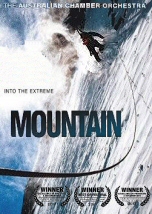
Mountain

   2018    Nature    HD
Jaw-dropping exploration of our obsessions with high places and how they have come to capture our imagination. Only three centuries ago, climbing a mountain would have been considered close to lunacy. The idea scarcely existed that wild landscapes might hold any sort of attraction. Peaks were places of peril, not beauty. Why, then, are we now drawn to mountains?
Filmed by the world's leading high-altitude cinematographers, narrated by William Dafoe and set to a specially curated musical performance by the Australian Chamber Orchestra, Mountain captures the fierce beauty of some of the world's most treacherous landscapes and the awe they inspire.

Tiger 1of2

   2020    History
A two-part documentary illuminating in sweeping scope and vast detail the rise, fall, and epic comeback of global icon Tiger Woods. Using Jeff Benedict and Armen Keteyian's best-selling book 'Tiger Woods' as a resource, the series is driven by never-before-seen footage and revealing interviews with those who know Tiger best.
Alex Gibney executive produces alongside filmmaker Matthew Heineman and Matthew Hamachek as directors of the film.
Series: Tiger

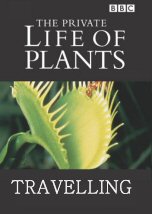
The Private Life of Plants: Travelling

   1994    Nature
Sir David Attenborough reveals plants as they have never been seen before - on the move and dangerously devious. About the major problems of life - growing, finding food, reproduction - and the varied ways plants have evolved to solve it. Filmed from the plant's point of view, using computer animations, fibre-optics and unique time-lapse photography. The first episode looks at how plants are able to move". The bramble is an aggressive example: it advances forcefully from side to side and, once settled on its course, there is little that can stand in its way. An altogether faster species is the birdcage plant, which inhabits Californian sand dunes. When its location becomes exposed, it shifts at great speed to another one with the assistance of wind — and it is this that allows many forms of vegetation to distribute their seeds. While not strictly a plant, the spores of fungi are also spread in a similar fashion. One of the most successful (and intricate) flowers to use the wind is the dandelion, whose seeds travel with the aid of 'parachutes'. They are needed to travel miles away from their parents, who are too densely packed to allow any new arrivals. Trees have the advantage of height to send their seeds further, and the cottonwood is shown as a specialist in this regard. The humidity of the tropical rainforest creates transportation problems, and the liana-species Alsomitra macrocarpa is one plant whose seeds are aerodynamic 'gliders'. Some, such as those of the sycamore, take the form of 'helicopters', while others, such as the squirting cucumber release their seeds by 'exploding'. Water is also a widely used method of propulsion. The tropical sea bean Entada gigas has one of the biggest fruits of all plants and is dispersed by water streams. However, most plants use living couriers, whether they be dogs, humans and other primates, ants or birds, etc., and to that end, they use colour and smell to signify when they are ripe for picking.
Series: The Private Life of Plants