



Last Watched

"The Universe"  Sort by

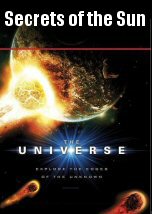
The Secrets of the Sun

   2007    Science    3D
A look at how the Sun was formed and how it could potentially die; its physical composition; how it makes energy; and the nature of solar eclipses, solar flares and sunspot activity. Behold the sun and all of its glory. Learn all things about the sun ranging from its beginning to its death. Also learn about how stars work in general and MUCH, MUCH more.
Series: The Universe
The Immortals

   2014    Science
This episode covers the nature of how life may have developed on Earth and the possibility of life on other planets. Tyson begins by explaining how the human development of writing systems enabled the transfer of information through generations, describing how Princess Enheduanna ca. 2280 BCE would be one of the first to sign her name to her works, and how Gilgamesh collected stories, including that of Utnapishtim documenting a great flood comparable to the story of Noah's Ark. Tyson explains how DNA similarly records information to propagate life, and postulates theories of how DNA originated on Earth, including evolution from a shallow tide pool, or from the ejecta of meteor collisions from other planets. In the latter case, Tyson explains how comparing the composition of the Nakhla meteorite in 1911 to results collected by the Viking program demonstrated that material from Mars could transit to Earth, and the ability of some microbes to survive the harsh conditions of space. With the motions of solar systems through the galaxy over billions of years, life could conceivably propagate from planet to planet in the same manner. Tyson then moves on to consider if life on other planets could exist. He explains how Project Diana performed in the 1960s showed that radio waves are able to travel in space, and that all of humanity's broadcast signals continue to radiate into space from our planet. Tyson notes that projects have since looked for similar signals potentially emanating from other solar systems. Tyson then explains that the development and lifespan of extraterrestrial civilizations must be considered for such detection to be realized. He notes that civilizations can be wiped out by cosmic events like supernovae, natural disasters such as the Toba disaster, or even self-destruct through war or other means, making probability estimates difficult. Tyson describes how elliptical galaxies, in which some of the oldest red dwarf stars exist, would offer the best chance of finding established civilizations. Tyson concludes that human intelligence properly applied should allow our species to avoid such disasters and enable us to migrate beyond the Earth before the Sun's eventual transformation into a red giant.
Series: Cosmos: A Spacetime Odyssey

Spaceship...Earth

   2007    Science
Take a ride through the formation of the third planet from the Sun, Earth. A survivor of one of the most violent neighbourhoods in the universe, learn how earth was created and discover what creatures hold clues to how life began. What evil forces threaten the demise of Earth?
Series: The Universe

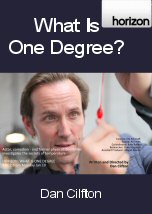
What is One Degree

   2011    Science
Comedian Ben Miller returns to his roots as a physicist to try to answer a deceptively simple question: what is one degree of temperature? His quest takes him to the frontiers of current science as he meets researchers working on the hottest and coldest temperatures in the universe, and to a lab where he experiences some of the strangest effects of quantum physics - a place where super-cooled liquids simply pass through solid glass. Plus, Ben installs his very own Met office weather station at home. Ben's investigations in this personal and passionate film highlight the importance of measurement and accuracy in the 21st century.

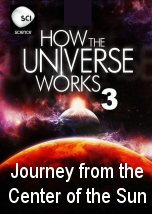
Journey from the Center of the Sun

   2014    Science
How does light escape from the sun? We take a journey from the center of the sun, following the path of light. We witness its fiery birth from in the core, its 430,000 mile battle against gravity and magnetism, and its escape from the solar surface.
Series: How the Universe Works

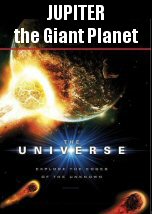
Jupiter the Giant Planet

   2007    Science    3D
A look at the solar system's largest planet, Jupiter; its formation and composition and its mini-solar system of over 60 moons – some of which may have the potential to support extra-terrestrial life.
Series: The Universe
Becoming Martian

Becoming Martian

2021  Technology
Dinosaur Planet

Dinosaur Planet

2003  Science
Space Race

Space Race

2005  Technology
Oceans

Oceans

2009  Nature
Coldplay Live

Coldplay Live

2012  Art
Chemistry

Chemistry

2010  Science