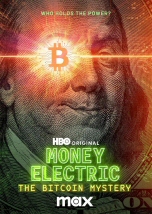
Cullen Hoback dives into one of the most enduring and high-stakes mysteries in technology and finance: the origins of Bitcoin and the identity of its anonymous creator, Satoshi Nakamoto. More than a decade after Satoshi's disappearance, Bitcoin now threatens to disrupt the global financial order, forcing nations to reconsider the very nature of money as Satoshi potentially stands to become the richest person on earth. Known for uncovering clandestine subcultures and movements through digital forensics, Hoback immerses himself with key players, uncovers never-before-seen clues, and humorously unravels Bitcoin's chaotic origins and meteoric rise. The documentary offers a thrilling, globe-spanning investigation into the intentions of Bitcoin's enigmatic inventor, as Hoback encounters those who could be Satoshi, seeking to reveal who holds the power -- and what they might do with it if Bitcoin were woven into our daily lives.
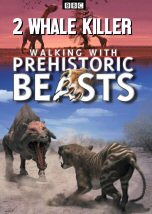
Moving on to the Late Eocene period 36 million years ago and mammals have prospered and are now the largest creatures on land and sea. This is an era of animals like andrewsarchus, the biggest mammal carnivore ever to walk on land, and the brontotheres, small-brained herbivores. It is in the sea, however, that the most monstrous mammals of all can be found. We follow the fate of a female basilosaurus, a huge serpent-like early whale, but nothing like the gentle filter feeding whales of the 21st century. Four times the length of the great white shark, with jaws to match, she is every inch a killer.
Video Games: The Movie, aims to educate & entertain audiences about how video games are made, marketed, and consumed by looking back at gaming history and culture through the eyes of game developers, publishers, and consumers. It is not just another film about the games industry, but attempts something much more ambitious; the question of what it means to be a 'gamer', a game maker, and where games are headed. Storytelling and the art of the video game medium are also explored in this first of it's kind film about the video game industry & the global culture it has created
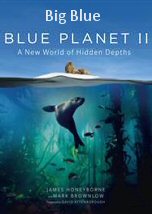
The big blue is the world's greatest wilderness, far from shore and many kilometres deep. It's a vast marine desert where there is little to eat and nowhere to hide. Yet it's home to some of the biggest and most spectacular creatures on earth. This episode reveals what it takes to survive in this savage and forbidding world. We witness feats of incredible endurance, moments of high drama and extraordinary acts of heart-wrenching self-sacrifice. Every animal in the big blue must find their own unique way to survive. Sperm whales have the largest brains in the world. They live for 80 years, and we are only now beginning to learn the extraordinary complexity of their language of clicks - thought to coordinate the whole family in everything from childcare to hunting. With special pressure-proof cameras, we witness record-breaking feats of endurance as they hunt for squid a kilometre down into the abyss. Only recently have we begun to solve the mystery of where baby turtles disappear to in their early years. They leave the crowded waters of the coast and head to the open ocean, where they use floating debris like logs as life rafts. Here they remain until adulthood, adrift on the high seas in relative safety away from coastal predators. Over half of all animals in the open ocean drift in currents. Jellyfish cross entire oceans feeding on whatever happens to tangle with their tentacles. The jelly-like Portuguese man-of-war can harness sail power to fish with its deadly tentacles. Sometimes there is a brief explosion of food in this marine desert, but ocean hunters must be fast to make the best of this bonanza. We witness super pods of up to 5,000 spinner dolphins racing to herd vast shoals of lanternfish, briefly caught at the surface where it is thought they spawn. New aerial footage reveals, for the first time, the truth to a centuries-old sailors' legend of the 'boiling seas' - the spectacular feeding frenzy of 90kg tuna and dolphins smashing through the lantern fish shoals turning the sea white with foam.
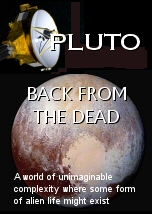
The incredible story of how Pluto has been propelled from an unremarkable ball of ice on the edge of the solar system to a world of unimaginable complexity - where some form of alien life might exist. New discoveries from the edge of the solar system are transforming what is known about Pluto, thanks to the New Horizons space probe that took the first-ever close up images of the planet. Pluto was once thought to be geologically dead, but the pictures revealed it to be an active world of stunning complexity, with mountains carved from ice, a nitrogen glacier that appeared to be moving and a recently active volcano, with data sent back lead some scientists to speculate that there may even be life on Pluto today.
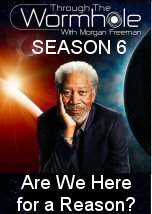
Evolution tells us that all life exists for only one purpose: to reproduce. But is that all there is? How could such a simple imperative lead us to create great art and civilizations? A new theory suggests that instead of passing on genes, our ultimate purpose is to process and pass on information. We are the universe figuring itself out. Scientists dig deep into DNA, chemistry, technology and engineering to find the meaning of life. One thing is certain: living is easier if you find a reason for living.




















The documentary offers a thrilling, globe-spanning investigation into the intentions of Bitcoin's enigmatic inventor, as Hoback encounters those who could be Satoshi, seeking to reveal who holds the power -- and what they might do with it if Bitcoin were woven into our daily lives.