About 340 million years ago a brand new family of animals was evolving in the primeval swamps. They were to go one step further than the amphibians who had emerged onto dry and before them. For they would eventually completely cut their ties with water. They were the ancestors of todays lizards. They evolved scaly impermeable skins and moved up into the forests. They diversified into a multitude of different shapes and sizes. They developed signalling systems to communicate with one another. And they squabbled as animals do. For food they hunted insects that were already well established on the land in great numbers. And here without returning to water they produced their families. They powered their bodies not only with food but with the heat that they drew directly from the sun.
As they diversified so they spread into the harshest of the lands habitats. The baking waterless deserts which eventually they would come to dominate. Discover jacky lizards that wave, wrestling beaded lizards and the the world's smallest chameleon, which is no bigger than his thumbnail, and the biggest lizard in Australia.
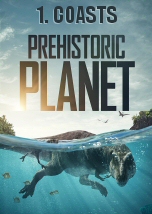
Attenborough's journey continues in Canada's Rocky Mountains, where fossils document an explosion in animal diversity never seen before or since. Travelling from there to North Africa, the rainforests of Australia and the east coast of Scotland, Attenborough discovers how animals evolved to conquer not only the oceans but also the land and air. These remote and fascinating creatures are brought to life as never before with the help of cutting-edge scientific technology and photorealistic visual effects. From the first large predators to the first legs on land, these were creatures that evolved the traits and tools that allow all animals, including ourselves, to survive to this day.
Professor of physics Jim Al-Khalili investigates the most accurate and yet perplexing scientific theory ever - quantum physics, the perplexing theory of sub-atomic particles. Turning his attention to the world of nature, can quantum mechanics explain the greatest mysteries in biology? The European robin navigates using one of the most bizarre effects in physics - quantum entanglement, a process which seems to defy common sense. Jim finds that even the most personal of human experiences - our sense of smell - is touched by ethereal quantum vibrations. According to new experiments it seems that our quantum noses are listening to smells. Jim discovers that the most famous law of quantum physics - the uncertainty principle - is obeyed by plants and trees as they capture sunlight during the vital process of photosynthesis. Jim wonders if the strange laws of the sub-atomic world, which allow objects to tunnel through impassable barriers in defiance of common sense, could effect the mechanism by which living species evolve?
This episode examines those birds whose sustenance comes from flesh and their methods of hunting. In New Zealand, Sir Attenborough observes Keas, parrots that do not eat meat exclusively, raiding a shearwater's burrow for a chick. However, it is the dedicated birds of prey, such as owls, buzzards, eagles, falcons and vultures, to which much of the programme is devoted. In order to spot and pursue their victims, senses of sight and hearing are very acute. Vultures are the exception, in that they eat what others have left, and once a carcass is found, so many birds descend on it that the carrion seems submerged beneath them. The Turkey Vulture is an anomaly within its group, as it also has a keen sense of smell. Eagles defend their territory vigorously, and a pair of sea eagles are shown engaging in an aerial battle. The Galápagos Hawk hunts Marine Iguanas, but can only do so when its quarry is vulnerable, during the breeding season. The African Harrier Hawk has adapted to extracting burrowing animals by virtue of an especially long, double-jointed pair of legs. By contrast, a shrike is not equipped with the requisite sharp beak and talons needed for butchery, and so dismembers its kill by impaling it on the thorns of acacias. The Lammergeier eats bones, and will drop them on to rocks from a great height in order to break them down to a digestible size. Also featured are the Eurasian Sparrowhawk, Goshawk and Peregrine Falcon.
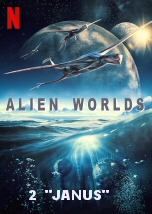
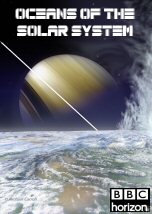
The oceans define the earth. They are crucial to life and we used to think that they were unique to our blue planet. But we were wrong. It has recently been discovered that there are oceans all over our solar system, and they are very similar to our own. And now scientists are going on an epic journey in search of new life in places that never seemed possible. Nasa is even planning to dive to the depths of a strange, distant ocean in a remarkable submarine. Discover that the hunt for oceans in space is marking the dawn of a new era in the search for alien life.
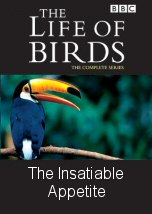
The next instalment focuses on dietary needs and how different species have evolved beaks to suit their individual requirements. The latter come in a multitude of forms. Blue tits and goldfinches have beaks akin to tweezers, with which to extract seeds, while the hawfinch's razor-like bill can deal with a cherry-stone. However, the crossbill is the only finch that can twist its mandibles in opposite directions. Jays store acorns for winter by burying them in the ground, whereas woodpeckers can keep up to 60,000 of them in one tree trunk. Sap is also desirable, and there are a variety of methods used to obtain it. The hoatzin is the only specialised leaf-eater, and accordingly has a digestive system more akin to that of cattle. Plants recruit birds to aid pollination, and offer nectar as a reward. Hummingbirds eat little else, and the sword-bill's beak is the longest of any bird in relation to its body. Insects are also highly prized, and Galapagos finches are shown to possess some ingenuity as they not only strip bark, but also use 'tools' to reach their prey. Crows are hailed as being among the most intelligent birds, and one is shown using a twig to spear a grub within a fallen log. The robin is an opportunist, and Sir Attenborough observes one seizing morsels as he digs a patch of earth. In South America, a cattle tyrant sits atop an obliging capybara and uses its vantage point to spot passing food that may be dislodged by its grazing partner.










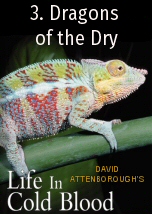




As they diversified so they spread into the harshest of the lands habitats. The baking waterless deserts which eventually they would come to dominate. Discover jacky lizards that wave, wrestling beaded lizards and the the world's smallest chameleon, which is no bigger than his thumbnail, and the biggest lizard in Australia.