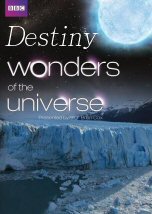
Brian Greene and an ensemble cast perform this theatrucak work tracing Albert Einstein's electrifying journey towards one of the most veautiful ideas ever conceived - the General Theory of Relativity. With state of the art animation and innovative projection techniques, Light Falls illuminates Einstein'sbreakthuroug moments, near misses, agonizing frustrations, and final emergence into the light, as one intrepid mind took on the universe... and won. Best-selling author, superstar physicist, and cofounder of the World Science Festival Brian Greene (The Elegant Universe, The Fabric of the Cosmos) and award-winning actor Paul Rudd (Ant-Man) perform this dramatic story. Featuring an original score by composer Jeff Beal, Einstein’s electrifying journey toward his greatest achievement is brought vividly to life.
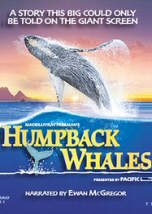
Narrated by Ewan McGregor, Humpback Whales is an extraordinary journey into the mysterious world of one of nature's most awe-inspiring marine mammals. Set in the spectacular waters of Alaska, Hawaii and the remote islands of Tonga, this ocean adventure offers audiences an up-close look at how these whales communicate, sing, feed, play and take care of their young. Humpbacks were nearly driven to extinction 50 years ago, but today are making a slow but remarkable recovery. Join a team of researchers as they unlock the secrets of the humpback and find out why humpbacks are the most acrobatic of all whales, why they sing their haunting songs, and why these intelligent 55-foot, 50-ton animals migrate up to 10,000 miles round-trip every year.
Where did we come from? What makes us human? Groundbreaking investigation explores how new discoveries are transforming views of our earliest ancestors. Featuring interviews with world-renowned scientists, footage shot in the trenches as fossils were unearthed, and stunning computer-generated animation, Becoming Human brings early hominids to life, examining how they lived and how we became the creative and adaptable modern humans of today. In the first episode Selam, the amazingly complete remains of a 3 million year-old child, packed with clues to why we split from the apes, came down from the trees, and started walking upright.
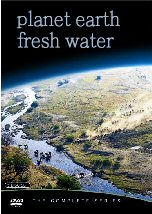
Fresh water is our most precious resource and it defines the distribution of life on land. Follow the descent of rivers from their mountain sources to the sea. Watch spectacular waterfalls, fly inside the Grand Canyon and explore the wildlife below the ice in the world's deepest lake. Witness unique and dramatic moments of animal behaviour: a showdown between smooth-coated otters and mugger crocodiles; deep-diving long tailed macaques; massive flocks of snow geese on the wing and a piranha frenzy in the perilous waters of the world's largest wetland.
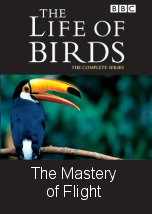
The second programme deals with the mechanics of flight. Getting into the air is by far the most exhausting of a bird's activities, and Sir Attenborough observes shearwaters in Japan that have taken to climbing trees to give them a good jumping-off point. The albatross is so large that it can only launch itself after a run-up to create a flow of air over its wings. A combination of aerodynamics and upward air currents (or thermals), together with the act of flapping or gliding is what keeps a bird aloft. Landing requires less energy but a greater degree of skill, particularly for a big bird, such as a swan. Weight is kept to a minimum by having a beak made of keratin instead of bone, a light frame, and a coat of feathers, which is maintained fastidiously. The peregrine falcon holds the record for being fastest in the air, diving at speeds of over 300 km/h. Conversely, the barn owl owes its predatory success to flying slowly, while the kestrel spots its quarry by hovering. However, the true specialists in this regard are the hummingbirds, whose wings beat at the rate of 25 times a second. The habits of migratory birds are explored. After stocking up with food during the brief summer of the north, such species will set off on huge journeys southwards. Some, such as snow geese, travel continuously, using both the stars and the sun for navigation. They are contrasted with hawks and vultures, which glide overland on warm air, and therefore have to stop overnight.
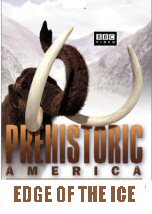
Journey through the long-vanished corners of prehistoric North America, beginning when man first entered the vast, unspoiled continent some 14,000 years ago, in this appealing BBC documentary. Witness ancient beasts, mammoths, mastodons, giant bears, and sabre-toothed cats, and see the legacies each has passed to their modern successors. Computer animation and digital effects bring to life mammoths, saber-toothed cats, giant ground sloths, short-faced bears, glyptodonts, and a plethora of smaller animals in a lush Ice Age mosaic. Discoveries from sites across America are the basis for the reconstructions.








Best-selling author, superstar physicist, and cofounder of the World Science Festival Brian Greene (The Elegant Universe, The Fabric of the Cosmos) and award-winning actor Paul Rudd (Ant-Man) perform this dramatic story. Featuring an original score by composer Jeff Beal, Einstein’s electrifying journey toward his greatest achievement is brought vividly to life.