The magnificent ringed planet Saturn, along with its more than 80 moons, forms the most dynamic planetary system in our neighborhood. With underground oceans and protective magnetic fields, experts are exploring how this collective of satellites has the potential to rewrite the rules of the Solar System. The closer that we look, the more we see these extraordinary moons like worlds of their own -- so dynamic, so Earth-like. Almost a billion miles from the Sun, these icy worlds could be home for Life 2.0. The moons of Saturn offer possibly the best chance of finding extraterrestrial life in our solar system. With each new mission, we get closer to unraveling the mysteries of Saturn's moons.
What if death didn't have to be the final goodbye? ‘Eternal You’ is a gripping documentary that delves into the emerging industry of startups using AI to create digital avatars of the deceased. By harnessing the digital footprints left behind, these companies offer grieving individuals a chance to interact with their lost loved ones, blurring the lines between life and afterlife. The film explores this groundbreaking technology and its impact on bereaved families, delving deep into our innate desire for immortality. But at what cost does this technological resurrection come? ‘Eternal You’ raises profound questions about the ethics of commodifying grief and the psychological consequences of defying traditional notions of mortality. Does interacting with a digital echo of a loved one aid the healing process, or does it make letting go even harder? As we stand on the cusp of unprecedented technological possibilities, this documentary challenges us to consider whether we truly want—and are ready for—this new reality.
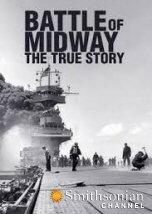
It's June 1942 and the world's fate is about to be decided by a handful of pilots and their untested aircraft. Experience an inside look at the Battle of Midway, captured through rarely seen battle footage and first-hand accounts from its hero dive-bombing pilot, "Dusty" Kleiss. This is an hour-by-hour recount of one of the most pivotal conflicts of the 20th century. Take a closer look at how this desperately needed victory came about through the design of U.S. air planes, the skill of the pilots, the element of surprise, and a stroke of luck.
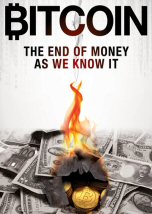
The concept of a digital, decentralized currency is questioning things and the answers being spilled out are deep-seated, long-standing propositions that place a magnifying glass onto the seemingly untouchable financial institutions at the base of modern commerce. What may be uncovered in the philosophical, political, and economic questions could have radical implications for the rest of the 21st century". The documenteray ushers us in, not to explore simply Bitcoin, but to hint at the basis of trade, commerce, and civil society. Director Torsten's story of money is one filled with promise like a sunrise over a landscape of human spirit.
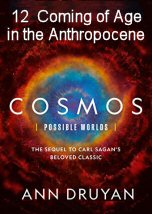
At 11 o'clock on New Year's Eve of the Cosmic Calendar, Homo erectus stood up for the first time, freeing its hands and earning the species its name. They began to move around, to explore, daring to risk everything to get to unknown places. Our Neanderthal relatives lived much as we did and did many of the things we consider to be 'human.' More restless than their cousins the Neanderthals and Denisovans, our Homo sapiens ancestors crossed seas and unforgiving landscapes, changing the land, ocean and atmosphere, leading to mass extinction. The scientific community gave our age a new name, 'Anthropocene.' Since the first civilizations we've wondered if there's something about human nature that contains the seeds of our destruction. Syukuro Manabe was born in rural Japan and took an intense interest in Earth's average global temperature. In the 1960's, he would assemble the evidence he needed to predict the increase of Earth's temperature due to greenhouse gases until it becomes an uninhabitable and toxic environment, leading to our extinction. 'This doesn't have to be,' says Neil deGrasse Tyson, 'it's not too late. There's another hallway, another future we can still have; we'll find a way.'
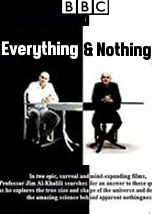
The second part, Nothing, explores science at the very limits of human perception, where we now understand the deepest mysteries of the universe lie. Professor Jim Al-Khalili sets out to answer one very simple question - what is nothing? His journey ends with perhaps the most profound insight about reality that humanity has ever made. Everything came from nothing. The quantum world of the super small shaped the vast universe we inhabit today, and Jim can prove it.





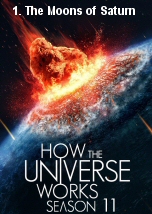



The closer that we look, the more we see these extraordinary moons like worlds of their own -- so dynamic, so Earth-like. Almost a billion miles from the Sun, these icy worlds could be home for Life 2.0. The moons of Saturn offer possibly the best chance of finding extraterrestrial life in our solar system. With each new mission, we get closer to unraveling the mysteries of Saturn's moons.