A kaleidoscopic immersion into the underground art and music scene of 1960s New York, this documentary eschews conventional rock biographies in favor of a sensory-rich, cinematic experience. Through a vibrant mosaic of avant-garde films, rare archival footage, and personal testimonies, it paints the Velvet Underground not just as a band—but as the beating heart of a creative explosion. By interweaving interviews with John Cale and Maureen Tucker alongside voices from their cultural milieu, the film evokes the fraught, fragile energy of a time when music intersected with performance, queerness, and counterculture. More than a story about a band, it is a journey into a cultural explosion that still resonates today.
The second part, Nothing, explores science at the very limits of human perception, where we now understand the deepest mysteries of the universe lie. Professor Jim Al-Khalili sets out to answer one very simple question - what is nothing? His journey ends with perhaps the most profound insight about reality that humanity has ever made. Everything came from nothing. The quantum world of the super small shaped the vast universe we inhabit today, and Jim can prove it.
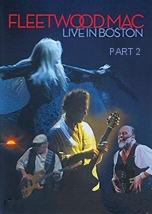
The band are captured performing live on 23–24 September 2003 at the FleetCenter (now known as the TD Garden) in Boston, Massachusetts during the group's Say You Will Tour, before a specially invited audience of industry insiders and friends. Having sold an amazing amount of records, and gone through tumultuous personal problems that would have finished off most bands, Fleetwood Mac have created an enduring legacy for themselves.
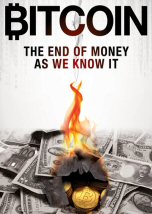
The concept of a digital, decentralized currency is questioning things and the answers being spilled out are deep-seated, long-standing propositions that place a magnifying glass onto the seemingly untouchable financial institutions at the base of modern commerce. What may be uncovered in the philosophical, political, and economic questions could have radical implications for the rest of the 21st century". The documenteray ushers us in, not to explore simply Bitcoin, but to hint at the basis of trade, commerce, and civil society. Director Torsten's story of money is one filled with promise like a sunrise over a landscape of human spirit.
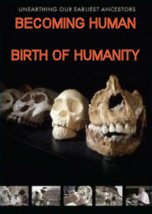
We will nvestigate the first skeleton that really looks like us –Turkana Boy– an astonishingly complete specimen of Homo erectus found by the famous Leakey team in Kenya. These early humans are thought to have developed key innovations that helped them thrive, including hunting large prey, the use of fire, and extensive social bonds. The program examines an intriguing theory that long-distance running –our ability to jog– was crucial for the survival of these early hominids. Not only did running help them escape from vicious predators roaming the grasslands, but it also gave them a unique hunting strategy: chasing down prey animals such as deer and antelope to the point of exhaustion. Birth of Humanity also probes how, why, and when humans' uniquely long period of childhood and parenting began.
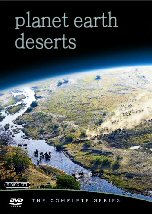
Around 30% of the land's surface is desert, the most varied of our ecosystems despite the lack of rain. Unravel the secrets of desert survival and experience the ephemeral nature of this dynamic environment. Watch Saharan sandstorms nearly a mile high and desert rivers that run for a single day. In the Gobi Desert, rare Bactrian camels get moisture from the snow. In the Atacama, guanacos survive by licking dew off cactus spines. In the USA, the brief blooming of Death Valley triggers a plague of locusts 65km wide and 160km long. A unique aerial voyage over the Namibian desert reveals elephants on a long trek for food and desert lions searching for wandering oryx.


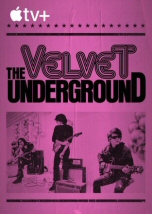


By interweaving interviews with John Cale and Maureen Tucker alongside voices from their cultural milieu, the film evokes the fraught, fragile energy of a time when music intersected with performance, queerness, and counterculture. More than a story about a band, it is a journey into a cultural explosion that still resonates today.