






Last Watched

Birth of Humanity

   2010    History
We will nvestigate the first skeleton that really looks like us –Turkana Boy– an astonishingly complete specimen of Homo erectus found by the famous Leakey team in Kenya. These early humans are thought to have developed key innovations that helped them thrive, including hunting large prey, the use of fire, and extensive social bonds. The program examines an intriguing theory that long-distance running –our ability to jog– was crucial for the survival of these early hominids. Not only did running help them escape from vicious predators roaming the grasslands, but it also gave them a unique hunting strategy: chasing down prey animals such as deer and antelope to the point of exhaustion. Birth of Humanity also probes how, why, and when humans' uniquely long period of childhood and parenting began.
Series: Becoming Human
In the Grip of the Seasons

   2015    Nature
The second episode looks at the challenges of hunting in the Arctic, the most seasonal place on Earth. To a predator, seasonal change is a problem. It means that all the parameters of the hunt - the conditions, the strategies, the prey - change too. The only option for the Arctic's top predators, the wolf, the Arctic fox and the polar bear, is to continually adapt to their changing world, exploiting the good times and enduring the bad.
Series: The Hunt

Retrograde

   2022    History
‘Retrograde’ offers a deeply intimate account of the end of Americas's longest war and humanizes the individuals most impacted through both US and Afghan perspectives. With a character-driven, cinema-verite approach, the film functions as an up-close record of a turning point in American and Afghan history while also providing an emotional reminder of the human costs of war.
‘Retrograde’ focuses in the relationship between American Green Berets and the Afghan officers they trained.

History Hells Angels

       History
Richard Rudgley goes in search of evidence of the barbarians of the dark ages, people whose names have for 1500 years been bywords for mindless brutality. The real truth about the barbarians who marched across Europe during the Dark Ages is more shocking than what you may know. Where did they come from? Who are their descendants? Are any of their techniques and inventions still used? Richard discovers the secrets of forgotten empires, and of mighty clashes throughout Europe. The art, society and cultural legacy of the barbarians are shown to have shaped and moulded the destiny of Europe even more than the Roman Empire.
In the first part of the journey through the Dark Ages we will be tracing the legacies of the Huns, Vandals and Goths, to ask whether the 'dark ages' represent a resurfacing of much older tribal lines. Sites in Austria show how sophisticated pre-Roman communities had become with evidence of stunning craftsmanship and sophisticated farming techniques which defy the image of a mindless rabble we have come to accept without challenge.
Series: Barbarians: Secrets of the Dark Ages

Nothing

   2011    Science
The second part, Nothing, explores science at the very limits of human perception, where we now understand the deepest mysteries of the universe lie. Professor Jim Al-Khalili sets out to answer one very simple question - what is nothing? His journey ends with perhaps the most profound insight about reality that humanity has ever made. Everything came from nothing. The quantum world of the super small shaped the vast universe we inhabit today, and Jim can prove it.
Series: Everything and Nothing

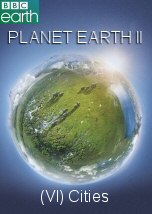
Planet Earth II Cities

   2016    Nature    HD
Cities are growing at a faster rate than any other habitat on Earth. They may seem an unlikely place for animals to thrive, but they can be a world of surprising opportunity. Leopards prowl the streets of Mumbai, peregrine falcons hunt amongst New York's skyscrapers, and a million starlings perform spectacular aerial dances over Rome. In Jodhpur, langurs are revered as religious deities and in Harar, locals live in harmony with wild hyenas. Many animals, however, struggle to cope in the urban jungle. As the architects of this environment, can humans choose to build cities that are homes for both them and wildlife?
Series: Planet Earth II
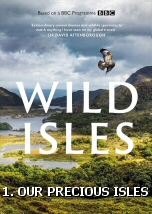
Wild Isles

Wild Isles

2023  Nature
Chef's Table

Chef's Table

2017  Art
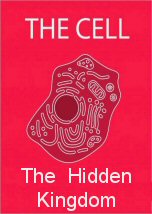
The Cell

The Cell

  Science
Ancient Apocalypse

Ancient Apocalypse

2024  History
Warrior Graveyard

Warrior Graveyard

  History
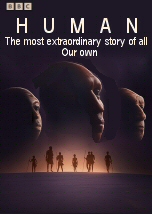
Human

Human

2025  History
Cursed Films

Cursed Films

2020  Art