Sir David Attenborough reveals how Mammals have conquered the Earth, uncovering the secrets to their success with their winning design, incredible adaptability, unrivalled intelligence, and unique sociability. 66 million years ago, when the reign of the dinosaurs came to an end, mammals were set free to exploit every corner of the planet. Mammals reveals the strategies, behaviours and traits that lie behind the astonishing success of this remarkable group of animals. Above all, the series celebrates the amazing intelligence that enables mammals to learn, remember, problem-solve, parent, and co-operate. Experience the complete six-episode series in a single video, showcasing how mammals have adapted to thrive in every major environment on Earth. They inhabit every ocean and continent, from frozen wildernesses and dense jungles to baking deserts, the dark depths of the ocean, and even the skies above our forests.
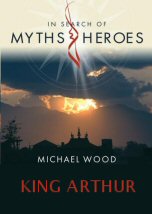
The fantastical tale of King Arthur, the hero warrior, is one of the great themes of British literature. But was it just invented to restore British pride after the Norman invasion? Michael Wood puts the king in the spotlight.
By cracking the ancient hieroglyphic code, Jean-François Champollion gave words to a thousand-year-old, mysterious civilization - but behind his legendary feat was a mysterious brother who made it all possible. New correspondence discovered between Jean-François Champollion and his brother Jacques-Joseph now allows us to fully understand how a young, self-taught genius was able to make one of the most important discoveries of the 19th century. Without the tireless support and cleverness of his older brother, Jean-François would never have managed to solve this burning, international enigma. Through animated sequences, using their private correspondence, archives and with the help of experts, this film will go back on this one-in-a lifetime scientific, human and intellectual adventure to celebrate the bicentenary of the decoding of hieroglyphs.
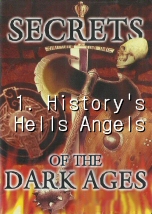
Richard Rudgley goes in search of evidence of the barbarians of the dark ages, people whose names have for 1500 years been bywords for mindless brutality. The real truth about the barbarians who marched across Europe during the Dark Ages is more shocking than what you may know. Where did they come from? Who are their descendants? Are any of their techniques and inventions still used? Richard discovers the secrets of forgotten empires, and of mighty clashes throughout Europe. The art, society and cultural legacy of the barbarians are shown to have shaped and moulded the destiny of Europe even more than the Roman Empire. In the first part of the journey through the Dark Ages we will be tracing the legacies of the Huns, Vandals and Goths, to ask whether the 'dark ages' represent a resurfacing of much older tribal lines. Sites in Austria show how sophisticated pre-Roman communities had become with evidence of stunning craftsmanship and sophisticated farming techniques which defy the image of a mindless rabble we have come to accept without challenge.
Jessie Buckley narrates the extraordinary story of the first transatlantic communications cable. In 16 August 1858, a short message is telegraphed from County Kerry to Newfoundland, 3,000km away: ‘Europe and America are united by telegraph. Glory to God in the highest, on earth peace, good will towards men.’ The Morse code message is conducted along the new underwater transatlantic telegraph cable laid across the bed of the Atlantic Ocean. Sending the same message by ship would have taken at least ten days, but the transmission takes just hours and heralds the dawn of the modern communications age. The quest is driven by visionaries and pioneers. Among them are Cyrus Field, a wealthy businessman who, despite his immense success, ends his life in poverty; Samuel Morse, inventor of the telegraph and Morse code; Isambard Kingdom Brunel, the British engineer who pushes boundaries and budgets; and Belfast physicist Lord Kelvin, who calculates how to achieve what had hitherto been deemed impossible. Together, their ingenuity and relentless pursuit helps realise one of the great scientific accomplishments of their age for which Valentia, on Ireland’s remote western coast, is ground zero.
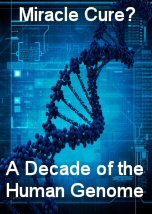
More than a decade ago, scientists announced that they had produced the first draft of the human genome, the 3.6 billion letters of our genetic code. It was seen as one of the greatest scientific achievements of our age, a breakthrough that would usher in a new age of medicine. Find out how close we are to developing the life-changing treatments that were hoped for". Follow three people, each with a genetic disease, as they go behind the scenes at some of Britain's leading research labs to find out what the sequencing of the human genome has done for them - and the hope this remarkable project offers all of us.








66 million years ago, when the reign of the dinosaurs came to an end, mammals were set free to exploit every corner of the planet. Mammals reveals the strategies, behaviours and traits that lie behind the astonishing success of this remarkable group of animals. Above all, the series celebrates the amazing intelligence that enables mammals to learn, remember, problem-solve, parent, and co-operate.
Experience the complete six-episode series in a single video, showcasing how mammals have adapted to thrive in every major environment on Earth. They inhabit every ocean and continent, from frozen wildernesses and dense jungles to baking deserts, the dark depths of the ocean, and even the skies above our forests.