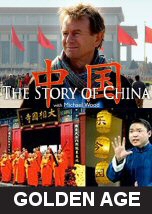
This episode tells the tale of what's broadly considered China's most creative dynasty - the Song (960-1279). Michael Wood heads to the city of Kaifeng, the greatest city in the world before the 19th century. Here in Twin Dragon Alley, locals tell him the legend of the baby boys who became emperors. He explores the ideas and inventions that made the Song one of greatest eras in world culture, helped by China's most famous work of art, the Kaifeng scroll, which shows the life of the city in around 1120. A chef makes Michael a recipe from a Song cookbook, while a guide to 'how to live happy, healthy lives for old people', published in 1085 and still in print, is discussed with local women doing their morning exercises. The Song was also a great era for scientific advance in China. Michael steers a huge working replica of an astronomical clock, made by China's Leonardo da Vinci. Then at a crunch Chinese Premier League match, Michael tells us the Chinese invented football! The golden age of the northern Song ended in 1127, when invaders sacked Kaifeng, but they survived in the south. At their new capital, Hangzhou, Wood joins locals dancing by the West Lake, while in the countryside he meets Mr Xie with his records of 40 generations of ancestors. The final defeat of the Song took place in a naval battle in the estuary of the Pearl River in 1279. When all was lost, rather than surrender to the Mongols, a loyal minister jumped into the sea with the young boy emperor in his arms. 'So ended the glory of the Song', Wood concludes, 'but a new age would arise... as in China, it always has!'.
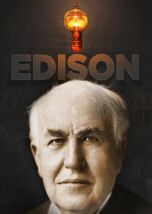
By the time he died in 1931, Thomas Alva Edison was one of the most famous men in the world. The holder of more patents than any other inventor in history, Edison had achieved glory as the genius behind such revolutionary inventions as sound recording, motion pictures, and electric light. Edison's curiosity led him to its cutting edge. With just three months of formal schooling, he took on one seemingly impossible technical challenge after another, and through intuition, persistence, and a unique team approach to innovation, invariably solved it." Driven and intensely competitive, Edison was often neglectful in his private life and could be ruthless in business. Challenged by competition in the industry he'd founded, Edison launched an ugly propaganda campaign against his rivals, and used his credibility as an electrical expert to help ensure that high-voltage electrocution became a form of capital punishment. Edison explores the complex alchemy that accounts for the enduring celebrity of America's most famous inventor, offering new perspectives on the man and his milieu, and illuminating not only the true nature of invention, but its role in turn-of-the-century America's rush into the future.
Spy in the Huddle use innovative techniques to reveal the incredible secrets of your pets' behaviour in ways never seen before. As astonishing photography explores the wild side of our playful pets, find out why hamsters love to run in a wheel, how dogs pick up the rules of the pack and how kittens learn to be solitary hunters. Featuring incredible views of plunge-diving dogs, babysitting cats, acrobatic hamsters and a playful cat outwitted by his prey" - you'll never look at your favourite companions in quite the same way again. The latest science also reveals why budgies talk, how a cat scales a vertical wall with the help of a special claw, why hamsters stuff their faces with more food than they can eat and the real meaning behind a rabbit's hop. Our pets are also given a chance to explore their wild side as we join the free-roaming pet dogs of Cusco Peru, pet rabbits living in a natural warren and the wild-living inhabitants of Cat Island, Japan. A range of innovative techniques such as moving X-rays, thermal imagery, minicam-carrying dogs and revelatory slow-motion photography shows why our pets play and how their true wild nature is just a whisker away.
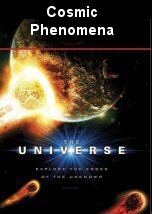
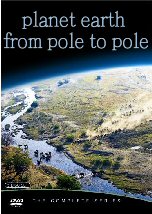
A variety of cosmic events have both helpful and harmful effects on life on Earth. From the beauty of the Aurora Borealis and rainbows to the dangers of UV radiation and cosmic rays, from the miracle of photosynthesis to the thrill of a meteor shower, this episode explores how the effects generated by the sun and other extra-solar sources can literally get under our skin, scramble our technology, make life possible and threaten our existence all at the same time
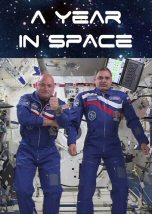
Follow astronaut Scott Kelly’s record-breaking 12-month mission on the International Space Station, from launch to landing, as NASA charts the effects of long-duration spaceflight. A Russian Soyuz spacecraft carried Scott Kelly of NASA and Mikhail Kornienko of Roscosmos to the space station for the longest space mission ever assigned to a NASA astronaut". The expedition provided important insights into operational and scientific areas in human research in space and on Earth. Integrated scientific investigations between NASA and Roscosmos will combine resources to improve data sharing among space medical and human research communities, as well as help inform current assessments of crew performance and health and better determine and validate countermeasures to reduce the risks associated with future exploration as NASA plans for missions around the moon, to an asteroid and eventually to Mars.
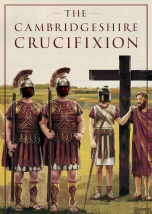
The documentary tells the story of the extremely rare discovery of evidence of Roman crucifixion, unearthed in a routine archaeological dig in the Cambridgeshire Fens. When human remains were found alongside a variety of Roman artifacts, none of the team at Albion Archaeology saw anything out of the ordinary. But once the bones were washed back at HQ, something highly unusual was uncovered: a nail through the heel bone of one of the individuals. Could this be evidence of a Roman crucifixion? When they did some research, they found that only one confirmed example had ever been unearthed before, discovered in the 1960s in Jerusalem. To find out more, they called in renowned osteoarchaeologist Dr Corinne Duhig to investigate. With exclusive access to Corinne’s investigation and the remains themselves, The Cambridgeshire Crucifixion sets out to find out who this person was, how they lived and why they were put to death in this notoriously gruesome way. We perform a CT scan, DNA and isotope analysis of the remains, and use them to create a cutting-edge virtual autopsy of the skeleton, conducted by Corinne and one of her former students, biologist Prof Ben Garrod. A supporting cast of expert contributors help to analyse the artefacts found at the Fenstanton site and reveal a compelling picture of life in Roman Britain in the 1st century CE. The film culminates in a world first: a full forensic facial reconstruction of a victim of Roman crucifixion, conducted by world-leading expert Joe Mullins.









He explores the ideas and inventions that made the Song one of greatest eras in world culture, helped by China's most famous work of art, the Kaifeng scroll, which shows the life of the city in around 1120. A chef makes Michael a recipe from a Song cookbook, while a guide to 'how to live happy, healthy lives for old people', published in 1085 and still in print, is discussed with local women doing their morning exercises. The Song was also a great era for scientific advance in China. Michael steers a huge working replica of an astronomical clock, made by China's Leonardo da Vinci.
Then at a crunch Chinese Premier League match, Michael tells us the Chinese invented football! The golden age of the northern Song ended in 1127, when invaders sacked Kaifeng, but they survived in the south. At their new capital, Hangzhou, Wood joins locals dancing by the West Lake, while in the countryside he meets Mr Xie with his records of 40 generations of ancestors. The final defeat of the Song took place in a naval battle in the estuary of the Pearl River in 1279. When all was lost, rather than surrender to the Mongols, a loyal minister jumped into the sea with the young boy emperor in his arms. 'So ended the glory of the Song', Wood concludes, 'but a new age would arise... as in China, it always has!'.