






Last Watched

"Nim"  Sort by

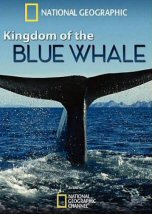
Kingdom of the Blue Whale

   2009    Nature
Blue whales are the largest animals to ever live on earth, yet they are difficult to find or track. Even some of the locations where they birth their young are great secrets. Join some of the world's eminent blue whale scientists as they embark on a revolutionary mission to identify and tag California blue whales as they migrate to a spot known as the Costa Rica Dome. This incredible voyage yields unforgettable new footage and insight into these amazing creatures' lives. Scientists use DNA analysis, recordings of whale songs, homing devices, and sea dives to shed light on the blue whale's breeding and birthing habits
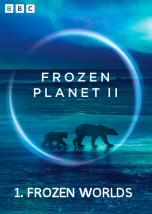
Frozen Planet II: Frozen Worlds

   2022    Nature    HD
Journeying from pole to pole, The series 'Frozen Planet II' reveals surprising worlds that exist across the planet and the remarkable animals that make them their home. In a fragile world of beauty and hostility, nature finds a way to survive and thrive. David Attenborough explores a planet on the brink of major change.
In the first episode, we begin our journey in the far south, in the most hostile place on earth, the frozen continent of Antarctica. After being raised on the ice in winter, emperor penguin chicks find themselves abandoned by their parents in spring. To survive, they must find their own way across the treacherous sea ice to the rich waters of the Southern Ocean.
The waters surrounding Antarctica may be the richest of all, but they are also home to an exceptionally sophisticated predator, the killer whale. To reach their favored prey, Weddell seals, a family of killer whales have learnt to generate their own waves, washing the seals off their ice floes. It’s a technique that has been passed down over generations and is coordinated by the family matriarch, who can be over 100 years old.
Leaving Antarctica and travelling north, we discover frozen habitats that are created by altitude. The greatest of these is the Himalaya, the tallest mountain range on earth, which contains so much ice and snow it is known as the third pole. In the shadow of the Himalaya lies a vast frozen grassy plain that is home to the fluffiest cat in the world, Pallas’s cat. It may have extremely dense fur, but if it’s to survive the Mongolian winter, it needs to catch lots of gerbils and voles. Easier said than done when you only have short legs and paws that are sensitive to the cold.
North of the Great Steppe lies the boreal forest, which encircles the continents of North America, Europe and Asia, and remains frozen for six months of the year. Prowling these forests in the far east of Russia is the Siberian tiger, the largest cat in the world. In winter, it is on the lookout for black bears hibernating in caves, a high-risk strategy that only a cat of this size would attempt.
Above the boreal forest, we cross into the Arctic Circle, where conditions become so extreme that trees can no longer grow. This is the tundra. Living here are relics of the last ice age, musk ox. In spring, their calves face a far greater danger than the cold, grizzly bears. Encounters can be brutal, but if just a few calves survive the gauntlet, the herd’s future is secure.
To the north of the tundra is the Arctic Ocean, the only ocean that can completely freeze over. Living here is one of the most peculiar animals on earth, the hooded seal. Males have extraordinary inflatable noses, producing a bright red balloon out of their left nostrils. One male hopes this will make him irresistible.
All of the frozen habitats share one thing in common: the threat posed by today’s climate change. Travelling to the island of Greenland, home to the largest body of ice in the northern hemisphere, we witness how global warming is melting its ice cap at faster rates than ever before, with profound consequences for global sea levels. Lastly, we visit the Arctic’s most iconic resident, the polar bear, as a mother bear struggles to provide for her cubs in a world of shrinking sea ice.
Series: Frozen Planet II

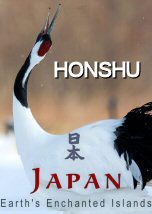
Honshu

   2017    Nature
Japan's landscapes range from snowy mountains to subtropical warmth. They are full of wildlife - and animals' and people's lives often cross as they adapt to these extremes. The central island of Honshu is home to over 100 million people, and its biggest city, Tokyo, is one of the largest urban metropolises on earth. But it has a wild heart - most of Honshu is mountainous. This wilderness is home to an astonishing range of wildlife - black bears, monkeys, exquisite fireflies and even cow demons. But all across this island, from the mountains to the edge of the sea, people and nature are drawn together in the most unexpected ways.
Series: Japan Earth Enchanted Islands

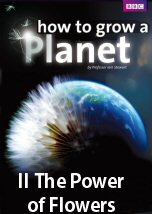
The Power of Flowers

   2012    Science
In the second episode, Professor Iain Stewart discovers how flowers have transformed our planet. He journeys to the remote islands of the South Pacific to track down the earliest flowers. In the deserts of Africa and rainforests of Vietnam, he sees how they brought brilliant colour to the most barren landscapes and sculpted the earth itself. And he learns how they drove the evolution of all animals - kick-starting our human story.
Series: How to Grow a Planet

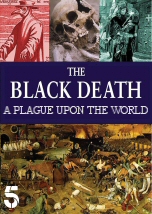
The Black Death

   2023    Medicine
In an enthralling documentary, Dan Snow and archaeologist Raksha Dave delve into the catastrophic impact of the Black Death on Britain 700 years ago, a pandemic that extinguished around half of the population, or three million people. The duo embarks on a journey to trace the origins and merciless spread of the plague, starting from its arrival on Britain's South coast in June 1348, through the bustling trade routes that brought the disease to Melcombe Regis, Dorset. Their investigation takes them to various hotspots of the outbreak, including the Old Operating Theatre in London and Wildwood Animal Sanctuary in Kent, where they explore the role of rats in dispersing the bubonic plague. Through dramatic reconstructions and visits to places like Nottingham University's biomedical laboratories, they uncover the rapid spread and deadly impact of the plague, offering a month-by-month account of how it ravaged the country, decimating cities, towns, and villages alike.
The documentary not only showcases the horrific symptoms and desperate attempts at cures through brutal medical practices of the time but also leverages cutting-edge research to explain why the Black Death remains the deadliest pandemic in history. The personal stories of victims, from princes to paupers, are brought to light, revealing the indiscriminate nature of the disease. Dan's visit to Canterbury Cathedral and Raksha's investigation into the recent discovery of mass graves beneath a tranquil London square underline the widespread desperation and devastation. Their journey through the history of the Black Death, culminating in the discovery of its indiscriminate toll and the unveiling of mass graves in London, not only sheds light on the darkest chapters of British history but also ignites a profound understanding of the tragedy, making a compelling case for why this documentary is a must-watch for anyone interested in the profound impacts of pandemics on human society.

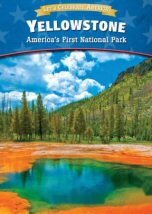
Yellowstone: America first National Park

   2015    Nature
On a vast plateau cradled in the heart of the rocky mountain range lies two million acres of unspoiled wilderness, never farmed and never fenced. Canyons, lakes, rivers and mountains, a refuge for magnificent animals and a spiritual sanctuary for generations of Americans, all resting on the largest super volcano in North America. This is Yellowstone, America's first national park, a raw and powerful beauty that truly comes to life through immersive 3D.
The Gene Code

The Gene Code

2011  Science
The Story of Science

The Story of Science

2010  History
Beckham

Beckham

2023  History
In the Age of AI

In the Age of AI

2019  Technology