










Last Watched

"Travel"  Sort by

Across the Hindu Kush

   1997    History
Wood travels through war-torn Afghanistan, crossing the Oxus River into Central Asia and the Silk Road city of Samarkand where, in a drunken brawl, Alexander killed the friend who had previously saved his life.
Series: In the Footsteps of Alexander the Great
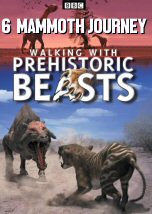
Mammoth Journey

       Science
Travelling forward in time to 30,000 years ago, it's the middle of an ice age. The landscape is dominated by mighty mammoths, living side-by-side with woolly rhinos, giant deer and two separate species of human. The programme follows the fate of a herd of mammoths in their annual struggle against the harsh ice-age conditions. Every summer they spend on the grassy plains of what will one day become the bottom of the North Sea, but every winter they are forced to head for the less exposed valleys further south. It is a journey fraught with danger: mammoths can get trapped in frozen bogs, and the herd must run the gauntlet of hunters like cave lions and the deadly Neanderthals.
Series: Walking with Prehistoric Beast

Endurance

   2024    Culture
In 1915, the ship Endurance sank near Antarctica. Explorer Ernest Shackleton and his crew miraculously survived. In 2022, the ship was discovered, some 3000m beneath the water’s surface. Documenting contemporary polar explorers and drawing on original expedition footage preserved and restored by the BFI National Archive, Endurance is an inspiring celebration of scientific curiosity and the indefatigable human spirit of discovery.
Maritime Heritage Trust locates Shackleton's shipwrecked Endurance near Antarctica. Shackleton and 27 crew survive incredible journey to South Georgia to seek rescue after ship sinks, showcasing human resilience against all odds.

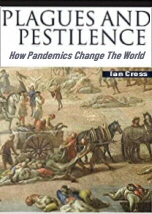
Plagues and Pestilence

   2020    Medicine
COVID-19 is far from the first pandemic to wreak havoc in the world. A long line of infectious diseases have devastated and in some cases destroyed entire societies. Almost all of them started in animals and made the jump to humans. The Black Death spread across Europe and Asia in the 14th century leaving millions dead in its wake. Between the 15th and 18th centuries, European colonists brought smallpox to the Americas, the Pacific region and to Australia. In Europe, the 17th century saw a series of major epidemics. And at the end of the First World War, more people died of the Spanish flu than on the battlefield.
This documentary examines the causes of these epidemics - whether it be lack of hygiene, interaction with animals, overcrowding, or the growth of cities - and how people travelling helped to spread disease and promote pandemics. It also sheds a light on the impact these infectious diseases have had on politics and societal change. Over the centuries, scientists managed to develop treatments and medicines to help control or even eradicate infectious diseases. Virologists are facing that task again with the coronavirus, as the world frantically searches for ways to overcome a pandemic which threatens our modern way of life.

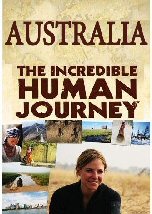
The Incredible Human Journey: Australia

   2009    History
Dr Alice Roberts looks at our ancestors' seemingly impossible journey to Australia. Miraculously preserved footprints and very old human fossils buried in the outback suggest a mystery: that humans reached Australia almost before anywhere else. How could they have travelled so far from Africa, crossing the open sea on the way, and do it thousands of years before they made it to Europe? The evidence trail is faint and difficult to pick up, but Alice takes on the challenge. In India, new discoveries among the debris of a super volcano hint that our species started the journey much earlier than previously thought, while in Malaysia, genetics points to an ancient trail still detectable in the DNA of tribes today. Alice travels deep into the Asian rainforests in search of the first cavemen of Borneo and tests out a Stone Age raft to see whether sea travel would have been possible thousands of years ago, before coming to a powerful conclusion.
Series: The Incredible Human Journey

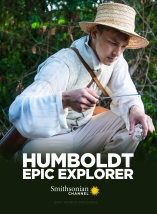
Humboldt Epic Explorer

   2020    History
In 1799, the German scientist Alexander von Humboldt embarked on a perilous journey of discovery across South America. It would take him to the deepest jungle near the Orinoco and to the heights of the Andes. His aim was twofold: to conduct the first scientific survey of South America and to discover how the natural world actually works — at a time when most scientists believed that the world was created less than 6,000 years ago. He later became a leading scientific figure and champion of the abolitionist movement in the US.
This extremely visual docudrama follows Humboldt’s extraordinary path. Travelling in Humboldt’s footsteps is historian Andrea Wulf, whose book on Humboldt became a worldwide bestseller. For good reason, since Humboldt’s ideas on the planet’s fragile web of life are as important today as they were 220 years ago.
Reel Rock

Reel Rock

2014  Culture
Coldplay Live

Coldplay Live

2012  Art
The Universe

The Universe

2010  Science
Minimalism

Minimalism

2015  Culture
Beckham

Beckham

2023  History
Life In Cold Blood

Life In Cold Blood

2008  Nature