











Last Watched

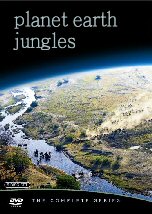
The Jungles

   2006    Nature
Jungles cover roughly three per cent of our planet yet contain 50 per cent of the world's species. High-definition cameras enable unprecedented views of animals living on the dark jungle floor. In the Ngogo forest the largest chimpanzee group in the world defends its territory from neighbouring groups. Other jungle specialists include parasitic fungi which infiltrate an insect host, feed on it, and then burst out of its body.
Series: Planet Earth

Alpha Egg

   2003    Science
SETTING: 80 million years ago in the South American forests of Patagonia. The world is a very dangerous place for tiny hatchlings like Alpha, a female saltasaur. Follow Alpha along the road of her growth years, from before her birth through asolescence and on to adulthood, as she learns how to survive and beat the odds.
Series: Dinosaur Planet

Electric Cars: Are they Really Worth it

   2025    Technology
The future of transportation is no longer a distant dream — it's here, and it's electric. But beneath the sleek designs and zero-emission promises lies a more complex reality. From hidden environmental costs to the fierce battle for battery materials, and from government incentives to powerful oil lobbies, this gripping investigation peels back the glossy surface to reveal the full story behind the electric revolution. Experts, insiders, and whistleblowers offer unprecedented insights into the true cost — and potential — of going electric. Fast-paced, eye-opening, and often surprising, this journey challenges everything you thought you knew about the cars of tomorrow.

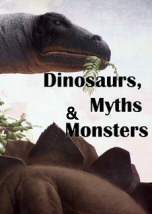
Dinosaurs Myths and Monsters

   2011    Science
From dinosaurs to mammoths, when our ancient ancestors encountered the fossil bones of extinct prehistoric creatures, what did they think they were? Just like us, ancient peoples were fascinated by the giant bones they found in the ground. Historian Tom Holland goes on a journey of discovery to explore the fascinating ways in which our ancestors sought to explain the remains of dinosaurs and other giant prehistoric creatures, and how bones and fossils have shaped and affected human culture.
In Classical Greece, petrified bones were exhibited in temples as the remains of a long-lost race of colossal heroes. Chinese tales of dragons may well have had their origins in the great fossil beds of the Gobi desert. In the Middle Ages, Christians believed that mysterious bones found in rock were the remains of giants drowned in Noah's Flood.
Tom encounters a medieval sculpture that is the first known reconstruction of a monster from a fossil, and learns about the Native Americans stories, told for generations, which contained clues that led bone hunters to some of the greatest dinosaur finds of the nineteenth century.

Making a Murderer Eighteen Years Lost

   2015    History
This series, acclaimed by the public and praised by critics, explores the story of Steven Avery, a man from Manitowoc County, Wisconsin, who served 18 years in prison for the wrongful conviction of sexual assault and attempted murder of Penny Beerntsen, before being fully exonerated in 2003 by DNA evidence. "Eighteen Years Lost" When Steven Avery is freed from a wrongful conviction, his search for justice raises questions about the authorities who put him behind bars.
Series: Making a Murderer

Hunt for the Oldest DNA

   2024    Science    HD
For decades, scientists have sought to unlock the secrets of ancient DNA, a fragile genetic blueprint that rarely survives millions of years. Danish biologist Eske Willerslev had a groundbreaking idea: instead of searching for DNA in fossils or ancient tissues, he looked to frozen sediment. Initially dismissed as impossible, his work led to the recovery of genetic traces from over two million years ago, revealing lush ecosystems that existed before the Ice Age. These discoveries offer unprecedented insights into long-extinct species that thrived in warm, verdant Arctic landscapes.
Willerslev’s perseverance revolutionized DNA research, enabling scientists to reconstruct vanished ecosystems and uncover the genetic secrets of ancient worlds. By examining the DNA of past climates, researchers are paving the way to better understand Earth's deep history and adapt to current environmental challenges. This landmark breakthrough demonstrates that ancient DNA acts as a "time machine," allowing humanity to explore its distant past and draw lessons for the future.
Leaving Neverland

Leaving Neverland

2019  Culture
Generation Iron

Generation Iron

2018  History
The Crime of the Century

The Crime of the Century

2021  Medicine
Unknown

Unknown

2023  Technology
Mammals

Mammals

2024  Nature