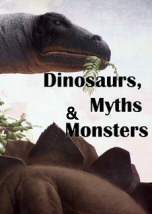
From dinosaurs to mammoths, when our ancient ancestors encountered the fossil bones of extinct prehistoric creatures, what did they think they were? Just like us, ancient peoples were fascinated by the giant bones they found in the ground. Historian Tom Holland goes on a journey of discovery to explore the fascinating ways in which our ancestors sought to explain the remains of dinosaurs and other giant prehistoric creatures, and how bones and fossils have shaped and affected human culture. In Classical Greece, petrified bones were exhibited in temples as the remains of a long-lost race of colossal heroes. Chinese tales of dragons may well have had their origins in the great fossil beds of the Gobi desert. In the Middle Ages, Christians believed that mysterious bones found in rock were the remains of giants drowned in Noah's Flood. Tom encounters a medieval sculpture that is the first known reconstruction of a monster from a fossil, and learns about the Native Americans stories, told for generations, which contained clues that led bone hunters to some of the greatest dinosaur finds of the nineteenth century.
Master Chef judge Gregg Wallace and mathematician Dr Hannah Fry take over a restaurant and invite five special guests to enjoy a dinner party with a difference, where they will be scored on the carbon footprint of every dish they choose. Food accounts for a third of all greenhouse gas emissions, so making informed choices about what we eat is more important than ever. Gregg is with the kitchen team preparing delicious dishes and uncovering tips and tricks we can all use to cook more sustainably. Hannah is working with environmental scientists to reveal the carbon footprint of every single item on the menu and uncovering the latest research that can help us enjoy the food we love that doesn't cost the Earth.
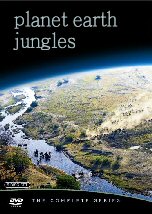
Jungles cover roughly three per cent of our planet yet contain 50 per cent of the world's species. High-definition cameras enable unprecedented views of animals living on the dark jungle floor. In the Ngogo forest the largest chimpanzee group in the world defends its territory from neighbouring groups. Other jungle specialists include parasitic fungi which infiltrate an insect host, feed on it, and then burst out of its body.
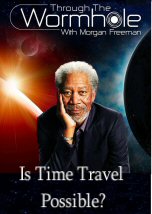
Einstein's world-shaking Theory of Relativity says that time travel is perfectly possible -- if you're going forward in time. Finding a way to travel backwards requires breaking the speed of light, which so far seems impossible. But now, strange-but-true phenomena such as quantum nonlocality (where particles instantly teleport across vast distances) may give us a way to make the dream of traveling back and forth through time a reality. Step into a time machine and rewrite history, bring loved ones back to life, control our destinies. But if succeed, what are the consequences of such freedom? Will we get trapped in a plethora of paradoxes and multiple universes that will destroy the fabric of the universe?
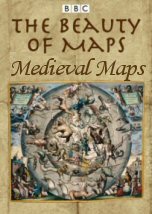
This documentary series charting the visual appeal and historical meaning of maps. The Hereford Mappa Mundi, the largest intact Medieval wall map in the world, its ambition to picture all of human knowledge in a single image is breathtaking. The work of a team of artists, the world it portrays is overflowing with life, featuring Classical and Biblical history, contemporary buildings and events, animals and plants from across the globe, and the infamous 'monstrous races' which were believed to inhabit the remotest corners of the Earth.
During the Cold War, American and Soviet scientists embarked on a perilous race to create the most powerful bomb in human history. This gripping documentary unveils how both nations pushed the boundaries of science and morality, culminating in the Soviet Union’s creation of the “Tsar Bomba”—the largest and most devastating weapon ever detonated, with a blast over 3,000 times more powerful than Hiroshima. Through unexpected twists, miscalculations, and high-stakes experiments, The World’s Biggest Bomb delves into the untold stories of ambition, fear, and rivalry that shaped a critical moment in history. Witness the harrowing journey of the scientists who risked everything to harness destruction on an unimaginable scale, forever altering the course of humanity.







In Classical Greece, petrified bones were exhibited in temples as the remains of a long-lost race of colossal heroes. Chinese tales of dragons may well have had their origins in the great fossil beds of the Gobi desert. In the Middle Ages, Christians believed that mysterious bones found in rock were the remains of giants drowned in Noah's Flood.
Tom encounters a medieval sculpture that is the first known reconstruction of a monster from a fossil, and learns about the Native Americans stories, told for generations, which contained clues that led bone hunters to some of the greatest dinosaur finds of the nineteenth century.