For decades, scientists have sought to unlock the secrets of ancient DNA, a fragile genetic blueprint that rarely survives millions of years. Danish biologist Eske Willerslev had a groundbreaking idea: instead of searching for DNA in fossils or ancient tissues, he looked to frozen sediment. Initially dismissed as impossible, his work led to the recovery of genetic traces from over two million years ago, revealing lush ecosystems that existed before the Ice Age. These discoveries offer unprecedented insights into long-extinct species that thrived in warm, verdant Arctic landscapes.
Willerslev’s perseverance revolutionized DNA research, enabling scientists to reconstruct vanished ecosystems and uncover the genetic secrets of ancient worlds. By examining the DNA of past climates, researchers are paving the way to better understand Earth's deep history and adapt to current environmental challenges. This landmark breakthrough demonstrates that ancient DNA acts as a "time machine," allowing humanity to explore its distant past and draw lessons for the future.
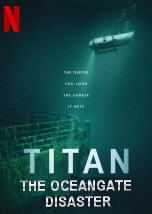
A gripping investigation into one of the most chilling maritime disasters in modern history. When a luxury submersible vanishes while descending toward the Titanic wreck, the world watches in suspense. Four days later, the truth shocks the globe: a catastrophic implosion, five lives lost, and a trail of ignored warnings. Through exclusive interviews and chilling archival footage, this film exposes the ambitious vision of an entrepreneur who defied engineering norms in pursuit of glory—and the irreversible consequences that followed. A haunting portrait of hubris, and the unforgiving power of the deep.
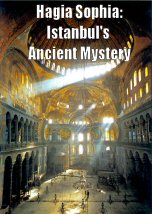
Whether serving as Christian church, Islamic mosque, or secular museum, Hagia Sophia and its soaring dome have inspired reverence and awe. For 800 years, it was the largest enclosed building in the world—the Statue of Liberty can fit beneath its dome with room to spare. How has it survived its location on one of the world's most active seismic faults, which has inflicted a dozen devastating earthquakes since it was built in 537?" As Istanbul braces for the next big quake, a team of architects and engineers is urgently investigating Hagia Sophia's seismic secrets. Follow engineers as they build a massive 8-ton model of the building's core structure, place it on a motorized shake table, and hit it with a series of simulated quakes, pushing it collapse—a fate that the team is determined to avoid with the real building
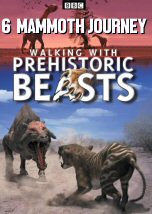
Travelling forward in time to 30,000 years ago, it's the middle of an ice age. The landscape is dominated by mighty mammoths, living side-by-side with woolly rhinos, giant deer and two separate species of human. The programme follows the fate of a herd of mammoths in their annual struggle against the harsh ice-age conditions. Every summer they spend on the grassy plains of what will one day become the bottom of the North Sea, but every winter they are forced to head for the less exposed valleys further south. It is a journey fraught with danger: mammoths can get trapped in frozen bogs, and the herd must run the gauntlet of hunters like cave lions and the deadly Neanderthals.
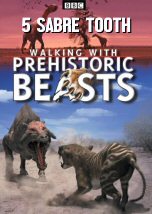
Back one million years ago, South America was a continent of exotic oversized creatures found nowhere else on Earth - huge terror birds, giant ground sloths and spiky-tailed relatives of the armadillo as big as cars. The deadliest animal of them all was smilodon, the largest of the sabre-tooth cats, with canines like carving knives. The programme follows the fortunes of an individual male, Half Tooth. Ousted from his clan by a pair of rival males, his life suddenly becomes a struggle to survive in this alien world.
This acclaimed multi-million dollar 4 part series shows the rise of the tribes of a primitive culture on the fringe of northern Europe to become the heirs of the Roman Empire. Since the age of Caesar this Roman-Germanic conflict was characterized not only by fierce battles but also by phases of co-existence & cooperation. the Germans dug the grave of the Roman Empire, but were also the preserves of the Roman legacy.


















Willerslev’s perseverance revolutionized DNA research, enabling scientists to reconstruct vanished ecosystems and uncover the genetic secrets of ancient worlds. By examining the DNA of past climates, researchers are paving the way to better understand Earth's deep history and adapt to current environmental challenges. This landmark breakthrough demonstrates that ancient DNA acts as a "time machine," allowing humanity to explore its distant past and draw lessons for the future.