







Last Watched

The Chemistry of Life

       Science
This episode explores how scientists delved ever deeper into the world of the cell, seeking to reveal the magic ingredient that can spark a bundle of chemicals into life. Their discoveries have brought us to the brink of being able to create life for ourselves.
Series: The Cell
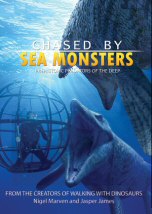
Chased by Sea Monsters 1of3

   2003    Science
If you're a paleontology buff, this series is for you. And the fun-loving Nigel Marvin provides a great narrative. Explore the prehistoric world in search of sea-based monsters. It focuses on life in ancient oceans during each prehistoric period. Nothing, not the carnivorous dinosaurs of the past, nor the imagined sea serpents and monsters of maritime history, nor the great white shark, salt water crocodile, killer whale and leopard seal of today can compare to the horrifying hunters of the prehistoric oceans.
Series: Chased by Sea Monsters

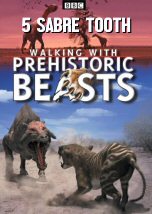
Sabre Tooth

       Science
Back one million years ago, South America was a continent of exotic oversized creatures found nowhere else on Earth - huge terror birds, giant ground sloths and spiky-tailed relatives of the armadillo as big as cars. The deadliest animal of them all was smilodon, the largest of the sabre-tooth cats, with canines like carving knives. The programme follows the fortunes of an individual male, Half Tooth. Ousted from his clan by a pair of rival males, his life suddenly becomes a struggle to survive in this alien world.
Series: Walking with Prehistoric Beast

World Biggest Bomb

       Technology
During the Cold War, American and Soviet scientists embarked on a perilous race to create the most powerful bomb in human history. This gripping documentary unveils how both nations pushed the boundaries of science and morality, culminating in the Soviet Union’s creation of the “Tsar Bomba”—the largest and most devastating weapon ever detonated, with a blast over 3,000 times more powerful than Hiroshima.
Through unexpected twists, miscalculations, and high-stakes experiments, The World’s Biggest Bomb delves into the untold stories of ambition, fear, and rivalry that shaped a critical moment in history. Witness the harrowing journey of the scientists who risked everything to harness destruction on an unimaginable scale, forever altering the course of humanity.

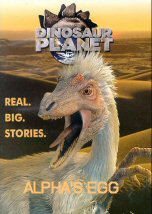
Alpha Egg

   2003    Science
SETTING: 80 million years ago in the South American forests of Patagonia. The world is a very dangerous place for tiny hatchlings like Alpha, a female saltasaur. Follow Alpha along the road of her growth years, from before her birth through asolescence and on to adulthood, as she learns how to survive and beat the odds.
Series: Dinosaur Planet

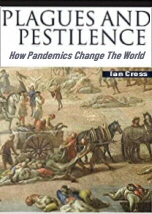
Plagues and Pestilence

   2020    Medicine
COVID-19 is far from the first pandemic to wreak havoc in the world. A long line of infectious diseases have devastated and in some cases destroyed entire societies. Almost all of them started in animals and made the jump to humans. The Black Death spread across Europe and Asia in the 14th century leaving millions dead in its wake. Between the 15th and 18th centuries, European colonists brought smallpox to the Americas, the Pacific region and to Australia. In Europe, the 17th century saw a series of major epidemics. And at the end of the First World War, more people died of the Spanish flu than on the battlefield.
This documentary examines the causes of these epidemics - whether it be lack of hygiene, interaction with animals, overcrowding, or the growth of cities - and how people travelling helped to spread disease and promote pandemics. It also sheds a light on the impact these infectious diseases have had on politics and societal change. Over the centuries, scientists managed to develop treatments and medicines to help control or even eradicate infectious diseases. Virologists are facing that task again with the coronavirus, as the world frantically searches for ways to overcome a pandemic which threatens our modern way of life.