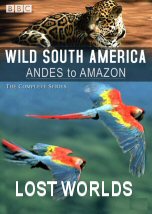
In 1799, the German scientist Alexander von Humboldt embarked on a perilous journey of discovery across South America. It would take him to the deepest jungle near the Orinoco and to the heights of the Andes. His aim was twofold: to conduct the first scientific survey of South America and to discover how the natural world actually works — at a time when most scientists believed that the world was created less than 6,000 years ago. He later became a leading scientific figure and champion of the abolitionist movement in the US. This extremely visual docudrama follows Humboldt’s extraordinary path. Travelling in Humboldt’s footsteps is historian Andrea Wulf, whose book on Humboldt became a worldwide bestseller. For good reason, since Humboldt’s ideas on the planet’s fragile web of life are as important today as they were 220 years ago.
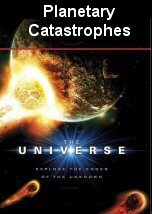
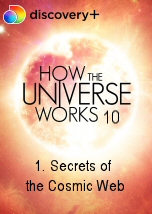
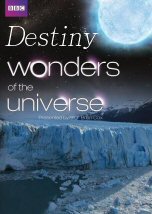
The tenth season of this acclaimed series. A users guide to the cosmos from the big bang to galaxies, stars, planets and moons. Where did it all come from and how does it all fit together. A primer for anyone who has ever looked up at the night sky and wondered. In the first episode, new astronomical research is beginning to reveal an invisible scaffold of dark matter known as the Cosmic Web, an intergalactic network that transformed the Universe from a chaotic Big Bang into the structured beauty of the present day cosmos.
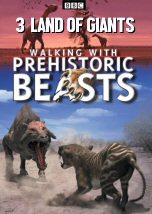
25 million years ago the biggest land mammals of all time, the indricotheres, stalked the Earth. Up to seven metres tall and weighing 15 tonnes, adults were too big to be eaten by any predator of the time. Only in the first few years of its life was indricotheres vulnerable. The programme follows the fate of a calf from his traumatic birth to see whether it can survive droughts, killer hogs and hyaenodon - a predator the size of a rhino with jaws that could crush a rock.
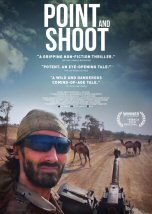
At first glance, Matthew Vandyke —a shy Baltimore native with a sheltered upbringing and a tormenting Obsessive-Compulsive Disorder diagnosis— is the last person you’d imagine on the front lines of the 2011 Libyan revolution. But after finishing grad school and escaping the U.S. for 'a crash course in manhood,' a winding path leads him just there. Motorcycling across North Africa and the Middle East and spending time as an embedded journalist in Iraq, Matthew lands in Libya, forming an unexpected kinship with a group of young men who transform his life. Matthew joins his friends in the rebel army against Gaddafi, taking up arms (and a camera). Along the way, he is captured and held in solitary confinement for six terrifying months.
In 1915, the ship Endurance sank near Antarctica. Explorer Ernest Shackleton and his crew miraculously survived. In 2022, the ship was discovered, some 3000m beneath the water’s surface. Documenting contemporary polar explorers and drawing on original expedition footage preserved and restored by the BFI National Archive, Endurance is an inspiring celebration of scientific curiosity and the indefatigable human spirit of discovery. Maritime Heritage Trust locates Shackleton's shipwrecked Endurance near Antarctica. Shackleton and 27 crew survive incredible journey to South Georgia to seek rescue after ship sinks, showcasing human resilience against all odds.
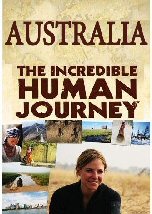
Dr Alice Roberts looks at our ancestors' seemingly impossible journey to Australia. Miraculously preserved footprints and very old human fossils buried in the outback suggest a mystery: that humans reached Australia almost before anywhere else. How could they have travelled so far from Africa, crossing the open sea on the way, and do it thousands of years before they made it to Europe? The evidence trail is faint and difficult to pick up, but Alice takes on the challenge. In India, new discoveries among the debris of a super volcano hint that our species started the journey much earlier than previously thought, while in Malaysia, genetics points to an ancient trail still detectable in the DNA of tribes today.
Alice travels deep into the Asian rainforests in search of the first cavemen of Borneo and tests out a Stone Age raft to see whether sea travel would have been possible thousands of years ago, before coming to a powerful conclusion.







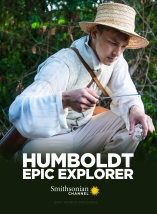



This extremely visual docudrama follows Humboldt’s extraordinary path. Travelling in Humboldt’s footsteps is historian Andrea Wulf, whose book on Humboldt became a worldwide bestseller. For good reason, since Humboldt’s ideas on the planet’s fragile web of life are as important today as they were 220 years ago.