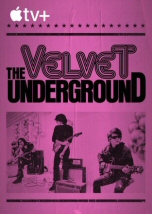
A kaleidoscopic immersion into the underground art and music scene of 1960s New York, this documentary eschews conventional rock biographies in favor of a sensory-rich, cinematic experience. Through a vibrant mosaic of avant-garde films, rare archival footage, and personal testimonies, it paints the Velvet Underground not just as a band—but as the beating heart of a creative explosion. By interweaving interviews with John Cale and Maureen Tucker alongside voices from their cultural milieu, the film evokes the fraught, fragile energy of a time when music intersected with performance, queerness, and counterculture. More than a story about a band, it is a journey into a cultural explosion that still resonates today.
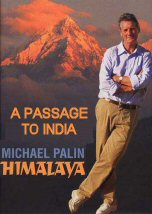
Travelling from K2 in Pakistan to Ladakh in India. It is a short distance as the crow flies but, due to politics, a huge loop. He passes through the Sikh city of Amritsar, with its Golden Temple, and through Shimla with its Vice Regal Lodge, Gaiety Theatre and cosy half-timbered tea-houses. He then meets the 14th Dalai Lama in Dharamsala, where the Tibetan government is in exile.
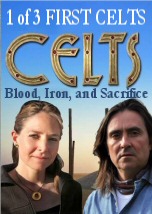
The Celts - one of the world's most mysterious ancient people. In Britain and Ireland, we are never far from our Celtic past but in this series Prof. Alice Roberts and archaeologist Neil Oliver travel much further afield, discovering the origins and beliefs of these Iron Age people in artefacts and human remains right across Europe, from Turkey to Portugal. What emerges is not a wild people on the western fringes of Europe, but a highly sophisticated tribal culture that influenced vast areas of the ancient world - and even Rome". Rich with vivid drama reconstruction, we recreate this pivotal time and meet some of our most famous ancient leaders - from Queen Boudicca to Julius Caesar - and relive the battles they fought for the heart and soul of Europe. Alice and Neil discover that these key battles between the Celts and the Romans over the best part of 500 years constituted a fight for two very different forms of civilisation - a fight that came to define the world we live in today. In the first episode, we see the origins of the Celts in the Alps of central Europe and relive the moment of first contact with the Romans in a pitched battle just north of Rome - a battle that the Celts won and that left the imperial city devastated.
The inside story of how a small band of fanatical jihadi fighters became the world's richest terror army ever. Featuring the first major TV interview with an imprisoned senior leader of the self-proclamed Islamic State, Peter Taylor looks behind its medieval savagery and investigates how it became so fabulously rich and resilient.
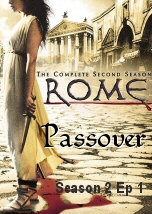
Caesar has been murdered, Mark Antony emerges from the Senate in shock, only to face Quintus Pompey and his thugs, who immediately follow him to try to kill him. Brutus returns home shaking after the murder. His mother is already plotting the return of the Roman Republic. Titus Pullo asks Eirene to marry him and she accepts. Erastes Fulmen kidnaps Lucius Vorenus' children and sister-in-law. Mark Antony proposes an amnesty to the rest of the senate to keep the peace and allow the Republic to continue. Vorenus says goodbye to Niobe while Rome says goodbye to Caesar. Vorenus and Pullo track down Fulmen to a bath house, where he tells them he killed Vorenus' family.
During the Cold War, American and Soviet scientists embarked on a perilous race to create the most powerful bomb in human history. This gripping documentary unveils how both nations pushed the boundaries of science and morality, culminating in the Soviet Union’s creation of the “Tsar Bomba”—the largest and most devastating weapon ever detonated, with a blast over 3,000 times more powerful than Hiroshima. Through unexpected twists, miscalculations, and high-stakes experiments, The World’s Biggest Bomb delves into the untold stories of ambition, fear, and rivalry that shaped a critical moment in history. Witness the harrowing journey of the scientists who risked everything to harness destruction on an unimaginable scale, forever altering the course of humanity.










By interweaving interviews with John Cale and Maureen Tucker alongside voices from their cultural milieu, the film evokes the fraught, fragile energy of a time when music intersected with performance, queerness, and counterculture. More than a story about a band, it is a journey into a cultural explosion that still resonates today.